Advertisement






What really powers the cloud? Behind every Google search, A...
A lot of what defines a home isn’t visible at handover. I...
Private equity has played a significant role in shaping Indi...
Luxury real estate is one of the most talked-about segments ...
Airports play a much bigger role than just enabling travel -...
The Mumbai Metropolitan Region Development Authority (MMRDA) has completed Phase II of the Airoli–Katai Naka corridor, while Phase I is in the final stage of execution. The high-speed corridor is expected to improve travel between Navi Mumbai, Thane, Kalyan-Dombivli and Badlapur by reducing congestion and cutting travel time by up to 45 minutes after full completion. The project includes twin tunnels, elevated roads, advanced tunnel safety systems and multiple access ramps. Officials said the corridor will support smoother regional movement, improve logistics connectivity and strengthen links between residential, industrial and commercial hubs across the Mumbai Metropolitan Region.
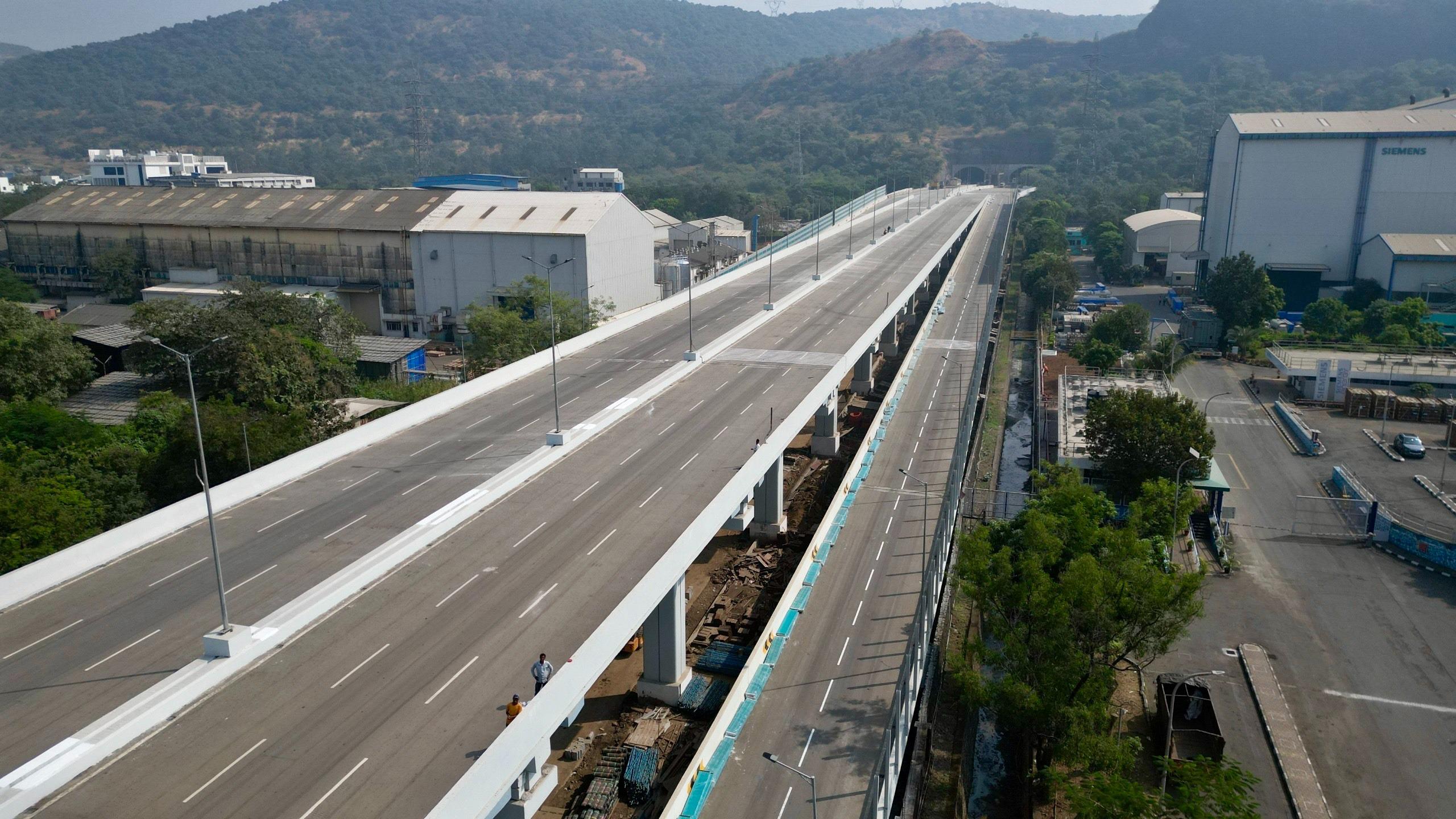
The Mumbai Metropolitan Region Development Authority (MMRDA) has achieved key construction milestones in the Airoli–Katai Naka corridor project, which is being developed to strengthen connectivity across the Mumbai Metropolitan Region (MMR). The project is designed as a continuous high-speed corridor connecting Airoli, Mumbra and Katai Naka, with the aim of reducing congestion and improving travel efficiency between Navi Mumbai, Thane, Kalyan-Dombivli and Badlapur. Advertisement






The corridor is being developed in three phases. Phase II has now been completed, while Phase I is nearing completion and Phase III is progressing steadily. Once operational, the project is expected to become an important east-west connectivity link in the region and support MMRDA’s “Mumbai in Minutes” mobility vision.
Maharashtra Chief Minister Devendra Fadnavis stated that the corridor was not merely a road project but a long-term investment for Maharashtra’s future. He said both Phase I and Phase II were in the final stages and are expected to be commissioned this year. According to him, the project will improve connectivity between major growth centres, support economic activity, strengthen logistics movement and improve quality of life for citizens across the region.
He further stated that infrastructure projects such as the Airoli–Katai Naka corridor would play an important role in decongesting Mumbai’s core areas and supporting balanced urban development as the state moves towards its larger Mumbai 3.0 vision.
Deputy Chief Minister and MMRDA Chairman Eknath Shinde said the corridor would significantly improve connectivity between Thane and Navi Mumbai, especially due to the tunnel section that will allow smoother travel between the two regions. He noted that the project is expected to reduce travel time by around 35 to 40 minutes and make daily commuting easier for residents.
Shinde added that reducing congestion and improving seamless movement across growth centres would also support the region’s expanding economic activity. He highlighted that better infrastructure ultimately gives citizens more personal time and improves day-to-day convenience.
MMRDA Metropolitan Commissioner Sanjay Mukherjee stated that MMRDA has been opening infrastructure projects in phases so that completed sections can be made operational earlier instead of waiting for full project completion. He said the Airoli–Katai Naka corridor would improve both passenger and goods movement across the region.
He also pointed out that heavily congested junctions such as Shilphata are expected to witness smoother traffic flow once the corridor becomes fully operational. According to MMRDA, the project is expected to substantially improve travel reliability across multiple urban nodes in the MMR.
The overall corridor spans around 12.71 km and includes a 3+3 lane carriageway configuration. One of the key features of the project is the twin tunnel system, which has been developed with three traffic lanes and one refuge lane in each tunnel tube. The tunnelling work has been executed using the New Austrian Tunnelling Method (NATM), a construction approach commonly used in complex geological conditions.
The project also includes advanced tunnel systems such as ventilation systems, firefighting systems, high-pressure water mist systems, intelligent lighting and Variable Message Signage (VMS). Such features are increasingly being incorporated in large-scale urban tunnel projects across India to improve commuter safety and traffic management.
Phase I, which connects Thane-Belapur Road to NH-04, is considered the core section of the project. The phase covers around 3.43 km and includes a 1.69 km twin tunnel and a 0.94 km elevated road. Civil works for the tunnel are around 92% complete, while installation of lighting, ventilation and firefighting systems is at an advanced stage.
This section is expected to provide a direct underground and elevated link between Airoli and NH-04 at Mumbra, helping bypass traffic bottlenecks at Mahape, Shil Phata and Kalyan Phata junctions. Infrastructure experts have earlier noted that these stretches remain among the most congested traffic points connecting Navi Mumbai and Thane.
Phase II, which stretches from Airoli to the Thane-Belapur Road, has been fully completed. The 2.57 km elevated road includes a 3+3 lane viaduct and multi-lane ramps connecting Airoli Mulund Road. MMRDA plans to commission this phase along with Phase I to ensure uninterrupted connectivity between the Mulund-Airoli Bridge and Mumbra.
Phase III will extend the corridor from NH-04 to Katai Naka along the Kalyan-Shil Road corridor. The 6.71 km fully elevated section is currently around 10% complete and is scheduled for completion in October 2028. The phase will include service roads on both sides, along with ramps at Diva-Shil Road, Katai Naka Junction and Katai Naka-Badlapur Road.
After completion of all three phases, the corridor is expected to reduce the distance between Mulund and Katai Naka by around 7 to 8 km. Overall travel time across the corridor is projected to reduce by 30 to 45 minutes.
MMRDA also expects the project to reduce traffic pressure on key roads and junctions including internal roads in Airoli, Thane-Belapur Road, Mahape Road, Shil Phata Junction, Kalyan Phata and the Kalyan-Shil Road stretch.
The project comes at a time when several large infrastructure developments are underway across the Mumbai Metropolitan Region, including metro rail expansion, coastal road connectivity projects and new transport corridors aimed at improving regional mobility and supporting future urban growth.

5th Jun, 2025

25th May, 2023

11th May, 2023

27th Apr, 2023
Advertisement









 Facebook
 Whatsapp
