Advertisement






Private equity has played a significant role in shaping Indi...
In today’s real estate landscape, fitness is often treated...
In this episode of Prop Personalities, we sit down with Hars...
Luxury real estate is one of the most talked-about segments ...
Welcome to Prop Personalities by Prop News Time - a podcast ...
The Telangana government has approached the Centre for approval of the proposed Hyderabad Metro Rail Phase-II project, estimated at INR 38,595 crore. The expansion plan covers 122.9 km across seven corridors and aims to improve connectivity in fast-growing residential and commercial areas of Hyderabad. Chief Minister A. Revanth Reddy recently met Union Housing and Urban Affairs Minister Manohar Lal Khattar in New Delhi and requested faster clearance for both Metro Phase-II and the proposed airport connectivity corridor under Phase-III. The state government has also submitted detailed project reports and is pushing for quicker implementation of the expansion plan.
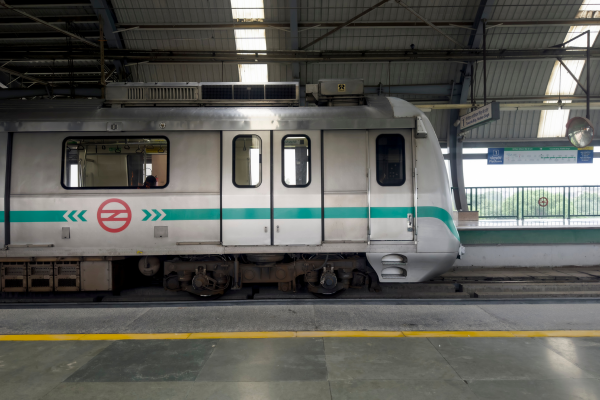
The Telangana government has sought the Centre’s approval for the Hyderabad Metro Rail Phase-II project, which is proposed at an estimated cost of INR 38,595 crore. The matter was discussed during Chief Minister A. Revanth Reddy’s recent meeting with Union Housing and Urban Affairs Minister Manohar Lal Khattar in New Delhi, where the state requested faster clearance for the project. Advertisement






During the discussions, the Telangana government informed the Centre that the Detailed Project Report for the proposed Metro expansion had already been prepared and submitted. The Phase-II project has been planned across seven corridors covering a total length of 122.9 km. The state government has proposed that the project should be implemented as a joint venture between the Centre and Telangana, considering Hyderabad’s rapid urban expansion and increasing transport requirements.
Officials said the proposed expansion is expected to improve Metro connectivity across several developing residential and commercial locations, including outer areas witnessing strong real estate and infrastructure growth. The government also highlighted the increasing pressure on Hyderabad’s road network due to rising population and vehicle registrations, stating that Metro expansion has become necessary to support long-term urban mobility.
The state government further requested the Centre to speed up approvals for the proposed Metro Phase-III airport corridor connecting Rajiv Gandhi International Airport with Bharat Future City. Officials informed the Union government that the Detailed Project Report for the airport corridor had also been submitted earlier. The proposed corridor is expected to improve airport accessibility and support future development in southern parts of Hyderabad.
Hyderabad Metro currently operates around 67 km across three corridors and remains one of the largest Metro rail networks developed under the public-private partnership model in India. The first phase of the project was executed by L&T Metro Rail Hyderabad Limited. However, expansion discussions between the state and Centre had slowed over the past few years due to funding structure concerns, revised alignment plans, and discussions around ridership projections.
The Telangana government recently moved to take greater control over Hyderabad Metro Rail operations and future expansion planning. Officials believe this will help in faster coordination and execution of upcoming phases. The revised Phase-II proposal has also been designed to improve integration between existing Metro lines, emerging residential clusters, IT hubs, commercial districts, and peripheral growth corridors.
Apart from improving daily commuting, the proposed Metro expansion is expected to support Hyderabad’s growing real estate market, especially in suburban locations where new housing and commercial developments are being planned. Improved Metro connectivity is also likely to increase access to employment hubs and reduce travel time across major parts of the city.
Senior officials from the Ministry of Housing and Urban Affairs, Hyderabad Metro Rail Limited, and the Telangana government were also present during the discussions held in Delhi regarding the expansion proposal and future execution plans.

5th Jun, 2025

25th May, 2023

11th May, 2023

27th Apr, 2023
Advertisement









 Facebook
 Whatsapp
