Advertisement






What really powers the cloud? Behind every Google search, A...
A lot of what defines a home isn’t visible at handover. I...
Private equity has played a significant role in shaping Indi...
Luxury real estate is one of the most talked-about segments ...
Airports play a much bigger role than just enabling travel -...
Dosti Realty has inaugurated a Ganesh temple within its Dosti Greater Thane township in Kalher, located around 7 km from Lake Shore, Thane, marking the first such religious structure developed within its residential projects. The 125-acre integrated development, designed as a self-sustained neighbourhood, includes over 70% open spaces, a 1 lakh sq ft clubhouse, and planned social infrastructure. The project is positioned near the upcoming Kalher Metro Station, improving connectivity to Thane and the wider Mumbai Metropolitan Region. Alongside residential offerings of 1 and 2 BHK units, the township incorporates lifestyle and training facilities, including sports academies and retail spaces. The temple adds a community-oriented element aimed at supporting cultural and social interactions among residents within the development.
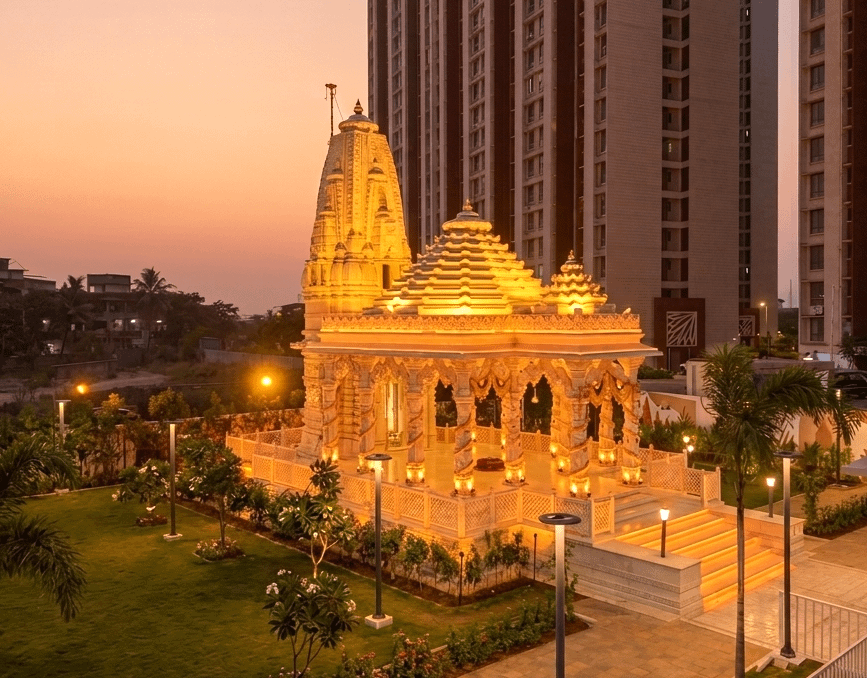
Dosti Realty has inaugurated a Ganesh temple within its Dosti Greater Thane township in Kalher, in the past week, marking the first instance of a religious structure being developed within any of its residential projects, as part of its broader integrated township planning in the Thane region. Advertisement






The development, spread across approximately 125 acres, is located around 7 km from Lake Shore, Thane, and is being positioned as a self-sustained residential neighbourhood with a mix of housing, social infrastructure, and community spaces. The addition of the temple forms part of the developer’s effort to incorporate cultural and social infrastructure within large-scale housing projects.
According to the company’s leadership, the temple has been conceptualised as a shared community space that would support social interaction and cultural practices among residents. The chairman and managing director of Dosti Realty indicated that the inclusion of the temple reflected the company’s approach of integrating community-oriented elements within its developments, with an emphasis on fostering shared experiences alongside physical infrastructure.
The director of the company further stated that the temple was expected to become part of residents’ daily routines and community life, serving as a focal point for religious observances and festivals, and contributing to social cohesion within the township.
Dosti Greater Thane has been planned with a focus on internal infrastructure and liveability, with over 70% of the project area allocated to open green spaces and landscaped zones. The master plan has been prepared by architect Hafeez Contractor, and includes a mix of residential, recreational, and commercial components designed to function within a single integrated layout.
The project also includes a clubhouse spanning approximately 1 lakh sq ft, along with high-street retail and provisions for educational facilities. Residential units within the development comprise 1 and 2 BHK configurations, targeting mid-income homebuyers seeking proximity to Thane with integrated amenities.
Connectivity remains a key aspect of the project’s positioning, with the upcoming Kalher Metro Station expected to enhance access to Thane and other parts of the Mumbai Metropolitan Region. The location also provides access to existing schools, offices, and retail centres in the surrounding areas.
In addition to core residential and social infrastructure, the development incorporates sports and training facilities, including associations with cricket and swimming academies, as well as spaces for activities such as badminton, music, and dance. These are intended to support skill development and recreational engagement for residents within the township.
The inclusion of the temple within the project reflects a broader trend among developers integrating community and cultural infrastructure into large-scale residential developments, alongside conventional amenities and connectivity-led planning.

5th Jun, 2025

25th May, 2023

11th May, 2023

27th Apr, 2023
Advertisement









 Facebook
 Whatsapp
