Advertisement
Private equity has played a significant role in shaping Indi...
In today’s real estate landscape, fitness is often treated...
In this episode of Prop Personalities, we sit down with Hars...
Luxury real estate is one of the most talked-about segments ...
Welcome to Prop Personalities by Prop News Time - a podcast ...
The Mumbai–Pune Expressway Missing Link Project has been completed and opened to traffic, introducing a new alignment that bypasses the Khandala Ghat stretch. Inaugurated in the past week, the project includes a 650-metre cable-stayed bridge with 182-metre pylons, making it the tallest road bridge structure in India. Executed in part by Afcons Infrastructure, the package also comprises twin viaducts, expressway widening, and over 10 km of approach roads. The upgraded corridor expands capacity from six to eight lanes across a key section and is expected to improve travel time and safety along one of the country’s busiest intercity routes.
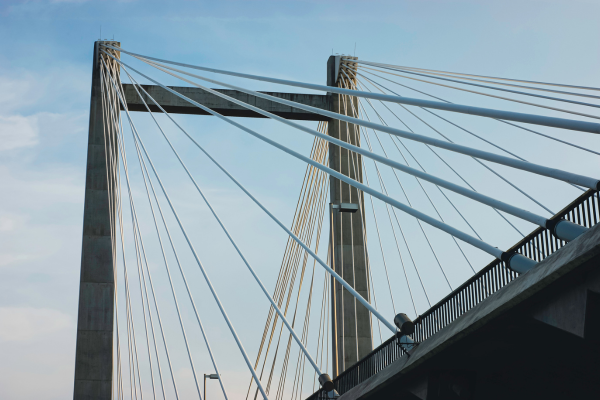
The Maharashtra government stated in the past week that the Mumbai–Pune Expressway Missing Link Project has been completed and inaugurated, introducing a new corridor that bypasses the Khandala Ghat section and enhances capacity and safety along the high-traffic route connecting Mumbai and Pune. Advertisement
The project includes a 650-metre-long cable-stayed bridge forming part of a viaduct, with pylons rising to 182 metres, making it the tallest such structure for a road project in India. The bridge has been designed with four carriageways on each viaduct and is supported by 240 cables. It forms a key component of Package II of the Missing Link Project, which has been executed by Afcons Infrastructure Ltd.
In addition to the cable-stayed structure, the package comprises two viaducts measuring 850 metres and 650 metres in length, respectively. The scope also includes the widening of the expressway from six to eight lanes over a stretch of 5.86 km, along with the development of more than 10 km of approach and slip roads to improve connectivity and traffic dispersal.
Project officials indicated that construction was undertaken in the Sahyadri terrain under challenging conditions, including limited working space, high wind speeds, heavy monsoon rainfall, and reduced visibility due to fog. The execution required specialised engineering methods, including the use of self-climbing shuttering systems for pylon construction and coordinated deployment of tower cranes and cantilever form travellers for deck segment installation.
The cable-stayed bridge rises over a deep valley, with deck segments constructed progressively to maintain structural precision. Engineers and workers operated at significant heights, requiring adherence to safety and quality protocols while managing constraints posed by terrain and weather conditions.
According to the project team, the development is expected to reduce travel time and improve operational safety by eliminating a difficult ghat section characterised by steep gradients and sharp curves. The upgraded infrastructure is also intended to enhance traffic flow on the Mumbai–Pune Expressway, which is among the busiest corridors in the country.
The Missing Link Project forms part of broader efforts to modernise highway infrastructure and address congestion on key intercity routes. With the completion of this section, the expressway’s capacity has been augmented, and movement between Mumbai and Pune is expected to become more efficient, particularly for long-distance and commercial traffic.
Source - PTI

5th Jun, 2025

25th May, 2023

11th May, 2023

27th Apr, 2023
Advertisement



 Facebook
 Whatsapp
