Advertisement






What really powers the cloud? Behind every Google search, A...
A lot of what defines a home isn’t visible at handover. I...
Private equity has played a significant role in shaping Indi...
Luxury real estate is one of the most talked-about segments ...
Airports play a much bigger role than just enabling travel -...
Eligibility for upper-floor residents under the Dharavi Redevelopment Project (DRP) has been made conditional on documentation strength and, in certain cases, the eligibility of ground-floor occupants. As per a government resolution issued earlier, residents who can establish occupancy before a November 2022 cut-off may qualify for 300 sq ft rehabilitation units outside Dharavi within the Mumbai Metropolitan Region. The policy introduces a hierarchy of documents, with affidavits placed at the lowest level and accepted only if supported by an eligible ground-floor household. The framework also restricts benefits to one dwelling per family and excludes applicants owning property under other housing schemes, marking a departure from earlier slum rehabilitation norms.
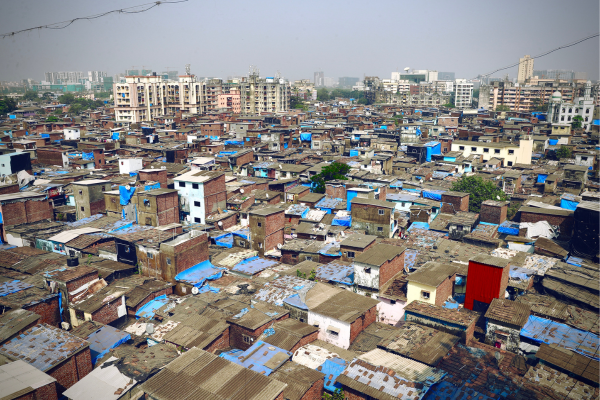
The Dharavi Redevelopment Project (DRP) has introduced eligibility criteria in the past week that link upper-floor rehabilitation benefits to both documentary evidence and, in specific cases, the qualification status of ground-floor occupants, as part of the implementation framework under a government resolution issued earlier. Advertisement






The policy allows upper-floor residents to qualify for housing if they can demonstrate occupancy prior to a cut-off set in November 2022. Eligible beneficiaries are to be allotted 300 sq ft units outside Dharavi but within the Mumbai Metropolitan Region. The scheme offers a hire-purchase model, under which occupants would pay nominal rent over a 25-year period before ownership transfer, with an option to secure early ownership through a pre-approved payment.
Officials indicated that the framework departs from previous slum rehabilitation schemes, which typically did not extend benefits to upper-floor residents. Under the revised structure, eligibility is determined through a defined hierarchy of documents submitted by the head of the household.
At the highest priority, applicants must provide electricity bills in their name showing the upper-floor address, including one document dated before the cut-off and one recent record. This is followed by registered rent agreements or registered purchase agreements, each supported by pre- and post-cut-off documentation. Government-issued identity documents such as Aadhaar, passport, ration card, driving licence, or voter ID bearing the upper-floor address prior to the cut-off fall under the next category.
Affidavits form the lowest tier in the documentation hierarchy and require certification from an eligible ground-floor resident. Officials clarified that if the ground-floor occupant fails to establish eligibility and is disqualified, upper-floor applicants relying solely on affidavits will also be deemed ineligible. They noted that a majority of upper-floor applicants are currently applying under this category, indicating limited availability of higher-priority documentation.
The project has also received applications involving multiple units on a single upper-floor structure. In such cases, each unit must submit independent documentation under higher-priority categories. Alternatively, occupants may file collectively as a single unit under the affidavit provision, subject to certification by the eligible ground-floor household.
The policy further stipulates that only one rehabilitation unit will be allotted per family, with spouses and children barred from filing separate claims. Applicants who already own property under other housing schemes within the Mumbai Metropolitan Region are excluded from eligibility.
Officials stated that the framework is intended to standardise the verification process while extending rehabilitation benefits to a broader set of residents, subject to clearly defined eligibility conditions and documentation requirements.
Source - PTI

5th Jun, 2025

25th May, 2023

11th May, 2023

27th Apr, 2023
Advertisement









 Facebook
 Whatsapp
