Advertisement






What really powers the cloud? Behind every Google search, A...
A lot of what defines a home isn’t visible at handover. I...
Private equity has played a significant role in shaping Indi...
Luxury real estate is one of the most talked-about segments ...
Airports play a much bigger role than just enabling travel -...
The Union government is preparing a dedicated scheme to promote floating solar projects, aiming to address land constraints in solar deployment and accelerate capacity addition. The proposal, discussed in the past week, seeks to encourage states to undertake larger-scale projects on water bodies, where installations offer higher efficiency due to natural cooling. India’s total solar capacity has reached 150.26 GW, up from 2.82 GW over the past decade, though floating solar accounts for only around 700 MW. The announcement was made alongside the launch of an expanded industry platform by the National Solar Energy Federation of India to support broader decarbonisation across sectors.
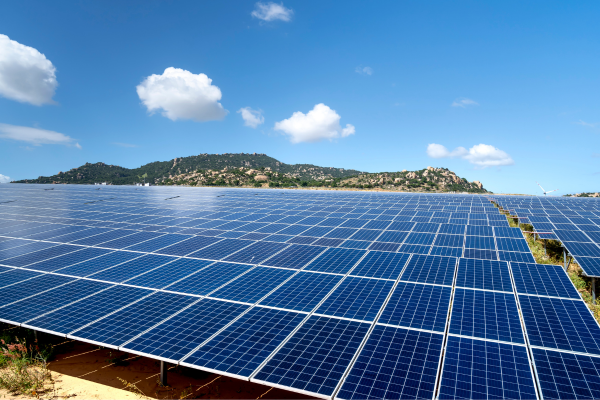
The Ministry of New and Renewable Energy (MNRE) stated in the past week that it is working on a dedicated scheme to promote floating solar projects across India, with the objective of addressing land availability constraints and encouraging large-scale deployment of solar capacity on water bodies. Advertisement






Santosh Kumar Sarangi, Secretary at MNRE, indicated that the ministry is exploring policy mechanisms to ensure that land does not become a limiting factor in the expansion of solar installations. He stated that the proposed scheme is intended to incentivise states to undertake larger floating solar projects, a segment that has so far not achieved its anticipated scale.
Floating solar systems involve the installation of photovoltaic panels on reservoirs, lakes, and other water bodies. According to the ministry, these systems can deliver higher efficiency compared to land-based installations due to the cooling effect of water, which improves panel performance and energy output.
The remarks were made during an industry event in the national capital, where the National Solar Energy Federation of India (NSEFI) marked its foundation day. During the event, Minister of State for New and Renewable Energy Shripad Yesso Naik announced the launch of an expanded platform under the organisation, aimed at broadening its focus beyond electricity and agriculture.
NSEFI’s Chief Executive Officer Subrahmanyam Pulipaka indicated that the restructured platform would integrate ongoing initiatives with additional focus areas such as industrial and mobility decarbonisation. He noted that the objective is to create a unified industry framework to support India’s transition towards a net-zero economy.
According to official data, India’s installed solar energy capacity has increased significantly over the past decade, rising from 2.82 GW in March 2014 to 150.26 GW in March 2026, reflecting an addition of 147.44 GW. However, floating solar capacity remains relatively limited at around 700 MW, highlighting the scope for expansion in this segment.
The proposed scheme is expected to complement existing renewable energy policies by facilitating the use of underutilised water bodies for solar generation, thereby reducing pressure on land resources while contributing to overall capacity growth.
Source - PTI

5th Jun, 2025

25th May, 2023

11th May, 2023

27th Apr, 2023
Advertisement









 Facebook
 Whatsapp
