Advertisement






Private equity has played a significant role in shaping Indi...
In today’s real estate landscape, fitness is often treated...
In this episode of Prop Personalities, we sit down with Hars...
Luxury real estate is one of the most talked-about segments ...
Welcome to Prop Personalities by Prop News Time - a podcast ...
Operations at Dubai Airports are being steadily scaled up after UAE airspace returned to normal following earlier disruptions linked to the Iran conflict. Chief executive Paul Griffiths indicated that capacity is increasing in line with available routes and airline schedules. Despite the temporary restrictions, Dubai International Airport and Al Maktoum International Airport handled more than six million passengers, over 32,000 aircraft movements, and 213,000 metric tonnes of cargo. However, DXB’s quarterly passenger traffic declined year-on-year, reflecting the impact of airspace closures, even as underlying travel demand through Dubai remained resilient.
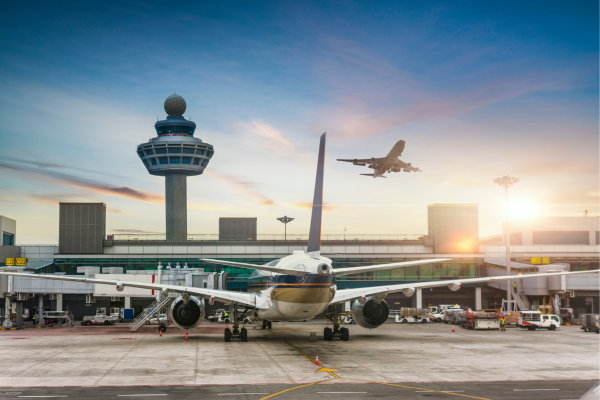
Operations at Dubai Airports are being gradually ramped up after the restoration of normal airspace conditions across the UAE. Chief executive Paul Griffiths stated that flight schedules and airport capacity are now being increased in line with available routing options, as airlines resume regular operations following a period of disruption. Advertisement






Earlier over the past week, the UAE’s aviation authority had indicated that air traffic had returned to normal after precautionary restrictions—introduced at the onset of the Iran conflict—were lifted. These measures had affected regional airspace and disrupted flight operations for several weeks.
Despite these challenges, Dubai’s aviation network continued to handle substantial volumes. Dubai International Airport and Al Maktoum International Airport together processed more than six million passengers, over 32,000 aircraft movements, and upwards of 213,000 metric tonnes of cargo during the disruption period. This indicated that transit demand through Dubai remained relatively resilient even amid geopolitical uncertainties.
However, passenger traffic at Dubai International Airport, widely recognised as the world’s busiest international travel hub, saw a decline in the first quarter. The airport handled 18.6 million passengers during the period, compared to 23.4 million in the corresponding quarter of the previous year, reflecting the temporary slowdown caused by restricted airspace access.
Griffiths conveyed that travel demand through Dubai had remained strong despite the disruption, adding that the airport was well positioned to gradually restore capacity and support airlines and passengers as operations stabilise. The phased ramp-up is expected to align with evolving flight routes and airline schedules as the sector adjusts to normal conditions.
Before the conflict led to widespread airspace closures across the Gulf, Dubai International Airport had been projected to handle close to 100 million passengers during the current year. While the recent disruption may affect short-term volumes, the recovery in operations suggests a steady return to normalcy in one of the world’s most critical aviation hubs.
Source - Reuters

5th Jun, 2025

25th May, 2023

11th May, 2023

27th Apr, 2023
Advertisement









 Facebook
 Whatsapp
