Advertisement






What really powers the cloud? Behind every Google search, A...
A lot of what defines a home isn’t visible at handover. I...
Private equity has played a significant role in shaping Indi...
Luxury real estate is one of the most talked-about segments ...
Airports play a much bigger role than just enabling travel -...
• India’s total energy investment is expected to touch a record USD 170 billion in 2026, according to the International Energy Agency (IEA).
• Solar power investment has grown 25 per cent annually over the past five years, while oil refining investment increased 23 per cent during the same period.
• India achieved its target of sourcing 50 per cent installed power capacity from non-fossil fuel sources ahead of schedule, supported by rising solar and renewable energy projects.
• Investments in transmission networks, battery storage, hydropower and nuclear energy are also increasing as the country expands renewable energy capacity.
• Coal continues to remain a major part of India’s energy mix, with coal supply investment expected to reach USD 13 billion in 2026.
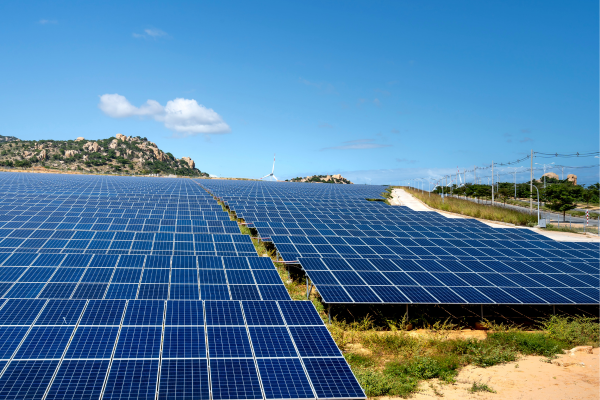
India’s energy investment is projected to reach a record USD 170 billion in 2026, supported by strong growth in solar energy, electricity infrastructure and oil refining projects, according to the International Energy Agency’s (IEA) World Energy Investment 2026 report. Advertisement






The report stated that India’s energy sector investment has grown at an average annual rate of 11 per cent over the last five years as the country continues to expand power generation capacity and strengthen energy infrastructure to meet rising demand.
Investment in solar photovoltaic (PV) projects increased by 25 per cent annually during this period, while oil refining investment rose by 23 per cent every year. Together, both sectors contributed nearly one-fourth of the growth in India’s overall energy spending.
India has been steadily increasing renewable energy capacity over the past few years through large-scale solar parks, wind projects and hybrid renewable developments. Government-backed schemes such as the Production Linked Incentive (PLI) programme for solar manufacturing and the Green Energy Corridor project have also supported investment in the sector.
The IEA report noted that the sharp rise in refining investment has put India on track to expand its refining capacity by nearly 15 per cent by 2030. This comes even as the country remains heavily dependent on imported crude oil to meet domestic fuel demand.
At the same time, upstream oil and gas investment has contracted by an average of 7 per cent annually since 2020. To improve exploration activity and attract fresh investment, the government introduced a new licensing regime in the past year for the oil and gas sector.
India also continues to remain one of the world’s largest investors in coal supply. According to the report, coal sector investments have tripled over the last decade as coal continues to support power generation and industrial operations across the country.
Investment in coal supply is expected to reach USD 13 billion in 2026 as India aims to increase domestic coal production to 1.5 billion tonnes by 2030 from nearly 1 billion tonnes currently.
The power sector accounts for almost half of India’s total energy investment. India had achieved its Nationally Determined Contribution target of sourcing 50 per cent of installed electricity generation capacity from non-fossil fuel sources ahead of schedule. Rising solar energy investment, which reached nearly USD 20 billion in the past year, played a major role in achieving this target.
The report added that investment in coal-fired power generation has fallen to nearly 40 per cent of its 2010 peak level. India is now investing three dollars in renewable and nuclear power generation for every dollar spent on fossil fuel-based generation, compared to 1.5 dollars five years ago.
With solar and wind energy now accounting for more than half of India’s installed power generation capacity, spending on transmission infrastructure, battery storage and grid modernisation has also increased significantly.
The IEA said investments in hydropower and nuclear energy have tripled since 2020 as India focuses on expanding non-fossil fuel-based dispatchable power sources. India has set a target of reaching 100 GW nuclear power capacity by 2047, compared to around 9 GW currently.
To support private participation in the sector, reforms introduced in 2025 allowed companies with up to 49 per cent foreign ownership to build and operate nuclear reactors and small modular reactors (SMRs), ending the earlier state monopoly structure.
Energy storage investments have also accelerated. Energy storage system (ESS) tenders crossed 100 GWh in the past year, more than double the previous year’s level and over ten times higher than 2023 levels. Battery storage tenders accounted for nearly 60 GWh.
India has been promoting both standalone battery storage projects and wind-solar hybrid projects through viability gap funding support under the Power System Development Fund. The scheme provides financial assistance for battery storage projects that meet local manufacturing requirements.
As project capacity increased, battery storage tariffs declined sharply from nearly USD 14,700 per MW per month in 2023 to below USD 3,000 per MW per month in the past year.
The Central Electricity Authority (CEA) has also prepared a roadmap targeting 100 GW of pumped storage capacity by 2035-36 to strengthen long-term grid reliability and renewable energy integration.
Transmission and distribution investment is expected to reach USD 26 billion in 2026 after recording annual growth of 15 per cent over the past five years.
The report highlighted that the first phase of the Green Energy Corridor project has already been completed, adding more than 3,000 km of transmission lines to support renewable energy evacuation into national and state grids. Additional phases of the project are currently under development.
Apart from generation and infrastructure, end-use energy efficiency investment has risen by more than 10 per cent annually to reach USD 18 billion. Electric vehicle investment is also growing steadily, although it currently remains relatively small at USD 2 billion and contributes around 5 per cent of total vehicle sales in India.
The IEA added that despite strong momentum in renewable energy and storage investment, some challenges remain, including under-subscription and cancellation of certain energy project tenders.
Source PTI

5th Jun, 2025

25th May, 2023

11th May, 2023

27th Apr, 2023
Advertisement









 Facebook
 Whatsapp
