Advertisement






What really powers the cloud? Behind every Google search, A...
A lot of what defines a home isn’t visible at handover. I...
Private equity has played a significant role in shaping Indi...
Luxury real estate is one of the most talked-about segments ...
Airports play a much bigger role than just enabling travel -...
• A satellite-based study has found that particulate matter (PM) pollution rose by over 20% across the Indo-Gangetic Plain, Himalayan region and North-East India compared to the 2000–2009 period.
• The analysis covered 2000–2024 and highlights a steady increase in carbon-based pollutants over time.
• Biomass burning, including crop residue burning and household solid fuel use, is identified as the main driver of rising pollution levels.
• Pollution from the Indo-Gangetic Plain is now being transported into Himalayan regions through wind movement.
• North-East India has also recorded higher pollution linked to shifting agricultural practices and domestic biomass use.
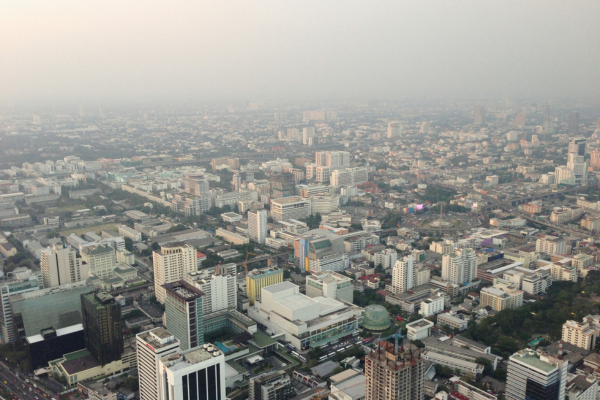
A satellite-based assessment has found that particulate matter (PM) pollution increased by more than 20% across the Indo-Gangetic Plain, Himalayan region and North-East India when compared with the 2000–2009 period. Advertisement






The study, which analysed data from 2000 to 2024, shows a consistent rise in air pollution levels, particularly in the eastern Indo-Gangetic Plain. The increase is mainly driven by carbon-based particles linked to biomass burning activities, including crop residue burning and the use of solid fuels in households.
Researchers observed that the rise in pollution was most significant during the 2010–2019 period. During this time, agricultural residue burning became more widespread in northern and eastern farming belts, while rural dependence on biomass fuels for cooking and heating continued in several regions.
The findings also highlight that North-East India has experienced a gradual increase in particulate pollution. This has been associated with shifting agricultural methods such as slash-and-burn practices along with continued use of traditional biomass-based energy sources in rural areas.
A key observation from the study is the movement of pollution beyond its source regions. Emissions from the Indo-Gangetic Plain are now being transported towards the Himalayan region through atmospheric wind patterns, affecting areas that were previously less exposed to such pollution levels.
The study further notes regional variation in pollution flow. Emissions from Punjab and Delhi have been linked to impacts on the western Himalayas, while pollution from Bihar and West Bengal is associated with increased particulate levels in the eastern Himalayan region.
Past environmental initiatives such as the National Clean Air Programme (NCAP), launched in 2019, have aimed to reduce particulate pollution in urban centres. However, the study indicates that rural biomass burning and agricultural emissions remain key gaps in long-term air quality improvement efforts.
Source PTI

5th Jun, 2025

25th May, 2023

11th May, 2023

27th Apr, 2023
Advertisement









 Facebook
 Whatsapp
