Advertisement






What really powers the cloud? Behind every Google search, A...
A lot of what defines a home isn’t visible at handover. I...
Private equity has played a significant role in shaping Indi...
Luxury real estate is one of the most talked-about segments ...
Airports play a much bigger role than just enabling travel -...
• Indian Railways has approved the INR 993 crore Arakkonam-Chengalpattu doubling project covering nearly 68 km under Southern Railway.
• The project is aimed at easing congestion on Chennai’s suburban rail network while improving punctuality, operational efficiency and train frequency.
• The corridor connects major industrial and manufacturing hubs including Sriperumbudur, Oragadam and Irungattukottai, while also supporting freight movement and the proposed Parandur airport region.
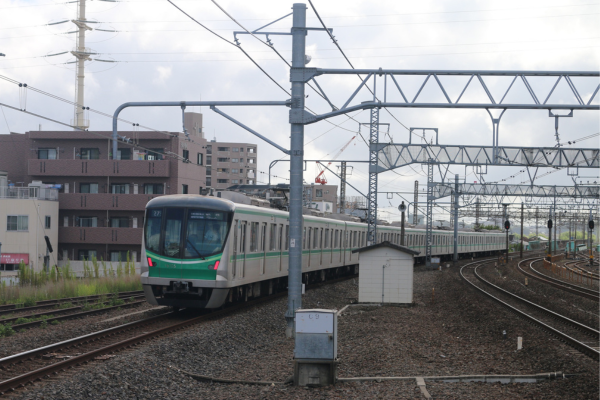
Indian Railways has approved the INR 993 crore Arakkonam-Chengalpattu doubling project under Southern Railway, a major infrastructure upgrade aimed at strengthening Chennai’s suburban rail network and improving operational efficiency along one of Tamil Nadu’s key transport corridors. Advertisement






The approved project involves doubling of the existing 68-km rail section connecting Arakkonam and Chengalpattu, which forms part of the larger Chennai suburban circular rail network linking Chennai Beach, Tambaram, Chengalpattu and Arakkonam. Railway authorities stated that the expansion is intended to address growing traffic pressure and capacity constraints on the existing single-line section.
Union Railway Minister Ashwini Vaishnaw stated that the project would help reduce congestion across the suburban corridor while improving punctuality and overall rail operations. The upgraded line is also expected to support both passenger and freight movement across the region, particularly transportation of commodities such as cement, automobiles, food grains, iron and steel.
Railway officials indicated that the existing rail section is currently operating at high levels of capacity utilisation, with passenger and freight demand expected to rise further in the coming years. The doubling work is expected to reduce detention time for trains, improve operational flexibility and increase the frequency of suburban rail services across the corridor.
The route serves several major industrial and economic clusters including Mahindra World City, Sriperumbudur, Oragadam and Irungattukottai, which collectively house automobile, manufacturing, logistics and industrial operations. The proposed Parandur airport project near Kancheepuram is also located close to the alignment, increasing the strategic importance of the rail corridor for future regional connectivity.
Infrastructure planners have increasingly identified the Chennai suburban rail network as a critical component of urban and regional mobility in Tamil Nadu, particularly as industrial activity and residential growth continue expanding beyond the city core into peripheral economic zones.
The project also forms part of Indian Railways’ broader capacity augmentation and network modernisation initiatives being undertaken across high-density suburban and freight corridors. Doubling projects are aimed at improving line capacity, reducing operational bottlenecks and strengthening connectivity between industrial regions and urban centres.
Railway authorities stated that the Arakkonam-Chengalpattu doubling project is expected to support faster, safer and more reliable transportation services while improving integration between suburban passenger movement and freight operations across southern India’s industrial corridors.
The approval comes amid continued investment in railway infrastructure projects linked to industrial growth centres, logistics movement and urban mobility systems across the country, with suburban rail corridors increasingly being prioritised for expansion and operational upgrades.
Source PIB

5th Jun, 2025

25th May, 2023

11th May, 2023

27th Apr, 2023
Advertisement









 Facebook
 Whatsapp
