Advertisement






What really powers the cloud? Behind every Google search, A...
A lot of what defines a home isn’t visible at handover. I...
Private equity has played a significant role in shaping Indi...
Luxury real estate is one of the most talked-about segments ...
Airports play a much bigger role than just enabling travel -...
The Tamil Nadu Alliance of Resident Welfare Associations (TNARWA) has urged the state government to undertake a transparent statewide audit of property tax assessments for residential and commercial buildings, alleging large-scale tax evasion and manipulation in civic valuation processes. The federation claimed that irregular assessments and under-reporting of property details have resulted in revenue losses amounting to hundreds of crores of rupees for urban local bodies across the state. The organisation has sought inspections of properties linked to elected representatives and politically connected individuals, alongside disciplinary action against officials responsible for alleged lapses in assessment procedures. The demand comes amid concerns over Tamil Nadu’s fiscal position and follows previous allegations of property tax irregularities in certain urban local bodies. TNARWA has also called for the creation of an independent oversight mechanism and a fully digital inspection framework to improve transparency in tax administration.
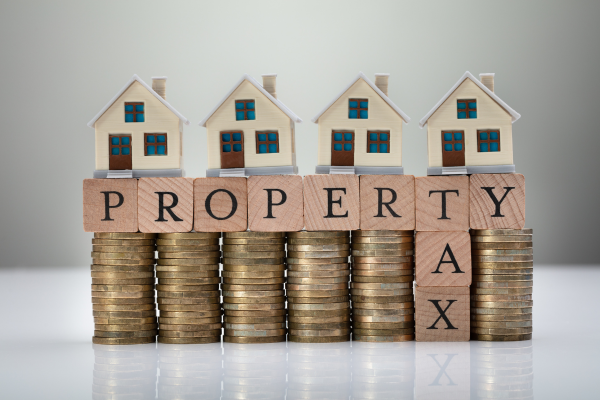
The Tamil Nadu Alliance of Resident Welfare Associations (TNARWA) has called on the state government to initiate a comprehensive statewide audit of property tax assessments for residential and commercial buildings, alleging widespread irregularities in valuation and tax collection practices across urban local bodies. The federation stated in the past week that large-scale property tax evasion and manipulated assessments had resulted in revenue losses running into hundreds of crores of rupees for municipal authorities across Tamil Nadu. Advertisement






According to the association, the proposed audit should cover buildings across corporations, municipalities and town panchayats through a transparent and digitally monitored mechanism. TNARWA president D Neelakannan stated that the state’s worsening financial position and pressure on public expenditure made it necessary to identify revenue leakages linked to property taxation and strengthen collection systems. The federation alleged that property tax assessments in several cases had been manipulated in favour of influential individuals and politically connected property owners over many years.
The association demanded regular inspections of properties owned by MLAs, councillors and other public representatives as part of the proposed verification exercise. It further sought strict action against both tax evaders and revenue officials accused of failing to conduct fair assessments. TNARWA general secretary J M S Nagarjunan stated that building owners found guilty of evasion should be directed to pay double the unpaid tax amount for the previous 10 years, while officials responsible for irregular assessments should face immediate suspension pending inquiry.
The federation has also proposed the formation of an independent expert committee to review previous property tax assessments conducted across the state. According to the association, the committee should include honest government officials, technical experts and civil society representatives instead of relying solely on revenue department personnel. TNARWA stated that a transparent and fully digital inspection process would help reduce political interference, prevent corruption and ensure uniformity in tax administration.
The demand follows growing scrutiny around property tax administration in Tamil Nadu after allegations of under-assessment and revenue losses surfaced in certain civic bodies in recent years. Resident welfare groups argued that discrepancies often arise when commercial buildings are classified as residential properties, additional floors remain unrecorded, or revised built-up areas are not reflected in municipal tax records. The association claimed that such practices had weakened municipal finances and affected the ability of local bodies to fund infrastructure and civic services.
Tamil Nadu revised property tax structures in recent years following recommendations linked to urban local body financing and infrastructure funding requirements. Resident welfare associations, however, stated that any future tax revisions should be accompanied by transparent assessment systems and stricter enforcement against under-reporting and preferential treatment in property valuation.

5th Jun, 2025

25th May, 2023

11th May, 2023

27th Apr, 2023
Advertisement









 Facebook
 Whatsapp
