Advertisement






What really powers the cloud? Behind every Google search, A...
A lot of what defines a home isn’t visible at handover. I...
Private equity has played a significant role in shaping Indi...
Luxury real estate is one of the most talked-about segments ...
Airports play a much bigger role than just enabling travel -...
• Maharashtra inaugurated the 13-km Missing Link section of the Mumbai–Pune Expressway on May 1, reducing travel time between Mumbai and Pune by an estimated 30 to 45 minutes.
• Industry stakeholders stated that the project is expected to accelerate ongoing residential, logistics and commercial expansion across the Mumbai–Pune corridor, particularly in integrated township developments.
• Anex Advisory said the shift towards hybrid work over the past five years has already altered residential demand patterns, with more buyers considering permanent living options beyond Mumbai’s urban core.
• The report highlighted that faster inter-city connectivity, combined with infrastructure projects such as Navi Mumbai International Airport, metro expansion and the Mumbai 3.0 framework, is reshaping regional economic linkages.
• Developers and investors are increasingly viewing the Mumbai–Pune belt as a connected economic ecosystem rather than two separate urban markets, with implications for future real estate value creation.
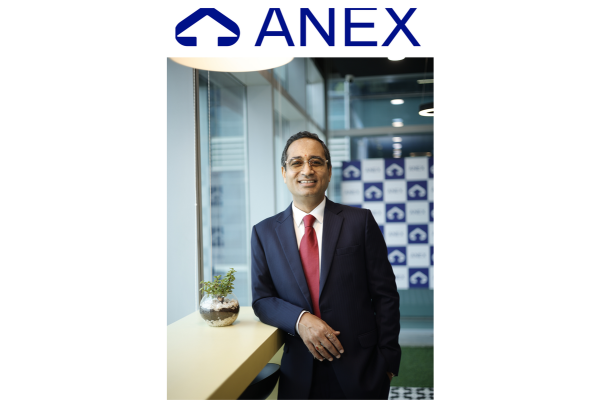
The inauguration of the Missing Link section on the Mumbai–Pune Expressway is expected to accelerate ongoing changes across the Mumbai–Pune real estate and infrastructure corridor, with industry stakeholders pointing towards deeper regional integration between the two urban centres. Advertisement






The 13-km stretch of tunnels and viaducts cutting through the Sahyadri hills was inaugurated by the Maharashtra government on May 1. The new alignment bypasses the existing ghat section on the expressway and is expected to reduce travel time between Mumbai and Pune by approximately 30 to 45 minutes, while improving road safety and freight movement efficiency.
According to Sanjay Daga, Founder and Chief Executive Officer of Anex Advisory, the significance of the project extends beyond improved road connectivity and conventional second-home demand narratives often associated with infrastructure upgrades. He stated that the Mumbai–Pune corridor had already begun transforming over the past several years, driven largely by changing workplace patterns and evolving residential preferences.
The report noted that developers who previously focused on weekend housing and leisure-oriented projects across the corridor are now increasingly developing integrated townships with schools, healthcare facilities, retail infrastructure and mixed-use components. According to Daga, this shift reflects changing buyer behaviour following the widespread adoption of hybrid work arrangements over the past five years.
He stated that reduced dependence on daily office commuting has altered residential decision-making, with more homebuyers willing to consider locations beyond Mumbai’s traditional urban boundaries. In this context, the Missing Link project is expected to accelerate an ongoing transition rather than initiate a new one.
Industry stakeholders stated that faster and more reliable connectivity between Mumbai and Pune could gradually reduce the traditional distinction between the two cities as separate economic centres. Mumbai continues to function as India’s primary financial and corporate hub, while Pune has emerged as a major manufacturing, technology and residential market with comparatively lower land and housing costs.
According to the report, improved travel efficiency may encourage greater movement of professionals, businesses and logistics activity across both cities. This could strengthen demand for residential, warehousing, commercial and mixed-use developments along the broader corridor.
The report also highlighted the wider infrastructure pipeline underway across Maharashtra, including the upcoming Navi Mumbai International Airport, metro rail expansion and the Mumbai 3.0 regional development framework. These projects are expected to improve connectivity across emerging suburban and peripheral growth corridors linked to Mumbai and Pune.
According to Daga, these infrastructure initiatives collectively represent a broader regional transformation rather than isolated upgrades. He stated that the next phase of value creation may emerge from the gradual integration of Mumbai and Pune into a larger interconnected economic geography supported by infrastructure, mobility and decentralised urban expansion.

5th Jun, 2025

25th May, 2023

11th May, 2023

27th Apr, 2023
Advertisement









 Facebook
 Whatsapp
