Advertisement










Private equity has played a significant role in shaping Indi...
In today’s real estate landscape, fitness is often treated...
In this episode of Prop Personalities, we sit down with Hars...
Luxury real estate is one of the most talked-about segments ...
Welcome to Prop Personalities by Prop News Time - a podcast ...
The Mumbai Metropolitan Region Development Authority (MMRDA) has introduced a participatory land acquisition framework for the planned Mumbai 3.0 project, covering over 323.44 sq km across Raigad district. The policy offers landowners multiple options, including consent-based acquisition, development rights compensation, and a land pooling model with 22.5% developed land return. Linked to the Atal Setu corridor, the initiative aims to promote planned urban expansion and infrastructure-led growth. Landowners will be able to submit consent through an online system starting April 27, 2026, marking a shift towards more inclusive and transparent development practices.
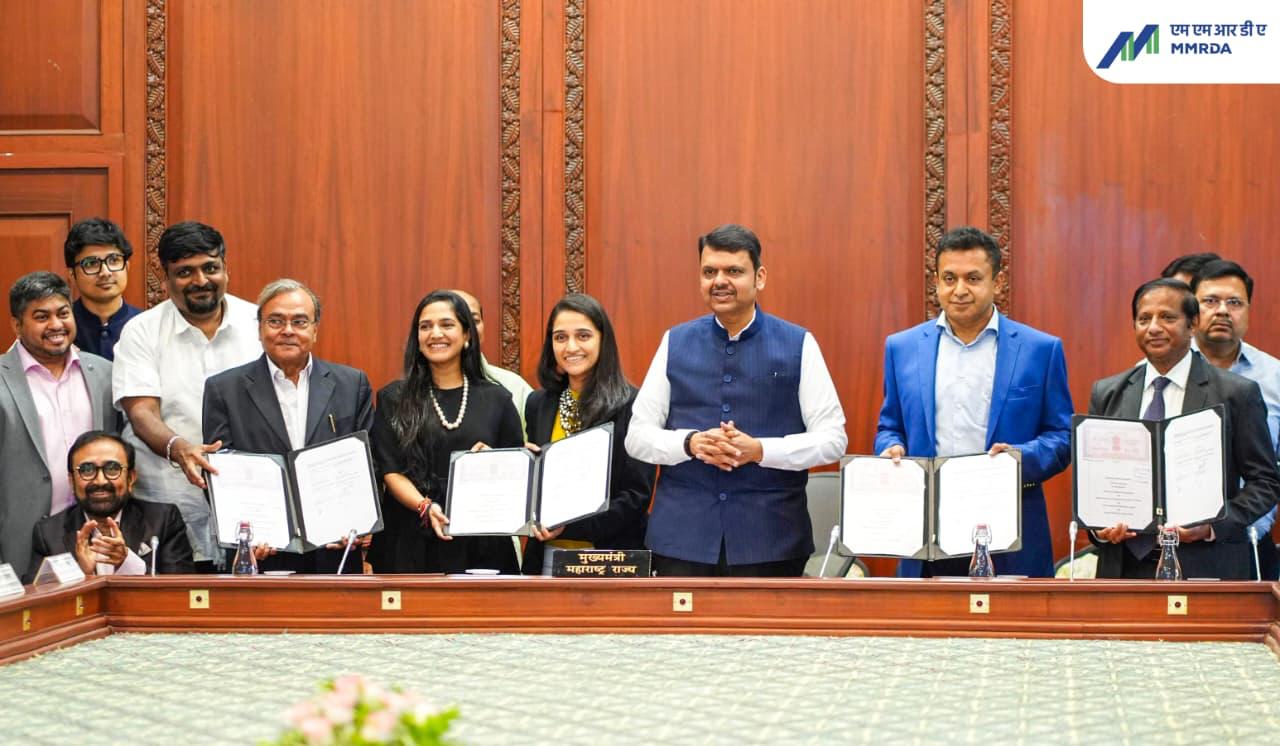
The Mumbai Metropolitan Region Development Authority (MMRDA) has introduced a participatory land acquisition framework as part of its Mumbai 3.0 vision, covering a large area in Raigad district. The authority has been appointed as the New Town Development Authority for around 323.44 sq km spread across 124 villages in Uran, Panvel and Pen talukas. The development falls within the influence zone of the Atal Bihari Vajpayee Sewri–Nhava Sheva Atal Setu, which has significantly improved regional connectivity. Advertisement


The move follows a government resolution issued in the past month, which laid out a revised land acquisition and pooling policy. This policy moves away from traditional acquisition methods and focuses on giving landowners a more active role in the development process.
Under the new framework, landowners have been given multiple options. One option allows acquisition through mutual consent, where compensation is decided through agreement under provisions of the Maharashtra Regional and Town Planning Act, 1966. Another option offers compensation in the form of development rights such as Floor Space Index (FSI) or Transferable Development Rights (TDR), along with additional incentives where applicable.
The third option is a land pooling model, where landowners can exchange undeveloped land for developed plots. In this model, 22.5% of developed land will be returned to landowners. Those from Uran and Panvel talukas will receive developed land in Uran, while landowners from Pen taluka will receive their share within Pen.
The authority has stated that this approach is intended to ensure that landowners are not only compensated but also benefit from the long-term value created through planned urbanisation.
MMRDA’s Metropolitan Commissioner Dr. Sanjay Mukherjee said that the planning approach for Mumbai 3.0 is based on people-centric development. He stated that the authority is offering multiple choices to landowners so they can decide what works best for them, and added that the success of the project will depend on voluntary participation and public confidence in the process.
The NTDA initiative is expected to support large-scale urban expansion in the Mumbai Metropolitan Region, especially in areas beyond the core city. Improved connectivity through the Atal Setu corridor is seen as a key factor in enabling this growth.
The authority has outlined that the project aims to create a planned urban ecosystem, promote balanced regional development, and accelerate infrastructure-led growth. It also aims to ensure faster and more efficient project execution compared to traditional models.
As part of the process, landowners will be able to submit their consent through an online system starting April 27, 2026. Required documents will include Aadhaar details and land records, indicating a move towards a more streamlined and transparent process.
This initiative builds on earlier land pooling efforts seen in parts of India, such as in Gujarat and Andhra Pradesh, where similar models were used to reduce disputes and improve stakeholder participation. However, this is among the first large-scale attempts in the Mumbai Metropolitan Region to formally integrate such an approach.

5th Jun, 2025

25th May, 2023

11th May, 2023

27th Apr, 2023
Advertisement





 Facebook
 Whatsapp
