Advertisement






What really powers the cloud? Behind every Google search, A...
A lot of what defines a home isn’t visible at handover. I...
Private equity has played a significant role in shaping Indi...
Luxury real estate is one of the most talked-about segments ...
Airports play a much bigger role than just enabling travel -...
CIDCO has appointed a joint venture of RITES Ltd and Creative Group LLP to carry out a six-month techno-commercial feasibility study for a proposed third runway at Navi Mumbai International Airport. The study will examine technical, operational, environmental and financial aspects of expansion. The move is part of long-term planning to meet rising air traffic demand in the Mumbai Metropolitan Region, where passenger numbers are expected to grow significantly over the next two decades, putting pressure on existing airport infrastructure.
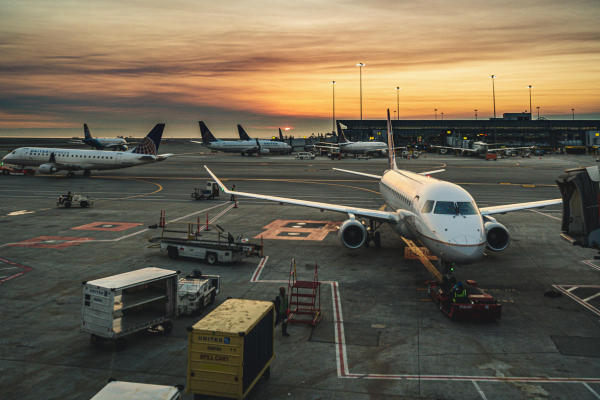
The City and Industrial Development Corporation (CIDCO) has appointed a joint venture between RITES Ltd and Creative Group LLP to conduct a techno-commercial feasibility study for a third runway at Navi Mumbai International Airport (NMIA). The study is expected to be completed within six months and will assess technical feasibility, operational efficiency, environmental impact and financial viability of adding another runway. Advertisement






A review meeting was recently held under CIDCO Vice-Chairman and Managing Director Vijay Singhal, with senior officials and representatives from both firms present. During the meeting, Singhal indicated that the airport had been planned as a long-term infrastructure asset and that early planning for expansion was necessary to meet future aviation demand. He conveyed that appointing a consultant was part of a forward-looking approach and that an additional runway could help improve capacity and overall efficiency of operations.
Navi Mumbai International Airport is being developed as one of India's largest greenfield airport projects, spread across about 1,160 hectares. The airport is designed with two parallel runways and four passenger terminals to be developed in phases. Once fully operational, it is expected to handle around 90 million passengers annually along with significant cargo traffic of about 3.2 million tonnes per year.
The project is planned to function as part of a dual-airport system along with Mumbai's Chhatrapati Shivaji Maharaj International Airport, which currently handles most of the city's air traffic. Together, both airports are expected to cater to around 150 million passengers annually in the near term, helping ease congestion at the existing airport.
Passenger traffic in the Mumbai Metropolitan Region is projected to grow sharply in the coming years. Estimates suggest demand could reach about 150 million passengers annually by 2040 and further increase to nearly 240 million annually between 2047 and 2050. With the region's population already exceeding 20 million, infrastructure agencies have been working on long-term capacity planning to avoid future constraints.
CIDCO had initiated the process earlier by inviting bids through an e-tender to appoint a consultant for this study. The feasibility report is expected to provide clarity on expansion requirements, possible runway alignment, land use considerations and operational impact, which will help in future decision-making.
In addition to expanding NMIA, there have also been discussions around developing another airport at Vadhavan to manage long-term demand. However, strengthening capacity at Navi Mumbai remains a near-term priority, given its strategic role in supporting Mumbai's aviation needs once operations begin.

5th Jun, 2025

25th May, 2023

11th May, 2023

27th Apr, 2023
Advertisement









 Facebook
 Whatsapp
