Advertisement






What really powers the cloud? Behind every Google search, A...
A lot of what defines a home isn’t visible at handover. I...
Private equity has played a significant role in shaping Indi...
Luxury real estate is one of the most talked-about segments ...
Airports play a much bigger role than just enabling travel -...
Traffic on the Mumbai Coastal Road has grown nearly seven times in under two years, with average daily usage now crossing 63,000 vehicles. The corridor has handled over 3.16 crore vehicles since opening and has become a key route for South Mumbai commuters due to major travel time savings. Growth picked up after full access and 24-hour operations were introduced. While the road has reduced congestion in some areas, experts point out that benefits are still largely limited to private vehicles, indicating the need for better public transport integration.
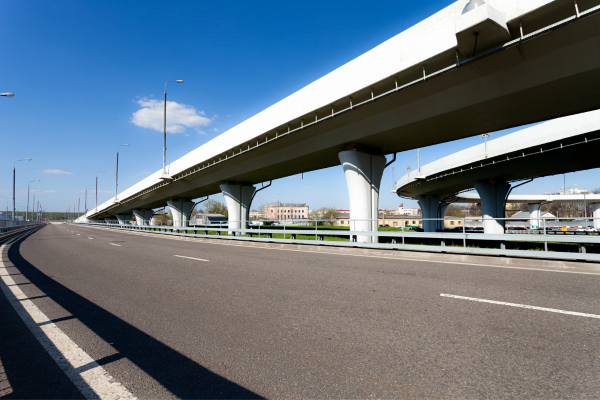
Traffic on the Mumbai Coastal Road has seen a sharp increase since it became operational, with daily vehicle movement rising from around 8,787 in the initial phase to about 63,000 at present. The corridor, which opened in March 2024, has gradually become a preferred route for commuters travelling between Marine Drive and Worli due to its signal-free design and faster connectivity. Advertisement






The project has recorded a cumulative traffic volume of more than 3.16 crore vehicles so far. Built at a cost of INR 13,893 crore, the road has significantly reduced travel time between key South Mumbai stretches to under 10 minutes, compared to the earlier 30-40 minutes through internal roads. This time efficiency has been a major factor behind the steady rise in usage.
In the initial months after opening, traffic growth was moderate, with the first full month recording close to 14,500 daily trips. However, volumes increased consistently as more sections were opened to the public and awareness improved among daily commuters. In the past month, total traffic reached nearly 18.9 lakh vehicles, showing strong and sustained adoption of the corridor.
A key shift in usage patterns was seen after the road was made operational round the clock in August 2025. At that stage, daily traffic had already reached around 46,000 vehicles. The introduction of 24-hour access, along with improved entry and exit points and the opening of the promenade, encouraged more users to shift to the coastal route for regular travel rather than occasional use.
Urban planners have noted that the coastal road, along with ongoing metro developments, has started to change mobility patterns in South Mumbai by offering a faster alternative to congested internal roads. However, they indicated that the current benefits are largely limited to private car users and taxi operators. Experts suggested that adding more BEST bus services on this stretch could improve accessibility and ensure that a larger section of the population benefits from the infrastructure.
There are also concerns regarding earlier traffic projections. A detailed project report prepared in 2016 had estimated an annual traffic growth of about 2 per cent across different vehicle categories. However, two-wheelers are currently not permitted on the coastal road, which may impact these projections and overall usage patterns in the long term.
At the local level, the project has delivered mixed outcomes. Residents have observed reduced congestion on key stretches such as Pedder Road, particularly near areas like Jaslok Hospital. At the same time, certain junctions near interchanges, including Breach Candy, have started experiencing fresh congestion due to merging traffic from the coastal road.
The nature of traffic has also evolved over time. Initial usage included a large number of recreational drives, but this has reduced significantly. The road is now mainly used by regular office commuters, indicating a shift towards functional, daily use rather than novelty-driven traffic.
Advertisement













 Facebook
 Whatsapp
