Advertisement






What really powers the cloud? Behind every Google search, A...
A lot of what defines a home isn’t visible at handover. I...
Private equity has played a significant role in shaping Indi...
Luxury real estate is one of the most talked-about segments ...
Airports play a much bigger role than just enabling travel -...
The Union government has begun identifying households holding both liquefied petroleum gas (LPG) and piped natural gas (PNG) connections to enforce a recent regulatory amendment prohibiting dual ownership. The move, notified under the Liquefied Petroleum Gas (Regulation of Supply and Distribution) Order, 2000, requires consumers with PNG access to surrender domestic LPG connections. More than 43,000 such connections have already been relinquished, though officials expect higher compliance. The policy aims to prioritise subsidised LPG supply for households without piped gas access, amid constraints driven by global energy disruptions. The decision follows supply pressures linked to geopolitical developments in West Asia, which have impacted India’s imports of crude oil, natural gas and LPG, prompting the government to rationalise allocation and limit fresh LPG connections.
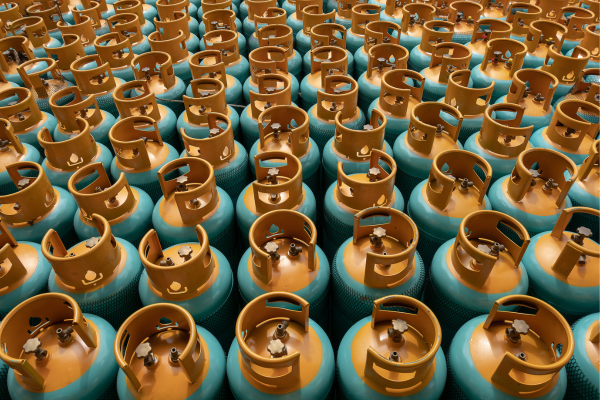
The Union government has initiated a process to identify households holding both liquefied petroleum gas (LPG) and piped natural gas (PNG) connections, as it implements a regulatory amendment prohibiting dual ownership in order to prioritise subsidised cooking gas supply. The measure follows a notification issued earlier in the past month by the Ministry of Petroleum and Natural Gas under the Liquefied Petroleum Gas (Regulation of Supply and Distribution) Order, 2000. Advertisement






Under the revised framework, households with access to piped natural gas are required to surrender their domestic LPG connections and are no longer eligible to obtain or refill subsidised LPG cylinders. The amendment also restricts government oil companies and their distributors from issuing new LPG connections or supplying refills to consumers who already have a PNG connection.
According to officials, an assessment is currently underway to determine the number of households with dual connections. The Joint Secretary in the Ministry of Petroleum and Natural Gas indicated during a recent inter-ministerial briefing that more than 43,000 LPG connections had been surrendered by consumers who also had access to piped gas. The official noted that this figure remained relatively low compared to expectations, suggesting that further compliance is anticipated as enforcement continues.
The policy intervention is aimed at ensuring that subsidised LPG supplies are directed towards households without access to piped gas infrastructure. By limiting dual usage, the government intends to rationalise distribution and reduce potential misuse of subsidised fuel.
The decision comes amid supply constraints linked to global energy market disruptions. India remains heavily dependent on imports, sourcing approximately 88% of its crude oil, 50% of its natural gas and around 60% of its LPG requirements from overseas markets. A significant proportion of these imports has traditionally come from West Asian countries, including Saudi Arabia and the United Arab Emirates.
Recent geopolitical developments in the region, including disruptions affecting key transit routes such as the Strait of Hormuz, have impacted the availability of energy supplies. While crude oil imports have been partially diversified through sourcing from alternative markets such as Russia, supply constraints have persisted in natural gas and LPG segments.
As a result, gas supplies to industrial consumers have been curtailed, and availability of LPG for commercial establishments, including hotels and restaurants, has been reduced. In parallel, the government has also limited the issuance of new domestic LPG connections to manage supply availability.
The enforcement of the dual-connection ban forms part of a broader set of measures aimed at maintaining supply stability and ensuring equitable distribution of cooking fuel. By prioritising households without access to PNG infrastructure, the government seeks to address supply-demand imbalances while responding to evolving global energy conditions.
Source - PTI

5th Jun, 2025

25th May, 2023

11th May, 2023

27th Apr, 2023
Advertisement









 Facebook
 Whatsapp
