Advertisement






What really powers the cloud? Behind every Google search, A...
A lot of what defines a home isn’t visible at handover. I...
Private equity has played a significant role in shaping Indi...
Luxury real estate is one of the most talked-about segments ...
Airports play a much bigger role than just enabling travel -...
Tata Power Renewable Energy Limited (TPREL), a subsidiary of Tata Power, has approved an investment of up to INR 6,500 crore to establish a photovoltaic (PV) ingot and wafer manufacturing facility with a planned capacity of up to 10 GW. The project, to be developed in two phases of 5 GW each, marks the company’s entry into upstream solar manufacturing. The initiative is aimed at strengthening backward integration, reducing reliance on imports, and supporting domestic solar supply chains. The move comes amid policy emphasis on localisation of solar manufacturing, including upcoming regulatory requirements under approved list mechanisms. The company expects the project to enhance supply security for its downstream operations while improving operational efficiencies and supporting long-term growth in renewable energy capacity.
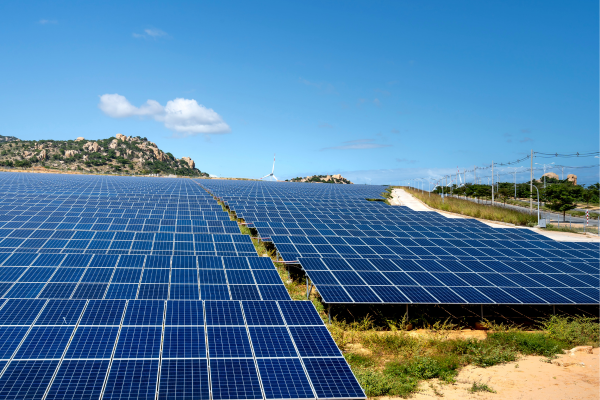
Tata Power Renewable Energy Limited (TPREL), a subsidiary of Tata Power, has approved an investment of up to INR 6,500 crore to set up a photovoltaic (PV) ingot and wafer manufacturing facility with a capacity of up to 10 GW, marking its entry into upstream solar manufacturing as part of a broader strategy to strengthen integration across the solar value chain. The proposal was cleared by the company’s board earlier in the past week, according to a regulatory filing. Advertisement






The proposed facility will be developed in two phases of 5 GW each and will focus on the production of PV ingots and wafers, which are critical raw materials used in the manufacturing of solar cells and modules. The company indicated that this segment forms a key part of the solar ecosystem, supplying essential inputs required for downstream renewable energy infrastructure.
The investment is intended to support backward integration within Tata Power’s renewable energy operations, enabling greater control over supply chains and reducing dependence on imports. Currently, a significant portion of global supply in this segment is dominated by manufacturers in China, making domestic capacity expansion a strategic priority for Indian developers.
The company stated that the move aligns with India’s policy focus on increasing self-reliance in solar manufacturing, particularly in light of regulatory measures such as the Approved List of Models and Manufacturers (ALMM) framework, which encourages domestic sourcing. By entering the ingot and wafer segment, the company aims to position itself within a capacity-constrained domestic market and benefit from anticipated demand growth.
In addition to supply chain advantages, the project is expected to support improved margins through vertical integration, allowing the company to capture value across multiple stages of solar manufacturing. The company also indicated that the project could provide an early-mover advantage in a segment where domestic capacity remains limited.
Financially, the investment is projected to deliver returns supported by operational efficiencies and demand visibility, with an estimated payback period of approximately five years. The company highlighted that the facility would also contribute to strengthening supply security for its downstream solar projects, which include large-scale renewable energy developments.
The proposed expansion comes at a time when India is scaling up its renewable energy capacity, with solar power playing a central role in meeting national energy targets. Domestic manufacturing of key components such as ingots and wafers is expected to be critical in reducing import dependence and ensuring continuity of supply amid global market fluctuations.
TPREL’s entry into upstream manufacturing reflects a broader trend among integrated energy companies to expand across the value chain, combining generation capacity with manufacturing capabilities. The project is also expected to align with government incentives aimed at boosting local manufacturing and supporting the growth of the renewable energy sector.
Source - PTI

5th Jun, 2025

25th May, 2023

11th May, 2023

27th Apr, 2023
Advertisement









 Facebook
 Whatsapp
