Advertisement




Private equity has played a significant role in shaping Indi...
In today’s real estate landscape, fitness is often treated...
In this episode of Prop Personalities, we sit down with Hars...
Luxury real estate is one of the most talked-about segments ...
Welcome to Prop Personalities by Prop News Time - a podcast ...
The inauguration of the 590+ km Ganga Expressway in the past week is expected to influence real estate activity across Uttar Pradesh and NCR-linked regions by improving connectivity and enabling industrial expansion. The corridor is likely to support logistics efficiency, reduce travel time, and attract investment into emerging micro-markets. Industry stakeholders indicated that locations along the Yamuna Expressway, Greater Noida, and adjoining belts could see increased demand, with near-term price appreciation estimated at 8–12% over the next 12–18 months. The project is also expected to accelerate development across tier-2 and tier-3 cities, supported by planned industrial clusters and infrastructure rollout.
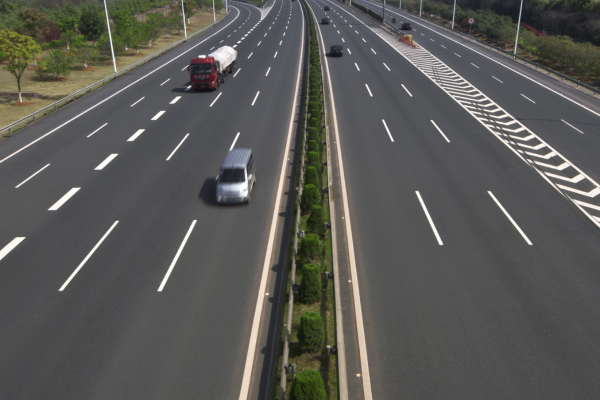
The Ganga Expressway, spanning over 590 km, was inaugurated in the past week, strengthening connectivity across western and central Uttar Pradesh and linking key industrial, agricultural, and logistics hubs. The infrastructure project is expected to influence real estate demand patterns across NCR-linked corridors by reducing travel time, improving freight movement, and enabling large-scale industrial development along the route. Advertisement


The expressway is designed to function as a major economic corridor, with implications for both residential and commercial real estate markets. Improved connectivity is expected to support demand across emerging micro-markets, particularly those located along the Yamuna Expressway, Greater Noida, and adjoining regions benefiting from access to the new corridor.
Industry stakeholders indicated that the proposed linkage between the Ganga Expressway and the Yamuna Expressway could extend the existing growth corridor of the National Capital Region, creating a continuous east–west connectivity spine. Vishal Sabharwal, vice president – sales at Orris Group, stated that this integration is expected to strengthen long-term value potential for both investors and end-users, supported by improved accessibility and expansion of demand catchments. He added that the presence of the upcoming Noida International Airport would further enhance the attractiveness of the corridor.
Market participants also noted that the project could influence capital allocation trends within NCR real estate. Ashish Narain Agarwal, founder and managing director of PropertyPistol, observed that improved logistics efficiency and faster freight movement are likely to support industrial and warehousing investments along the corridor, with a direct impact on land values. He indicated that demand is gradually shifting from Delhi towards Noida and peripheral micro-markets, where lower entry costs and infrastructure-led growth are attracting investors.
The corridor is also expected to accelerate development timelines across Uttar Pradesh’s tier-2 and tier-3 cities. Vishal Raheja, founder and managing director of InvestoXpert Advisors, stated that the expressway could act as a structural catalyst for real estate growth by strengthening multi-city connectivity and supporting industrial expansion. He noted that with over INR 47,000 crore in investment proposals and more than 6,500 acres allocated for industrial clusters, development timelines in surrounding regions could compress from 15–20 years to approximately 7–10 years.
In the near term, stakeholders estimate that well-connected locations along the corridor could witness price appreciation of 8–12% over the next 12–18 months, particularly in plotted developments and mid-income housing segments. This is expected to be supported by a reduction in logistics costs of around 15–20% and the expansion of demand from NCR into adjoining regions.
The expressway is also expected to support the transition of semi-urban areas into structured residential and commercial hubs, driven by infrastructure investment and increasing private sector participation. As connectivity improves, emerging nodes along the corridor are likely to see increased activity across industrial, warehousing, and residential segments, reflecting a broader shift towards infrastructure-led real estate development.

5th Jun, 2025

25th May, 2023

11th May, 2023

27th Apr, 2023
Advertisement





 Facebook
 Whatsapp
