Advertisement










In this episode of Prop Personalities, we sit down with Hars...
Luxury real estate is one of the most talked-about segments ...
Welcome to Prop Personalities by Prop News Time - a podcast ...
Airports play a much bigger role than just enabling travel -...
Why does the same hotel brand operate multiple properties in...
The Andhra Pradesh government has launched a large-scale energy efficiency initiative under the Pradhan Mantri Awas Yojana (PMAY), covering five lakh households in its first phase. Implemented through a tripartite agreement between Andhra Pradesh State Housing Corporation Limited (APSHCL), Energy Efficiency Services Limited (EESL), and AP SEEDCO, the programme will replace conventional electrical fixtures with energy-efficient appliances in affordable housing units. The initiative, formalised in the past week, aims to reduce electricity consumption, lower household expenses, and cut carbon emissions. It also aligns with the state's broader objective of delivering sustainable housing to all eligible beneficiaries by 2029 while improving energy performance across mass housing stock.
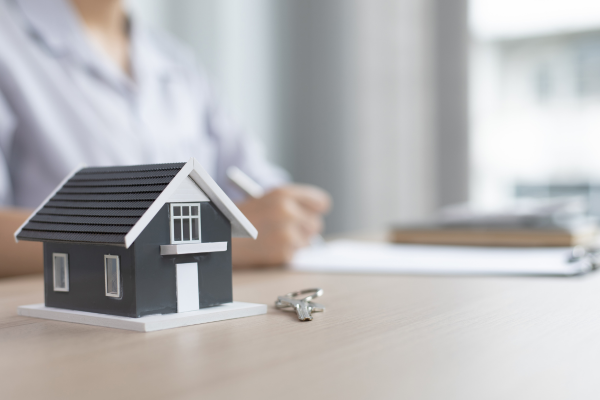
The Andhra Pradesh government, through the Andhra Pradesh State Housing Corporation Limited (APSHCL), has initiated a large-scale energy efficiency programme for homes built under the Pradhan Mantri Awas Yojana (PMAY), targeting five lakh beneficiaries in the first phase. The initiative, formalised in the past week through a tripartite memorandum of understanding with Energy Efficiency Services Limited (EESL) and AP SEEDCO, seeks to integrate energy-efficient systems into affordable housing across the state. Advertisement


The agreement, originally signed during India Energy Week 2026 in Goa, was formally exchanged at Naidupeta in Tirupati district in the presence of Chief Minister N Chandrababu Naidu and senior state officials. The programme is designed to replace conventional electrical fixtures in PMAY homes with energy-efficient, star-rated appliances, with the objective of improving household energy consumption patterns and reducing long-term utility costs.
Under the scheme, each housing unit will be equipped with energy-efficient appliances such as LED bulbs, LED tube lights and brushless direct current (BLDC) ceiling fans. Officials indicated that this transition is expected to reduce connected load per household by more than half, bringing down electricity consumption significantly. Annual consumption per household is projected to decline from over 1,000 units to around 457 units, translating into estimated savings of approximately INR 3,300 per household each year.
The initiative is also expected to contribute to environmental targets, with each household estimated to reduce carbon dioxide emissions by approximately 456 kg annually. In addition to household-level benefits, authorities have indicated that the programme could ease pressure on the state's power distribution network by lowering peak demand and improving grid stability.
State officials have positioned the programme as part of a broader policy push towards sustainable development under the Integrated Clean Energy Policy 2024. The Chief Minister conveyed that the government intends to provide permanent housing to all eligible households by 2029 while ensuring that such housing incorporates energy-efficient features. The administration indicated that the initiative aligns with national objectives of promoting energy conservation and reducing the environmental impact of urbanisation.
Senior officials associated with the programme stated that the adoption of energy-efficient appliances would improve living standards for beneficiaries by reducing electricity expenses and enhancing indoor comfort. Representatives from EESL noted that the scale of implementation positions Andhra Pradesh among the leading states in integrating sustainability measures within affordable housing.
The programme reflects an increasing policy focus on embedding energy efficiency within mass housing schemes, particularly in states with large-scale affordable housing pipelines. By combining housing delivery with energy interventions, the initiative seeks to address both affordability and sustainability considerations within the residential sector.

5th Jun, 2025

25th May, 2023

11th May, 2023

27th Apr, 2023
Advertisement





 Facebook
 Whatsapp
