Advertisement










Private equity has played a significant role in shaping Indi...
In today’s real estate landscape, fitness is often treated...
In this episode of Prop Personalities, we sit down with Hars...
Luxury real estate is one of the most talked-about segments ...
Welcome to Prop Personalities by Prop News Time - a podcast ...
The Prime Minister's Office (PMO) has raised concerns over deficiencies in dust control and waste management measures in Delhi, directing civic and infrastructure agencies to address gaps or face action. The issue was reviewed at a high-level meeting of the Implementation Committee for Control of Air Pollution, where shortcomings in road dust management, construction waste removal, and grievance redressal systems were highlighted. Agencies including the Municipal Corporation of Delhi (MCD) and Delhi Metro Rail Corporation (DMRC) were instructed to strengthen enforcement and submit action taken reports. The review also flagged operational constraints such as limited mechanised sweeping and inefficiencies in complaint handling systems, indicating increased oversight of urban environmental compliance.
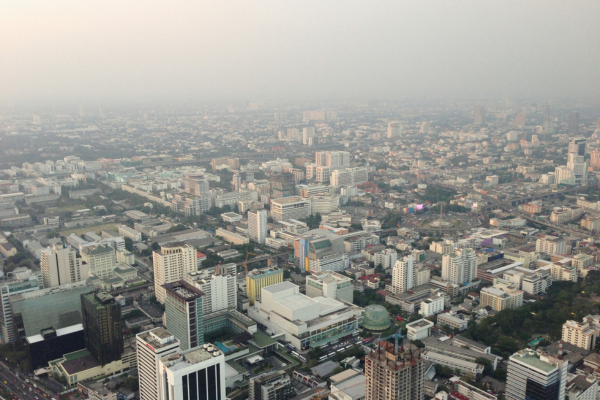
The Prime Minister's Office (PMO) has flagged deficiencies in Delhi's dust mitigation measures in recent days, warning of disciplinary action against officials if corrective steps are not implemented, as concerns over road dust, construction debris, and weak enforcement continue to affect air quality management in the capital. Advertisement


The issue was reviewed during a meeting of the Implementation Committee for Control of Air Pollution (ICCAP), chaired by the Delhi chief secretary, where observations from a recent PMO review were discussed with senior officials from multiple civic and infrastructure agencies. The review highlighted persistent gaps in dust control, particularly in the removal of construction and demolition (C&D) waste from roadsides and vacant plots, which remain a major contributor to particulate pollution.
Officials from the Municipal Corporation of Delhi (MCD) informed the committee that clearance of waste was being undertaken on an accelerated basis, with instructions issued to district-level officers to enforce compliance more strictly. However, operational challenges were also identified, including limited deployment of mechanised sweeping in residential areas, constraints in handling waste at Fixed Compactor Transfer Stations (FCTS), and logistical difficulties in accessing narrow urban lanes with heavy machinery.
The review also drew attention to inefficiencies in public grievance redressal systems. Concerns were raised over delays and repeated transfers of complaints within the MCD's 311 application, prompting directions to streamline processes and ensure that complaints are assigned directly to the responsible agency without unnecessary routing.
Construction-related dust, particularly around infrastructure and metro project sites, was identified as another area requiring immediate attention. The Delhi Metro Rail Corporation (DMRC) and MCD were instructed to improve dust suppression measures and demonstrate compliance through documented evidence, including photographic submissions.
In addition, the handling of waste during transportation to landfill sites was flagged as a concern, with reports of spillage contributing to roadside dust accumulation. Authorities were advised to strengthen containment systems at transfer stations, including increasing the number of waste capsules to prevent overflow during transit.
The committee also directed district officials to certify that no polluting industrial units were operating within their jurisdictions, with the Delhi Pollution Control Committee (DPCC) tasked with verification and enforcement action against violations. This step is aimed at strengthening accountability across administrative levels and ensuring compliance with environmental regulations.
As part of broader enforcement measures, departments have been instructed to adhere strictly to decisions under the Dust-Free Delhi campaign and submit regular action taken reports to central ministries, including the Ministry of Housing and Urban Affairs and the Ministry of Home Affairs. The emphasis on measurable outcomes and reporting reflects a more structured oversight mechanism.
The intervention underscores increasing scrutiny of urban environmental management, particularly in relation to construction activity and municipal services, with authorities focusing on strengthening execution and accountability across agencies responsible for air quality control.

5th Jun, 2025

25th May, 2023

11th May, 2023

27th Apr, 2023
Advertisement





 Facebook
 Whatsapp
