Advertisement






What really powers the cloud? Behind every Google search, A...
A lot of what defines a home isn’t visible at handover. I...
Private equity has played a significant role in shaping Indi...
Luxury real estate is one of the most talked-about segments ...
Airports play a much bigger role than just enabling travel -...
The 11th ET Edge GCC Summit 2026 in Bengaluru showcased how India's Global Capability Centers are evolving into AI-driven strategic hubs. Leaders highlighted GCCs transition from operational units to centers of enterprise intelligence, focusing on talent, innovation, startup collaboration, cybersecurity, workplace design, and sustainability. Real estate and policy clarity are supporting this growth, while Bengaluru remains central to India's GCC ecosystem. The summit reinforced that the next phase of GCC success will depend on effectively integrating technology, human capital, and strategy to drive enterprise value and global competitiveness.
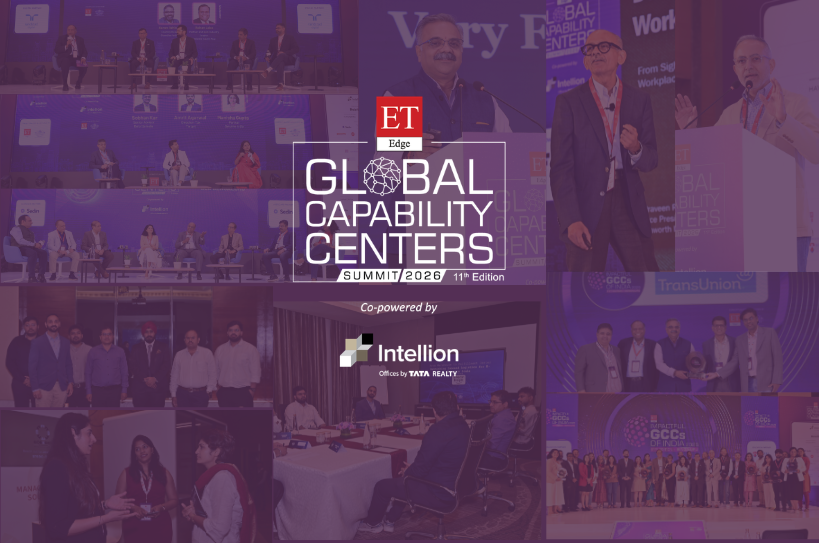
Bengaluru hosted the 11th edition of the ET Edge GCC Summit 2026, co-powered by Intellion Offices by Tata Realty, marking a significant point in India's Global Capability Center (GCC) journey. As businesses increasingly move toward AI-first, data-driven strategies, the summit brought together GCC CEOs, policymakers, technologists, and ecosystem partners to explore how these centers are evolving into strategic hubs of innovation, resilience, and enterprise intelligence. With India hosting over 1,700 GCCs employing nearly two million professionals, the discussions emphasized that these centers have become critical drivers of global business transformation rather than mere operational extensions. Advertisement






The summit highlighted how GCC leadership is shifting in an AI-led enterprise landscape. Experts noted that GCCs have evolved through three phases, moving from efficiency-focused operations to strategic centers that influence enterprise decision-making. Leaders now need to guide products, platforms, and enterprise intelligence while combining the right capabilities with technology to deliver meaningful, sustained value. Talent continues to be the key differentiator, with GCCs leveraging deep domain expertise to generate measurable business outcomes and foster continuous innovation.
Real estate has emerged as a strategic enabler of GCC growth, with India's centers occupying nearly 200 million square feet of office space. Organizations are increasingly focusing on high-quality, future-ready workplaces that support collaboration, innovation, and operational resilience. The summit also highlighted the growing collaboration between GCCs and India's startup ecosystem. With over 100,000 startups in the country, these partnerships are accelerating product development, improving efficiency, and providing startups access to enterprise scale and global markets.
The design of GCC workplaces is changing to support hybrid work and technology-driven collaboration. Dynamic workspaces are replacing static layouts, prioritizing employee experience, agility, and productivity. Cybersecurity, meanwhile, has shifted from reactive compliance to proactive governance, as GCCs manage global platforms, sensitive data, and cloud ecosystems, making resilience and risk management a strategic priority.
AI adoption is now central to enterprise transformation. Leaders noted a clear move from experimental projects to full-scale deployment, embedding AI into business processes, product development, and decision-making frameworks. The ability to translate data into actionable insights is becoming a critical differentiator, with success dependent on data readiness, business alignment, and scalable implementation models. Sustainability is also gaining prominence, with organizations embedding ESG principles into infrastructure, energy use, workforce practices, and operations. Younger professionals are driving this cultural shift, leading to scalable, efficient, and environmentally responsible GCC campuses.
Talent remains the core of growth in India's GCC ecosystem. The 4Cs cost, capability, culture, and continuity are seen as the foundation for resilient organizations. With nearly two million professionals and approximately 20 new GCCs being established each month, leadership pipelines, continuous learning, and integration of human talent with emerging technologies like AI are critical for future growth. Policy clarity, including improved tax regulations, evolving transfer pricing norms, and state-level incentives, has strengthened India's position as a preferred GCC destination. Bengaluru continues to play a central role, hosting over 880 centers and accounting for nearly 42 percent of India's GCC office leasing, while serving as a hub for enterprise innovation and transformation.
The summit concluded with the understanding that GCCs are no longer defined solely by efficiency or scale. They are strategic centers shaping enterprise intelligence, innovation, and global competitiveness. Integration of technology with talent, alignment of strategy with execution, and resilience across operations will determine the GCCs that lead in the future. The next edition of the summit is scheduled in Mumbai, where global leaders, policymakers, and ecosystem partners will continue discussions on enterprise value creation, collaboration, and the evolving role of GCCs in driving business transformation.

5th Jun, 2025

25th May, 2023

11th May, 2023

27th Apr, 2023
Advertisement









 Facebook
 Whatsapp
