Advertisement










Private equity has played a significant role in shaping Indi...
In today’s real estate landscape, fitness is often treated...
In this episode of Prop Personalities, we sit down with Hars...
Luxury real estate is one of the most talked-about segments ...
Welcome to Prop Personalities by Prop News Time - a podcast ...
ChargeZone has announced plans to deploy more than 1,000 electric vehicle (EV) supercharging stations across key national highway corridors by FY27, targeting long-distance and intercity mobility demand. The rollout will follow a dealer-owned, company-operated (DOCO) model, enabling private investors and landowners to fund infrastructure while the company manages operations. The stations will have capacities ranging from 500 kW to 1.5 MW, catering to both passenger vehicles and commercial fleets. The expansion will cover major routes such as Delhi-Mumbai, Bengaluru-Hyderabad, and Mumbai-Hyderabad, supported by a financing partnership with State Bank of India. The initiative aligns with India's broader push to strengthen EV infrastructure beyond urban centres.
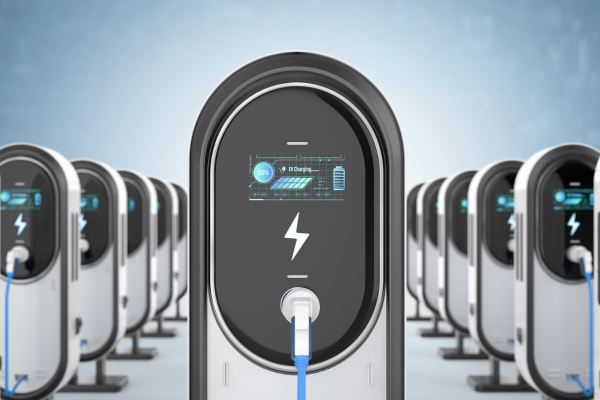
ChargeZone has outlined plans to establish more than 1,000 electric vehicle (EV) supercharging stations across key national highway corridors by FY27, aiming to address gaps in long-distance charging infrastructure as EV adoption expands beyond urban markets. The proposed rollout, announced in recent days, will target major intercity routes including Delhi-Mumbai, Bengaluru-Hyderabad, Mumbai-Hyderabad, Delhi-Chandigarh, and Bengaluru-Chennai. Advertisement


The company intends to implement the expansion through a dealer-owned, company-operated (DOCO) model, under which private investors, landowners, and businesses will finance the charging stations, while ChargeZone will oversee development, commissioning, and operational management. This structure is designed to broaden participation in EV infrastructure development while maintaining standardised operations across the network.
Each charging station is expected to be equipped with high-capacity infrastructure ranging between 500 kW and 1.5 MW, allowing for fast charging of both passenger electric vehicles and commercial fleets. The focus on high-capacity stations reflects the need to support freight movement and intercity travel, segments where charging availability remains limited despite growing EV penetration.
To facilitate investment, the company has entered into a financing arrangement with the State Bank of India, enabling eligible investors to access loans for setting up charging infrastructure. The financing support is intended to reduce entry barriers for participants under the DOCO model and accelerate deployment timelines across multiple highway corridors.
The planned expansion builds on ChargeZone's existing presence across several highway networks, including routes such as Delhi-Mumbai, Bengaluru-Hyderabad, and Mumbai-Bengaluru. By extending coverage along these and additional corridors, the company is seeking to create a continuous charging network that supports long-haul EV travel.
The initiative is aligned with broader policy efforts to strengthen EV infrastructure across India, particularly under government programmes aimed at increasing electrification in transport. With highway charging still emerging as a critical gap in the ecosystem, private sector participation is playing a key role in scaling infrastructure to meet anticipated demand.
Company leadership indicated that the expansion is intended to support both individual EV users and commercial transport operators, reflecting a shift in focus towards enabling large-scale electrification of mobility. The emphasis on highway corridors also signals a move towards integrating EV infrastructure with logistics and freight networks, which are expected to see increased electrification in the coming years.
The development highlights the growing role of franchise-led and investor-backed models in infrastructure deployment, particularly in emerging sectors such as EV charging, where capital requirements and geographic scale necessitate distributed investment frameworks.

5th Jun, 2025

25th May, 2023

11th May, 2023

27th Apr, 2023
Advertisement





 Facebook
 Whatsapp
