Advertisement










Private equity has played a significant role in shaping Indi...
In today’s real estate landscape, fitness is often treated...
In this episode of Prop Personalities, we sit down with Hars...
Luxury real estate is one of the most talked-about segments ...
Welcome to Prop Personalities by Prop News Time - a podcast ...
The Indian government has approved a high speed rail corridor between Mumbai and Pune, expected to reduce the current three hour journey to just 48 minutes. This route is part of seven new bullet train corridors under Phase 2 of India's high speed rail programme, covering about 4,000 km with an estimated investment of INR 16 lakh crore. Officials highlighted challenges in the Western Ghats due to steep terrain. Updates on the ongoing Mumbai-Ahmedabad bullet train show phased construction, tunnel breakthroughs, and plans for Shinkansen train sets from Japan, signalling faster, efficient connectivity for the region.
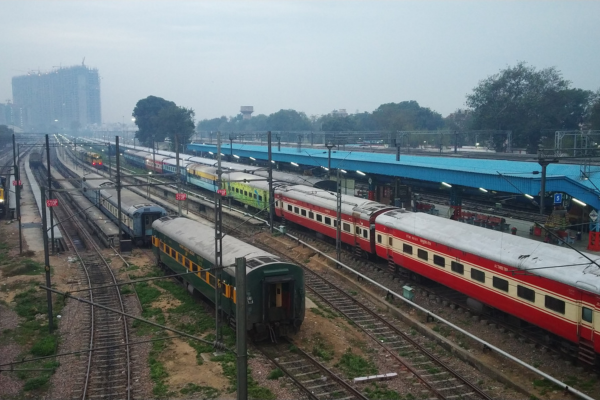
The Ministry of Railways has approved a high speed rail corridor connecting Mumbai and Pune, which is expected to cut travel time from the current three hours to roughly 48 minutes, Railway Minister Ashwini Vaishnaw said. This line is part of seven new bullet train corridors announced under Phase 2 of India's high-speed rail programme. The other proposed routes include Pune-Hyderabad, Hyderabad-Bengaluru, Hyderabad-Chennai, Chennai-Bengaluru, Delhi-Varanasi, and Varanasi-Siliguri. Together, these corridors span around 4,000 km and involve an estimated investment of INR 16 lakh crore. Advertisement


Maharashtra is set to receive two bullet train corridors. Apart from the Mumbai-Pune line, the second corridor connecting Pune and Hyderabad will reduce travel time to approximately 1 hour 55 minutes, linking major IT and business hubs across the region. Officials view these routes as key to enhancing economic and commuter connectivity.
Railway authorities have raised concerns about the Mumbai-Pune alignment, particularly through the Western Ghats, where the steep terrain poses construction challenges. Some officials questioned the practicality of building a bullet train corridor on a route where current travel takes about three hours. Despite these concerns, the project is moving forward as part of the larger Phase 2 plan.
Updates on India's first bullet train, the Mumbai-Ahmedabad High-Speed Rail (MAHSR), indicate that the 50 km first phase between Bilimora and Surat is expected to be completed by the end of this year. Commercial operations on the Vapi-Ahmedabad section are likely to begin in 2027. The entire 508 km corridor, divided into three phases, is scheduled for completion between 2028 and 2029. The route includes 27.4 km of tunnels, with eight mountain tunnels across Maharashtra and Gujarat. A recent breakthrough was achieved in Mountain Tunnel 5 in Palghar district, completed in 18 months using drill-and-blast methods.
The Railway Ministry is procuring E5 and E10 Shinkansen train sets from Japan for testing under Indian conditions. Initial services will run at intervals of one to two hours, with potential to operate every 15-20 minutes after stabilisation, similar to the Tokyo Osaka corridor. Fares are expected to remain affordable, making high-speed travel accessible to commuters and business travelers.
In addition to bullet trains, work on local trains and suburban networks in Maharashtra is progressing. Tenders for 238 AC local trains under the Mumbai Urban Transport Project (MUTP) will be awarded soon. Modifications such as improved oxygen supply in coaches and extended train length to 18 cars are underway. In the Union Budget, INR 23,926 crore was allocated for railway projects in Maharashtra, including increasing suburban train length to 15 cars on Central and Western Railways.
The Konkan Railway expansion is also under review, with a detailed project report for doubling the line in preparation. Officials cite rising demand along the coastal route and emphasise that the expansion is crucial to support growing commuter and cargo traffic.

5th Jun, 2025

25th May, 2023

11th May, 2023

27th Apr, 2023
Advertisement





 Facebook
 Whatsapp
