Advertisement






What really powers the cloud? Behind every Google search, A...
A lot of what defines a home isn’t visible at handover. I...
Private equity has played a significant role in shaping Indi...
Luxury real estate is one of the most talked-about segments ...
Airports play a much bigger role than just enabling travel -...
Adani Ports and Special Economic Zone Ltd (APSEZ) is set to undertake the second phase of development of the Vizhinjam international seaport in Kerala at an estimated cost of around INR 16,000 crore. The announcement is expected during the inauguration ceremony of phase two, to be held on Saturday evening in the presence of Kerala Chief Minister Pinarayi Vijayan. The expansion is aimed at transforming Vizhinjam into the largest transhipment hub in the Indian subcontinent by adding 4.1 million TEUs to the port's existing capacity. Phase two will feature advanced automation, new berths, extensive dredging and reclamation works, and the construction of India's deepest breakwater, reinforcing Vizhinjam's strategic role in global maritime trade.
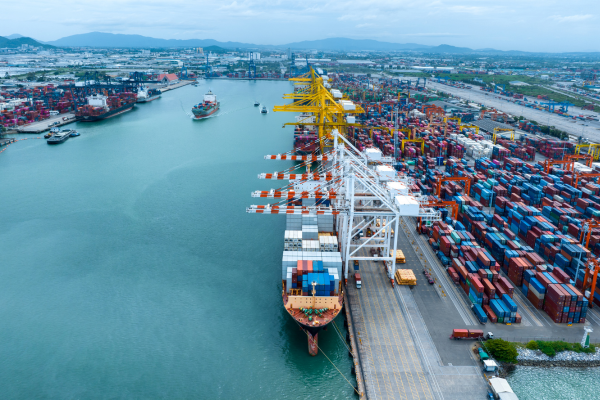
Adani Ports and Special Economic Zone Ltd (APSEZ) is preparing to commence the second phase of development at the Vizhinjam international seaport in Thiruvananthapuram, with an estimated investment of around INR 16,000 crore. Sources indicated that the formal announcement is expected during the inauguration ceremony scheduled for Saturday evening, which will be attended by Kerala Chief Minister Pinarayi Vijayan. Advertisement






The second phase is expected to significantly enhance Vizhinjam's scale and operational capabilities, positioning it as the largest transhipment hub in the Indian subcontinent. According to sources, the expansion will add 4.1 million Twenty-foot Equivalent Units (TEUs) to the port's existing handling capacity, strengthening India's ability to capture transhipment cargo that currently moves through foreign ports.
Vizhinjam is already regarded as the most advanced and fully automated transhipment hub in the country. Phase two will build on this foundation with upgraded automation technologies and next-generation port equipment. The planned infrastructure includes the installation of 21 automated ship-to-shore (STS) cranes and 45 automated cantilever rail-mounted gantry (CMRG) cranes. A dedicated rail handling yard, along with state-of-the-art electrical and automation systems, will also form part of the development.
In addition to equipment upgrades, the expansion will involve substantial marine and civil works. These include berth expansion, extensive dredging and land reclamation to create additional operational areas, and the construction of what is expected to be the deepest breakwater in India. The breakwater will extend approximately 920 metres and reach a depth of 21 metres, enabling the port to accommodate large next-generation container vessels.
Sustainability and compliance infrastructure will also be integrated into phase two. Sources said the development plan includes the deployment of green equipment such as electric vehicle charging stations, alongside critical support facilities including an electrical substation, a sewage treatment plant, and International Ship and Port Facility Security (ISPS) fencing.
Once completed, the second phase is expected to consolidate Vizhinjam's position as a key maritime gateway for the region, enhancing India's transhipment capacity while supporting long-term trade growth and logistics efficiency along the country's western coast.
Source - PTI

5th Jun, 2025

25th May, 2023

11th May, 2023

27th Apr, 2023
Advertisement









 Facebook
 Whatsapp
