Advertisement






What really powers the cloud? Behind every Google search, A...
A lot of what defines a home isn’t visible at handover. I...
Private equity has played a significant role in shaping Indi...
Luxury real estate is one of the most talked-about segments ...
Airports play a much bigger role than just enabling travel -...
Mumbai's iconic skyline is set to expand dramatically. A report by Anarock, a leading real estate consultancy, predicts a 34% increase in skyscrapers in the Mumbai Metropolitan Region (MMR) by 2030, adding 207 new towers to the existing 154. This growth solidifies Mumbai's status as India's skyscraper capital. Limited land availability and a growing population have driven this vertical expansion, with strategic increases in Floor Space Index (FSI) limits and reduced FSI premiums boosting high-rise development. The MMR, currently boasting 361 high-rise towers, will see South Central Mumbai leading with 103 skyscrapers, reshaping the city's architectural landscape.
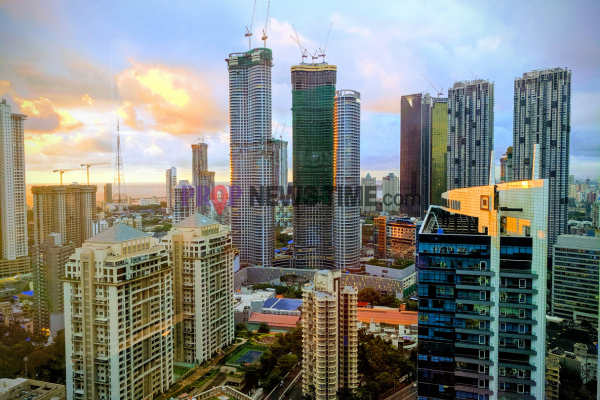
Mumbai's iconic skyline is about to get even more impressive. A new report by Anarock, a leading real estate consultancy, reveals a significant rise in skyscrapers planned for the Mumbai Metropolitan Region (MMR) over the next six years. By 2030, the MMR is expected to see a 34% increase in high-rise towers exceeding 40 floors, adding a staggering 207 new towers to the existing 154. This will further solidify Mumbai's position as the undisputed skyscraper capital of India. Advertisement






Several factors are propelling this skyward trend. Mumbai, with limited land availability and a constantly growing population, has strategically focused on vertical growth for its future development. Exponential population growth, coupled with increased Floor Space Index (FSI) limits implemented over the last decade, has significantly contributed to the rise of skyscrapers. A major boost came in 2019 when the state government reduced the FSI premium for residential and commercial projects, making high-rise development more financially attractive for builders.
Currently, the MMR boasts an impressive 361 high-rise towers, with over 154 already completed and the remaining 207 slated for completion by 2030. South Central Mumbai takes the crown for the most skyscrapers, holding a dominant position with 103 towers, representing a 29% share of the total. The city's central and western suburbs follow closely behind with 87 and 80 high-rises, respectively. Areas like Thane (61 high-rises) and Navi Mumbai (25 high-rises) are also witnessing a surge in high-rise projects, indicating a growing trend beyond the city centre. Interestingly, data reveals a concentration in specific micro-markets, with areas like Byculla, Worli, Lower Parel, Prabhadevi, Mahalakshmi, Marine Lines, Mulund, Chembur, Kanjurmarg, Santacruz, Malad, Goregaon, and Thane City emerging as definitive skyscraper hotspots. Among these high-rises, a noteworthy 61 towers have an even more impressive height, exceeding 60 floors each, with South Central Mumbai once again leading the pack with 28 such super-tall structures.
The rise of skyscrapers in Mumbai goes beyond aesthetics. These high-rises offer a solution to the city's space constraints. By integrating residential and commercial spaces within a single vertical structure, skyscrapers help reduce urban sprawl and traffic congestion. Additionally, the development of high-rises often triggers improvements in essential infrastructure, like better roads and public transport facilities. Many high-rises also incorporate amenities like gyms, swimming pools, and entertainment areas, creating self-contained communities within the city.
Mumbai's ever-evolving skyline is a proof to the city's ambition and its ability to adapt to challenges. As the city continues to grow, expect even more innovative and sustainable skyscraper projects to redefine Mumbai's architectural landscape in the years to come.

5th Jun, 2025

25th May, 2023

11th May, 2023

27th Apr, 2023
Advertisement









 Facebook
 Whatsapp
