Advertisement










Private equity has played a significant role in shaping Indi...
In today’s real estate landscape, fitness is often treated...
In this episode of Prop Personalities, we sit down with Hars...
Luxury real estate is one of the most talked-about segments ...
Welcome to Prop Personalities by Prop News Time - a podcast ...
With large parts of Mumbai built 60-80 years ago and no open land available, redevelopment of the city's aging housing stock is the only way for developers to access prime real estate in India's financial hub. Over 25,000 housing societies across the city have been earmarked for redevelopment by authorities, presenting a USD 2 trillion opportunity for builders according to industry estimates. While legal and logistical complexities exist, increased FSI incentives and cluster redevelopment policies are driving momentum in the market. Major developers are actively bidding for redevelopment projects, with some announcing plans worth billions. Coordinated efforts by authorities and builders will be key to tackling issues and realizing the true potential of Mumbai's redevelopment.
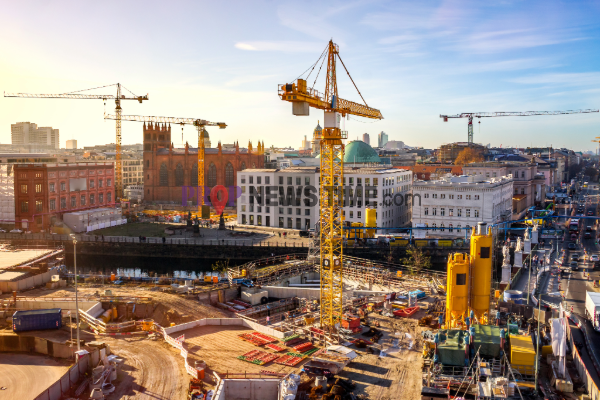
Mumbai presents a USD 2 trillion opportunity for redevelopment projects according to Gautam Singhania, CEO of Raymond Ltd. Large parts of the city were built 60-80 years ago when slums were more prevalent, making redevelopment the only way for developers to access prime land in the land-scarce financial capital. Advertisement


Data from the Maharashtra Housing and Area Development Authority (MHADA) shows that there are over 25,000 housing societies lined up for redevelopment. Developers are attracted to these projects due to the additional floor space index (FSI) granted, which can be as high as 2.5 in some areas. This extra built-up area can be sold to more customers.
Despite challenges like legal issues, coordination difficulties, and project complexities, the pace of redevelopment has increased as large developers have entered the market. With no open land left in south Mumbai, redevelopment is the sole option for prime site access, according to Divyesh Doshi of Kinjal Group, which has delivered 10 redevelopment projects.
Government policies favouring redevelopment, such as increased FSI and cluster redevelopment initiatives, have further stimulated the market. Redevelopment projects also offer upgraded amenities and enhanced safety standards, addressing the deficiencies prevalent in older buildings.
Key micro markets earmarked for redevelopment include Worli, Lower Parel, and Bandra-Mahim, offering proximity to major business districts and presenting lucrative transformation opportunities.
Recent announcements include Oberoi Realty announcing a redevelopment agreement for a 12,790 square meter land parcel in Worli, that would generate a free sale component of 6 lakh sq ft for the builder. In January, Kolte Patil Developers received two redevelopment projects in Mumbai with a saleable area of over 3 lakh sq ft and a revenue potential of INR 545 crore. Mahindra Lifespace Developers has a redevelopment project in Malad that will be launched this year. Rustomjee Group has made redevelopment a strong focus area and has undertaken a number of projects in the city. Singhania said he was bidding for projects worth INR 5,000 crore in south Mumbai. The biggest and most ambitious redevelopment project in the city is that of Dharavi slum cluster, which is being undertaken by the Adani group, at a total cost of USD 3 billion.
However, challenges persist, including securing residents' consent, logistical complexities of relocation, and navigating legal and regulatory hurdles. Additionally, GST implications on rent payments during the redevelopment phase add to project costs, impacting profitability.
Several housing societies in Mumbai are located on narrow congested roads and adhering to the mandated open spaces pose a challenge to developers. The FSI for the redeveloper is not enough to accommodate the amenities as well as open spaces. Some relaxation in this respect would also help ensure project viability.
In conclusion, despite current challenges, industry experts remain bullish on redevelopment as integral to Mumbai's future growth. If undertaken systematically through public-private partnership, it can help address the city's infrastructure needs while unlocking immense economic value over the next decade.

5th Jun, 2025

25th May, 2023

11th May, 2023

27th Apr, 2023
Advertisement





 Facebook
 Whatsapp
