Advertisement










Private equity has played a significant role in shaping Indi...
In today’s real estate landscape, fitness is often treated...
In this episode of Prop Personalities, we sit down with Hars...
Luxury real estate is one of the most talked-about segments ...
Welcome to Prop Personalities by Prop News Time - a podcast ...
The Municipal Corporation of Gurugram (MCG) has directed the developer of DLF 1 to 5, a licensed colony, to use only recycled water for construction activities to reduce the disruption of drinking water supply to residents. The directive comes after complaints from residents that potable water is being used for construction activities at more than 250 sites in DLF colonies and other areas in the MCG limits, with underground water being extracted illegally. The MCG has set up 41 sewage treatment plants in the city, and recycled water can be taken from these locations or from plants set up by GMDA for construction uses.
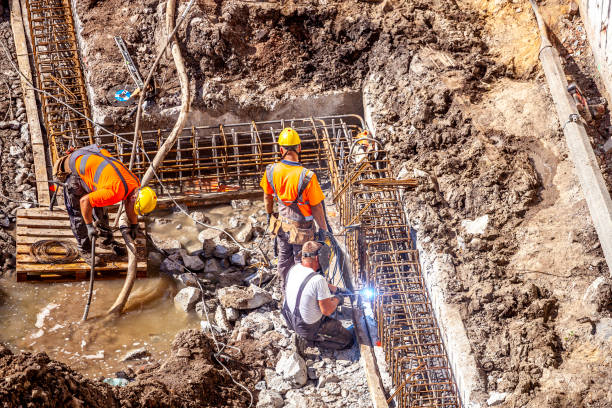
In an effort to reduce the disruption in the supply of drinking water to residents of DLF colonies, the Municipal Corporation of Gurugram (MCG) directed the developer of licensed colonies, DLF 1 to 5, to use only recycled water for construction activities. This directive came after complaints from residents that potable water was being used for construction activities at more than 250 sites in DLF colonies and other areas in the MCG limits.
Advertisement


MCG officials stated that underground water is being illegally extracted for construction work, and many property owners are using water meant for domestic use. To address this issue, the MCG chief engineer, Radhey Shyam Sharma, wrote a letter to DLF directing the developer to ensure that drinking water is not used for construction purposes. The official also warned that water supply would be disconnected, and a heavy penalty imposed if any violation is found.
To strictly implement this order, the MCG has directed junior engineers to visit the sites and check the source of water used. The civic body has set up 41 sewage treatment plants (STPs) at various locations in the city, and the recycled water can be taken from these locations or from the plants set up by Gurugram Metropolitan Development Authority (GMDA) for construction uses. If any site owner or individual is found using potable water for construction activities, strict action will be taken.
One official stated that illegal use of groundwater is one of the major reasons behind water shortages, which forces residents to rely on water tankers. Councillor Rama Rani Rathee also received several complaints alleging a water crisis in DLF 1 and 2. At least 250 sites are undergoing construction work, which has affected the water supply for residents.
DLF has assured the MCG that they have cautioned vendors, contractors, and builders on these sites to use only recycled and STP water for construction. Surprise checks involving local RWA are being carried out, and daily reports are being filed with the DLF management.
The MCG's directive is a step towards sustainable construction practices, and it highlights the importance of reducing water consumption in construction activities. The use of recycled water for construction purposes not only reduces the burden on the potable water supply but also ensures that the water is put to good use. The MCG's decision to impose penalties and disconnect water supply for violators is a stern warning to other builders and developers to comply with sustainable practices in construction activities. This directive can also serve as an example for other cities to follow, encouraging sustainable construction practices and reducing water consumption.
Moreover, the MCG's efforts to conserve water can also benefit the environment, as it reduces the extraction of groundwater. Groundwater depletion can cause several environmental problems such as land subsidence, seawater intrusion, and drying up of lakes and rivers. Therefore, sustainable water management practices are crucial for the environment's well-being, and the MCG's directive is a step in the right direction.
In conclusion, the MCG's directive to use only recycled water for construction activities is a significant step towards sustainable construction practices and water conservation. The directive can serve as an example for other cities to follow, and it highlights the importance of sustainable practices in construction activities. The MCG's efforts to conserve water can also benefit the environment by reducing groundwater depletion. Therefore, it is essential for builders, developers, and individuals to comply with sustainable practices to ensure a better future for the environment and society.
This story was first published in ET Realty

5th Jun, 2025

25th May, 2023

11th May, 2023

27th Apr, 2023
Advertisement





 Facebook
 Whatsapp
