Advertisement










Private equity has played a significant role in shaping Indi...
In today’s real estate landscape, fitness is often treated...
In this episode of Prop Personalities, we sit down with Hars...
Luxury real estate is one of the most talked-about segments ...
Welcome to Prop Personalities by Prop News Time - a podcast ...
Despite economic uncertainty and decreased investment, the warehousing and logistics industry demonstrated resilience in 2023, with warehouse space usage increasing by 21% to 37.8 million sq ft, surpassing pre-pandemic levels. Institutional investment decreased by 65%, totalling USD 646 million, as investors adopted a cautious approach. Third-party logistics (3PL) firms played a crucial role, representing 44% of total absorption. Mumbai led in absorption, while Kolkata experienced a decline due to warehouse shortages. NCR saw a 21% rise in absorption, driven by its strategic location and e-commerce growth. Southern cities remained significant players despite challenges. While 2024 poses uncertainties, long-term growth prospects remain optimistic, with a predicted CAGR of 10%-13% driven by e-commerce expansion and infrastructure development.
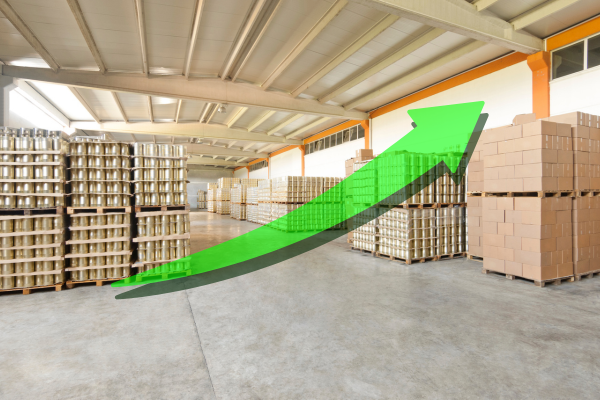
The warehousing and logistics industry showed incredible endurance in 2023 in the face of a lack of investment, despite the continuing economic uncertainty. The use of warehouse space increased by 37.8 mn sq ft, a remarkable 21% over the previous year in spite of a decline in investments, indicating an improvement that exceeded pre-pandemic levels. Advertisement


The industry confronted the challenge of dried-up capital in 2023; institutional investment as a whole was USD 646 million, a substantial 65% decrease from the year before. Due to the ongoing global macroeconomic uncertainty, which caused this loss, investors decided to take a cautious "wait-and-watch" stance and avoid making large capital commitments in an unsettling market.
A number of factors contributed to the spike in absorption, one of which was the rise in popularity of third-party logistics (3PL) firms as go-to partners for enterprises looking to save costs and increase flexibility in the face of changing market conditions. These 3PL businesses represented a significant 44% of total absorption in 2023, highlighting their critical role in influencing demand and the industry's environment. Furthermore, engineering and manufacturing firms made a substantial contribution, accounting for 18% of the total, with the retail sector contributing 11%.
Mumbai emerged as the absorption leader geographically, accounting for a substantial 27% of the total absorption in 2023. The city saw a noteworthy surge in absorption, with an absolute 69% increase, driven by increased real estate activity and a 4% yearly appreciation in rentals. On the other hand, absorption in Kolkata declined, falling by 23% a year, mostly as a result of a shortage of Grade A warehouses and a decrease in absorption activity.
A 21% rise in absorption was observed in NCR over the previous year, thanks to its advantageous location and growing e-commerce marketplaces. Its percentage of the overall absorption stayed steady despite this expansion, indicating the balanced growth in many areas. The existence of Chakan MIDC, a trade hub that is home to sizable manufacturing and logistics parks, is also responsible for Pune's notable yearly growth of 35% in 2023.
In 2023, the combined absorption of southern cities like Bengaluru, Chennai, and Hyderabad accounted for 27% of the overall absorption. Despite a decrease from the 34% share in the previous year, these cities continued to play a major role in the sector's overall performance. Notwithstanding obstacles including scarce supply of Grade A warehouses and muted absorption efforts, the South remained a key player in propelling expansion and promoting innovation in the logistics and warehousing industry.
Industry experts predict a difficult year marked by uncertainty and shifting market dynamics for the Indian warehousing business in 2024. Regarding the industry's long-term growth prospects, however, optimism is still present since growth is anticipated to occur at a compound annual growth rate (CAGR) of 10%–13% for the coming years. It is anticipated that factors including the expansion of e-commerce and third-party logistics businesses, along with the development of infrastructure, will increase demand for Grade A facilities and accelerate the growth trajectory of the industry.

5th Jun, 2025

25th May, 2023

11th May, 2023

27th Apr, 2023
Advertisement





 Facebook
 Whatsapp
