Advertisement






What really powers the cloud? Behind every Google search, A...
A lot of what defines a home isn’t visible at handover. I...
Private equity has played a significant role in shaping Indi...
Luxury real estate is one of the most talked-about segments ...
Airports play a much bigger role than just enabling travel -...
• Reliance Industries has delivered the first 200 MWp batch of high-efficiency solar modules from its green energy manufacturing complex in Jamnagar, Gujarat.
• The company is developing a 5,000-acre integrated clean energy ecosystem covering solar modules, batteries, green hydrogen and bio-energy infrastructure.
• Reliance plans to scale solar manufacturing capacity to 10 GWp annually, with a long-term target of 20 GWp.
• The company is also advancing battery storage, green hydrogen and compressed biogas infrastructure as part of its clean energy platform.
• Reliance stated that it has committed nearly INR 75,000 crore towards the initiative, which could generate over 200,000 green jobs.
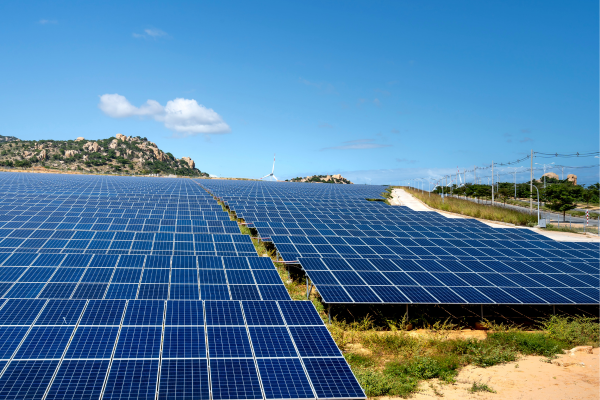
Reliance Industries has commenced deliveries of high-efficiency solar modules from its green energy manufacturing complex in Jamnagar, Gujarat, marking the operational rollout of its New Energy business during FY26. Advertisement






The company stated in its latest annual report that the first batch comprising 200 megawatt-peak (MWp) of 720-watt-peak BIS-certified heterojunction technology (HJT) solar modules had been delivered from the Dhirubhai Ambani Green Energy Giga Complex. The integrated clean energy manufacturing ecosystem is being developed across approximately 5,000 acres in Jamnagar and includes facilities related to solar modules, batteries, green hydrogen and bio-energy infrastructure.
According to the company, the newly manufactured HJT solar panels demonstrated nearly 10% higher energy yield and around 25% lower degradation compared with prevailing industry benchmarks. Reliance stated that it is progressively commissioning solar cell and module manufacturing lines and remains on track to establish annual manufacturing capacity of 10 gigawatt-peak (GWp), with plans for future expansion to 20 GWp.
The company added that integration of upstream manufacturing infrastructure for polysilicon, glass, ingots and wafers is being implemented in phases as part of the broader solar manufacturing ecosystem.
Reliance also stated that its battery energy storage system (BESS) giga-factory has entered an advanced commissioning stage. The facility has an initial operational target of 40 gigawatt-hours (GWh) of annual production capacity, with a long-term roadmap to scale up to 100 GWh. The battery manufacturing operations are focused on lithium iron phosphate (LFP) chemistry intended for utility-scale storage and mobility applications. Production ramp-up is expected during the second half of 2026.
In the green hydrogen segment, the company stated that work has commenced on its electrolyser giga-factory following the acquisition of exclusive technology licensing rights in India from Norwegian electrolyser company Nel ASA for alkaline electrolyser technology. Reliance said it aims to develop green hydrogen equivalent capacity of 3 million metric tonnes per annum by 2032 for both domestic and export markets.
The company has also entered into a long-term green ammonia offtake agreement with Samsung C&T Corporation, with supplies scheduled to commence during the second half of FY2029.
Separately, Reliance is developing a large renewable energy hub spread across approximately 550,000 acres in Kutch, Gujarat. The company stated that peak deployment at the site is expected to reach 55 MWp of solar modules and 150 megawatt-hours of battery containers daily. The platform is intended to support captive green power generation, green fuel production and dedicated transmission infrastructure connecting Kutch and Jamnagar.
According to the company, the renewable platform could potentially meet nearly 10% of India’s electricity demand over the coming decade.
In the bio-energy segment, Reliance stated that compressed biogas production has crossed 270 tonnes per day through 35 operational plants. The company expects production to increase to 1,100 tonnes per day from 55 plants by the end of FY27. Reliance added that it currently contributes over 30% of India’s compressed biogas output and supplies fuel to more than 40,000 vehicles daily through around 270 retail outlets while working with over 80,000 farmers.
The company stated that it has committed nearly INR 75,000 crore towards its clean energy platform, which it expects could generate more than 200,000 green jobs while supporting lower energy costs and reducing dependence on imported fuels.
Source - PTI

5th Jun, 2025

25th May, 2023

11th May, 2023

27th Apr, 2023
Advertisement









 Facebook
 Whatsapp
