Advertisement






What really powers the cloud? Behind every Google search, A...
A lot of what defines a home isn’t visible at handover. I...
Private equity has played a significant role in shaping Indi...
Luxury real estate is one of the most talked-about segments ...
Airports play a much bigger role than just enabling travel -...
• Automated Parking Systems (APS) are witnessing increased adoption across Indian cities amid rising vehicle density and shrinking urban land availability.
• Developers across residential, commercial and mixed-use projects are using APS to optimise parking capacity and improve land utilisation.
• The systems use robotic and mechanical technology to park vehicles without manual navigation, reducing congestion and improving user convenience.
• Smart city initiatives, sustainability goals and technology integration are further accelerating deployment of automated parking infrastructure.
• Premium housing projects, office developments, malls and hospitals are increasingly incorporating APS as part of modern urban infrastructure planning.
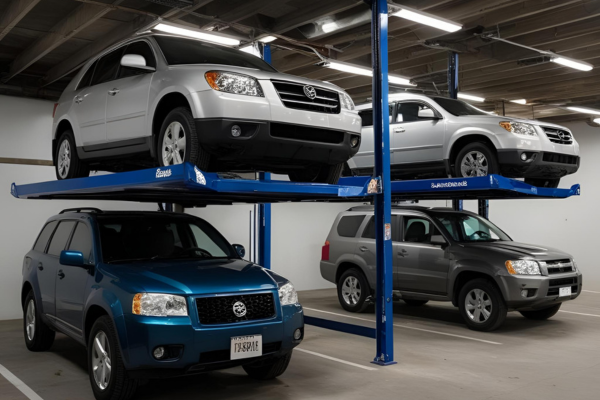
India’s urban infrastructure landscape is undergoing rapid technological transformation, with automated parking systems (APS) emerging as a key component of modern real estate and mobility planning. As metropolitan cities continue to experience rising vehicle ownership, increasing land costs and growing pressure on civic infrastructure, developers and urban planners are turning towards technology-driven parking solutions to address long-standing space and traffic challenges. Advertisement






Traditionally treated as a purely functional requirement within real estate projects, parking infrastructure is increasingly being viewed as an important element of urban mobility, traffic management and user experience. Automated parking systems, which rely on robotic or mechanical mechanisms to transport and store vehicles, are gaining visibility across residential, commercial and institutional developments in major Indian cities.
Unlike conventional parking facilities where drivers manually navigate ramps and floors in search of vacant slots, APS enables vehicles to be parked automatically through lift-based, pallet-driven or conveyor-supported systems. The technology minimises the need for driving within parking structures and allows vehicles to be stacked more efficiently within limited spaces.
One of the primary factors driving adoption is the growing pressure on urban land availability. In cities such as Mumbai, Bengaluru, Pune, Delhi and Hyderabad, developers are increasingly seeking ways to maximise usable built-up area while accommodating rising parking requirements. Automated parking systems enable significantly higher parking density compared to traditional basement or podium parking configurations, making them particularly attractive for premium residential projects, office developments, shopping centres and healthcare facilities.
The push towards smart city infrastructure and sustainable urban development is also contributing to increased deployment of APS technology. Automated systems help reduce internal vehicular circulation within buildings, lower fuel consumption caused by idling vehicles and improve energy efficiency within enclosed parking environments. Several green-certified developments are now integrating automated parking solutions as part of broader sustainability and environmental compliance strategies.
Technology integration is further strengthening the appeal of automated parking infrastructure. Many modern systems can now be linked with mobile applications, digital access control platforms, licence plate recognition technology and real-time monitoring systems. These features allow users to access contactless parking services, faster vehicle retrieval and improved operational convenience.
Luxury housing projects across metropolitan markets are increasingly positioning automated parking as a lifestyle and convenience feature alongside smart home technologies, concierge services and integrated digital infrastructure. Developers are using such systems as a product differentiator in high-end projects where efficient space utilisation and premium amenities have become important purchasing considerations.
Commercial real estate developers are also adopting automated parking systems to improve tenant experience and streamline traffic flow within office campuses and mixed-use developments. By reducing vehicle movement within basements and improving parking turnover efficiency, APS solutions are being viewed as part of wider efforts to modernise urban infrastructure.
As Indian cities continue to expand and densify, conventional parking formats are facing growing operational and spatial limitations. Industry stakeholders increasingly view automated parking systems not merely as a response to parking shortages, but as part of the broader redesign of future urban mobility infrastructure.

5th Jun, 2025

25th May, 2023

11th May, 2023

27th Apr, 2023
Advertisement









 Facebook
 Whatsapp
