Advertisement






What really powers the cloud? Behind every Google search, A...
A lot of what defines a home isn’t visible at handover. I...
Private equity has played a significant role in shaping Indi...
Luxury real estate is one of the most talked-about segments ...
Airports play a much bigger role than just enabling travel -...
• Ashwini Vaishnaw said railways, electronics and semiconductors, and AI would drive India’s next phase of economic and industrial growth.
• The minister highlighted rising railway infrastructure investment, with capital expenditure reaching nearly INR 2.72 lakh crore in the last financial year.
• He said smartphone exports emerged as India’s largest export category amid growth in electronics manufacturing and the semiconductor ecosystem.
• Vaishnaw stated that the Dedicated Freight Corridor has reduced freight transit time, while stressing the need for AI adoption, data centres and workforce skilling.
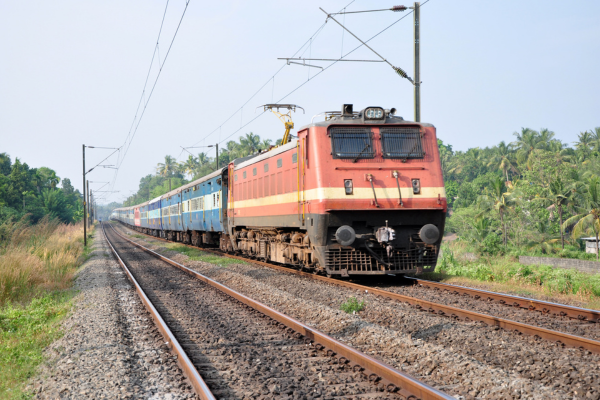
Union Minister for Railways, Information and Broadcasting, and Electronics and Information Technology Ashwini Vaishnaw said railways, electronics and semiconductors, and artificial intelligence would form the core pillars of India’s next phase of economic transformation while addressing the inaugural session of the CII Annual Business Summit 2026 on 11 May. Advertisement






Speaking at the summit organised by the Confederation of Indian Industry, Vaishnaw said India had managed global economic and geopolitical challenges through policy measures and infrastructure investments under the leadership of Prime Minister Narendra Modi. He urged industry and citizens to contribute towards strengthening India’s economic resilience by reducing foreign exchange outflows and increasing export competitiveness.
The minister highlighted railways as one of the principal sectors driving infrastructure-led growth. He stated that railway capital expenditure had increased from around INR 66,000 crore a few years ago to nearly INR 2.72 lakh crore in the previous financial year. According to Vaishnaw, the scale-up in investment was accompanied by improvements in project execution capability and delivery across the railway ecosystem.
Vaishnaw said nearly 49,000 km of railway tracks had been electrified, which he compared to the size of Germany’s railway network. He added that production of wagons and locomotives had also increased significantly during the period.
The minister also announced completion of the Dedicated Freight Corridor project on 5 April. He stated that the corridor was currently enabling movement of around 480 trains daily while reducing transit time between ports and hinterland regions from approximately 48 hours to between 12 and 16 hours.
Referring to high-speed rail infrastructure, Vaishnaw said upcoming corridors would increasingly integrate connected cities into larger economic zones through faster passenger and freight mobility. He added that India’s industrial and infrastructure strategy remained focused on quality, cost competitiveness and process efficiency.
On the electronics and semiconductor sector, the minister said smartphones had emerged as India’s largest export commodity in the previous year, surpassing traditional export categories such as diesel, textiles and gems and jewellery. He added that India exported electronic components worth nearly INR 30,000 crore to neighbouring countries as part of the broader Make in India initiative.
Vaishnaw stated that a growing network of electronics manufacturing facilities was helping establish lean manufacturing and quality-focused production systems across the country. He also described artificial intelligence as one of the most transformative technological developments globally and said India needed a strategic approach towards adoption of AI-driven systems.
The minister said the government was focusing on expanding data centre infrastructure and supporting investments in AI through tax exemptions announced in the Union Budget. He also called for large-scale workforce skilling and urged industry bodies to play a greater role in preparing talent for emerging technology sectors.
Source- CII Media Release

5th Jun, 2025

25th May, 2023

11th May, 2023

27th Apr, 2023
Advertisement









 Facebook
 Whatsapp
