Advertisement






Private equity has played a significant role in shaping Indi...
In today’s real estate landscape, fitness is often treated...
In this episode of Prop Personalities, we sit down with Hars...
Luxury real estate is one of the most talked-about segments ...
Welcome to Prop Personalities by Prop News Time - a podcast ...
• Delhi has operationalised its second Multi-Lane Free Flow (MLFF) barrier-less toll plaza at Mundka-Bakkarwala on the Urban Extension Road-II corridor.
• Union Road Transport and Highways Minister Nitin Gadkari inaugurated the project earlier this week as part of the Centre’s wider push for automated toll collection.
• The system uses Automatic Number Plate Recognition cameras and FASTag technology to allow vehicles to pass without stopping at toll booths.
• NHAI plans to expand the MLFF system to 17 toll plazas across nine states during the current financial year, with over 108 additional plazas planned by March 2027.
• The government expects the technology to reduce congestion, lower fuel consumption, improve highway efficiency and cut toll collection costs significantly.
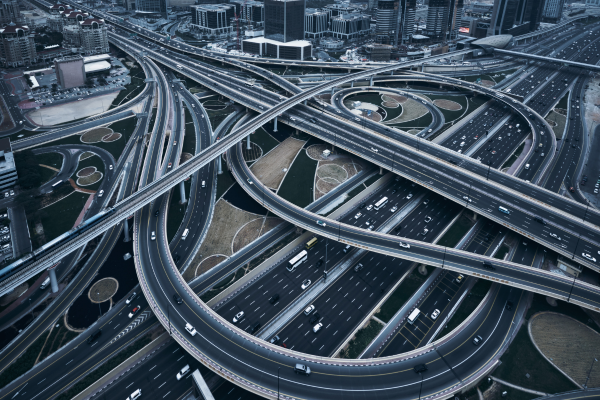
India’s second Multi-Lane Free Flow (MLFF) barrier-less tolling system has become operational in Delhi with the inauguration of the Mundka-Bakkarwala toll plaza on the Urban Extension Road-II (UER-II) corridor. The project was inaugurated by Union Road Transport and Highways Minister Nitin Gadkari earlier this week as part of the government’s ongoing efforts to modernise toll collection systems across national highways. Advertisement






The newly launched toll plaza removes the need for physical barriers and manual stoppages at toll booths. Vehicles can now continue moving at regular speed while toll charges are deducted digitally through FASTag and Automatic Number Plate Recognition (ANPR) technology. The system is aimed at reducing long queues, improving travel time and easing congestion on busy highway stretches around Delhi and the NCR region.
This is the second operational barrier-less toll plaza in the country after the Choryasi toll plaza on the Surat-Bharuch section of NH-48 in Gujarat, which became operational recently. The Centre has been gradually introducing the MLFF system as a replacement for conventional toll plazas where vehicles are required to stop for payment verification.
According to officials from the National Highways Authority of India (NHAI), the technology combines high-speed cameras, FASTag readers and backend digital systems to identify vehicles automatically and deduct toll charges without physical intervention. Vehicles without valid FASTags or sufficient balance may receive e-notices and penalties through the enforcement system linked to vehicle registration databases.
Government officials stated that the move is expected to improve overall highway efficiency by reducing stoppage time at toll plazas, especially during peak traffic hours. They added that lower waiting time would also help reduce fuel wastage and vehicular emissions caused by idling at toll booths for extended periods.
During the inauguration, Gadkari said the barrier-less tolling system is part of a larger plan to bring advanced digital infrastructure to India’s road network. He noted that the technology would help improve traffic movement while also lowering operational expenses related to toll collection. According to estimates shared by the ministry, toll collection operating costs could decline to nearly 3-4 per cent from the current 12-15 per cent under the traditional system.
Officials also highlighted that pilot operations conducted before the launch showed positive results in traffic management and toll compliance. NHAI Chairman Santosh Kumar Yadav stated that pilot testing recorded nearly 10 per cent growth in toll collection due to improved compliance and reduced leakages. Authorities further observed that traffic movement became smoother at busy stretches where vehicles earlier experienced delays during peak hours.
The Urban Extension Road-II corridor is considered an important infrastructure project for Delhi and the wider National Capital Region. The corridor improves connectivity between Alipur, Rohini, Mundka, Najafgarh and Dwarka while also linking with major expressways including the Dwarka Expressway and the Delhi-Mumbai Expressway network. The road project has been developed to divert traffic from congested internal city roads and improve movement of both passenger and commercial vehicles.
NHAI has also announced plans to expand the MLFF tolling system further across the country. Officials said 17 toll plazas across nine states have been identified for implementation during the current financial year. These include locations in Delhi, Gujarat, Haryana, Rajasthan, Maharashtra, Karnataka, Tamil Nadu and Assam. The first phase is expected to be completed by September 2026, while over 108 additional toll plazas are planned to be brought under the system by March 2027.
Apart from toll collection, officials indicated that the technology may later support broader traffic enforcement mechanisms. The integrated digital system could eventually be used to identify traffic rule violations such as driving without seat belts or using mobile phones while driving, allowing authorities to strengthen road monitoring systems through automated enforcement.
The ministry has also projected environmental and economic benefits from the transition towards barrier-less tolling. According to government estimates, the new system could help save nearly INR 295 crore annually in fuel costs due to reduced stoppage time at toll plazas, while also contributing to lower carbon emissions across heavily used highway corridors.
Source PTI

5th Jun, 2025

25th May, 2023

11th May, 2023

27th Apr, 2023
Advertisement









 Facebook
 Whatsapp
