Advertisement






What really powers the cloud? Behind every Google search, A...
A lot of what defines a home isn’t visible at handover. I...
Private equity has played a significant role in shaping Indi...
Luxury real estate is one of the most talked-about segments ...
Airports play a much bigger role than just enabling travel -...
The Maharashtra government has proposed relaxing parking requirements for additional built-up space in key commercial blocks of Bandra Kurla Complex (BKC). The draft allows up to a 50% reduction in parking norms for existing and under-construction buildings in ‘E’ and ‘G’ blocks, subject to space constraints. The move aims to unlock unused development potential in one of Mumbai’s prime business districts. While industry bodies have welcomed the step, concerns remain about added traffic pressure in an already congested area without parallel infrastructure upgrades.
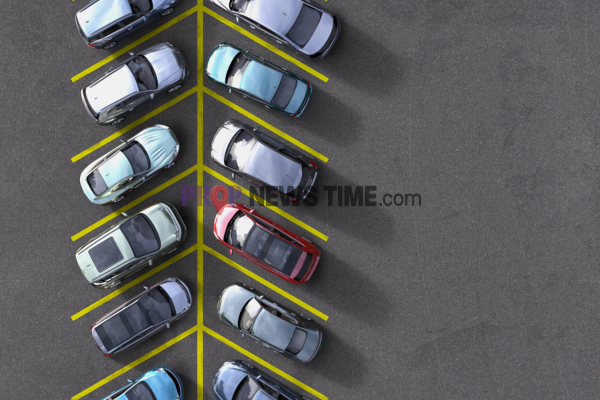
The Maharashtra government has proposed changes to development control regulations to reduce parking requirements for certain buildings in Bandra Kurla Complex (BKC), aiming to support expansion in one of the city’s key commercial hubs. Advertisement






A draft notification issued by the state’s urban development department in the past week stated that developers could be allowed up to a 50% reduction in mandatory parking provisions for additional built-up area in existing and under-construction buildings located in the ‘E’ and ‘G’ blocks. The relaxation will not apply to new developments, keeping stricter norms intact for upcoming projects.
At present, any increase in built-up area requires a proportional increase in parking spaces, which has limited expansion in dense zones like BKC. Officials indicated that the proposed change is intended to address this constraint and allow better utilisation of permissible floor space. In several cases, buildings have not been able to use their full development potential due to the lack of physical space to create additional parking.
The proposal makes it clear that the concession will be granted only where genuine constraints exist. Developers and property owners will need to demonstrate that providing the required parking is not feasible due to space limitations. This condition is expected to act as a filter and prevent blanket relaxation across all properties.
The ‘E’ block of BKC houses major government and regulatory institutions, including offices of the Reserve Bank of India, Income Tax department and the Mumbai Metropolitan Region Development Authority. The ‘G’ block functions as a financial and commercial hub, with landmarks such as the National Stock Exchange and Bharat Diamond Bourse. These areas witness high daily footfall, making parking and traffic management a key concern.
Industry groups, including CREDAI-MCHI and the BKC Property Owners Association, had earlier approached the state government highlighting the practical challenges in meeting parking norms. They had pointed out that several plots were designed under older regulations, and complying with current parking requirements while expanding built-up area was not viable in many cases.
The Mumbai Metropolitan Region Development Authority, which owns land in BKC, supported the proposal. Officials noted that easing parking norms in a controlled manner could help unlock stalled development potential and encourage redevelopment or expansion of existing commercial properties.
The draft also clarified that parking spaces already approved under earlier permissions will remain unchanged, ensuring that existing infrastructure is not reduced. Public suggestions and objections have been invited before the proposal is finalised.
This move builds on earlier policy decisions taken by the state to strengthen BKC’s position as a financial centre. A committee set up earlier had recommended rationalisation of floor space index (FSI) and premium rates, along with merging the ‘E’ and ‘G’ blocks. These recommendations were accepted, allowing higher development potential in the area.
However, the proposal has raised concerns among urban planners and transport experts. BKC already faces heavy congestion during peak hours, and reducing parking requirements for additional space could increase pressure on surrounding roads if not managed carefully. Experts have previously noted that easing parking norms without parallel improvements in public transport and traffic systems may create operational challenges.
Currently, parking norms for office buildings require one parking space per 40 square metres up to a certain limit, and one per 80 square metres beyond that. Any relaxation in these norms is likely to have a direct impact on traffic flow and parking availability within the district.
Source Reuters

5th Jun, 2025

25th May, 2023

11th May, 2023

27th Apr, 2023
Advertisement









 Facebook
 Whatsapp
