Advertisement






What really powers the cloud? Behind every Google search, A...
A lot of what defines a home isn’t visible at handover. I...
Private equity has played a significant role in shaping Indi...
Luxury real estate is one of the most talked-about segments ...
Airports play a much bigger role than just enabling travel -...
A fire safety audit conducted across high-rise residential societies in Ghaziabad has identified major safety violations in 43 housing complexes, raising concerns over emergency preparedness in NCR’s growing condominium market. Inspections by the fire department found blocked exits, faulty firefighting systems, non-functional alarms and poor maintenance of safety infrastructure in several buildings. Notices have been issued to resident welfare associations and developers to fix deficiencies within a stipulated timeline. The findings have once again brought focus on fire safety compliance in high-rise apartments, especially as Ghaziabad, Noida and Greater Noida continue to witness rapid vertical residential development.
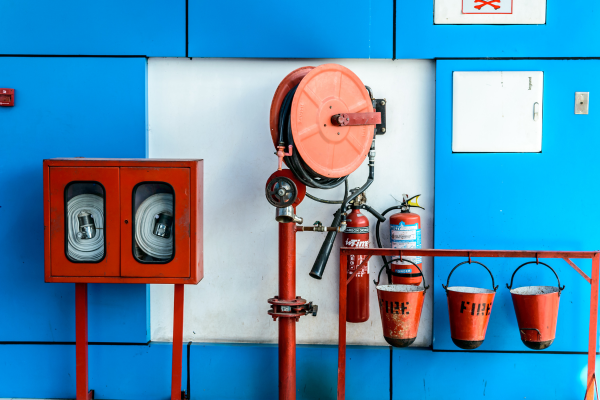
A fire safety audit conducted by the Ghaziabad fire department has found that 43 high-rise residential societies in the city failed to meet mandatory fire safety norms, exposing serious gaps in emergency preparedness and building maintenance in several condominium projects. Advertisement






The inspection drive covered multiple high-rise apartment complexes across Ghaziabad as authorities reviewed compliance with fire safety regulations applicable to residential towers. During the audit, officials found several violations including blocked emergency exits, malfunctioning sprinkler systems, non-working fire alarms, expired fire extinguishers and poorly maintained firefighting equipment.
According to officials, many societies had installed fire safety infrastructure during project approvals but failed to maintain the systems after residents moved in. In several cases, evacuation routes were found obstructed, while access areas required for fire tenders were either encroached upon or not maintained properly.
Authorities have issued notices to the concerned resident welfare associations, apartment management bodies and developers, directing them to rectify the deficiencies within a fixed timeline. Officials indicated that failure to comply with fire safety norms could lead to stricter regulatory action under applicable municipal and fire department rules.
The latest audit has again highlighted recurring concerns around fire safety compliance in NCR’s high-rise residential market. Over the past few years, multiple fire incidents in residential towers and commercial buildings across Delhi-NCR have led to tighter inspections and increased scrutiny of emergency response systems in densely populated developments.
Fire department officials and urban safety experts have repeatedly pointed out that obtaining fire clearances during construction is only one part of compliance. Regular maintenance of sprinklers, hydrants, smoke detectors, alarms and evacuation systems remains equally important once a project becomes operational.
The issue has become more significant as Ghaziabad continues to witness rapid expansion of high-rise housing projects, particularly in areas connected to Noida, Greater Noida and Delhi. Thousands of families now live in vertical residential developments where emergency evacuation and fire response can become difficult if safety systems are not maintained properly.
Officials involved in the inspection process stated that lack of periodic servicing and poor upkeep of installed infrastructure were among the most common deficiencies identified during the audit. In some societies, fire exits were reportedly being used for storage purposes, while certain firefighting systems were either partially functional or completely inactive.
Industry experts believe that regular third-party audits, routine inspections and awareness programmes for residents are becoming increasingly necessary in large residential communities. They also noted that resident welfare associations have an important role in ensuring that common area safety systems remain operational throughout the year.
The audit findings are expected to increase monitoring of high-rise residential societies in Ghaziabad and nearby NCR regions, where authorities have been focusing more closely on urban safety compliance amid continued growth in apartment-based housing.

5th Jun, 2025

25th May, 2023

11th May, 2023

27th Apr, 2023
Advertisement









 Facebook
 Whatsapp
