Advertisement






What really powers the cloud? Behind every Google search, A...
A lot of what defines a home isn’t visible at handover. I...
Private equity has played a significant role in shaping Indi...
Luxury real estate is one of the most talked-about segments ...
Airports play a much bigger role than just enabling travel -...
• Delhi Metro is expected to operationalise three new corridors under Phase IV by December, including extensions of the Magenta and Pink Lines.
• The Aerocity–Tughlakabad corridor will improve airport connectivity and strengthen metro access across south Delhi.
• DMRC has also received approvals for additional Phase IV routes including Inderlok–Indraprastha and Rithala–Narela–Nathupur corridors.
• The Centre earlier approved Phase V(A) projects worth INR 12,014.91 crore to further expand Delhi Metro connectivity.
• The metro expansion is expected to improve daily commuting, reduce road congestion and support residential and commercial growth along new corridors.
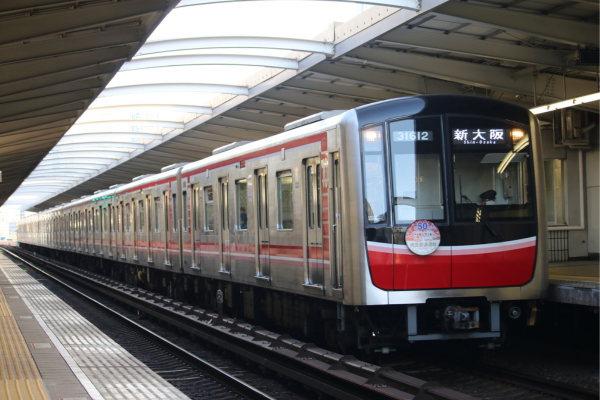
Delhi Metro Rail Corporation (DMRC) is preparing to launch three new metro corridors by the end of this year as work under Delhi Metro Phase IV reaches advanced stages. The upcoming routes include the Janakpuri West–RK Ashram Marg extension of the Magenta Line, the Aerocity–Tughlakabad corridor and the Majlis Park–Maujpur extension of the Pink Line. Advertisement






DMRC Managing Director Vikas Kumar recently said that construction work on these stretches is progressing steadily and the corridors are expected to open by December. Once operational, these routes are likely to improve metro connectivity across west, south, north and northeast Delhi while also strengthening airport-linked transit access in the capital.
The Janakpuri West–RK Ashram Marg corridor is one of the key stretches under Delhi Metro Phase IV. The route is expected to provide interchange connectivity with several existing metro lines, helping reduce travel time for commuters travelling between west and central Delhi. The corridor is also expected to improve access to commercial hubs and densely populated residential areas.
The Aerocity–Tughlakabad corridor, also known as the Golden Line, is being seen as an important airport connectivity route. The corridor is expected to connect Aerocity, south Delhi and Tughlakabad while improving access for commuters travelling towards Indira Gandhi International Airport. The line is also likely to benefit areas such as Chhatarpur, Saket and nearby residential pockets that currently depend heavily on road transport.
The Majlis Park–Maujpur extension of the Pink Line is expected to strengthen metro connectivity in north and northeast Delhi. The corridor will also complete an important loop of the Pink Line network, which is expected to improve passenger movement across several parts of the city.
Apart from these priority stretches, DMRC has also moved ahead with additional expansion plans under Delhi Metro Phase IV. The approved corridors include the Inderlok–Indraprastha route, the Lajpat Nagar–Saket G Block corridor and the Rithala–Narela–Nathupur extension. According to officials, these projects are targeted for completion around 2029, subject to construction and land-related clearances.
The Union Cabinet had earlier approved three Delhi Metro Phase V(A) corridors covering 16.076 km at an estimated project cost of INR 12,014.91 crore. These include the RK Ashram Marg–Indraprastha section, Aerocity–IGD Airport Terminal 1 corridor and the Tughlakabad–Kalindi Kunj extension. The projects are expected to be jointly funded by the Centre, Delhi government and international financial agencies.
The RK Ashram Marg–Indraprastha corridor is expected to improve metro access to the Central Vista area and key government offices. Officials had earlier stated that the corridor could benefit nearly two lakh visitors and around 60,000 office-goers daily. The airport-linked metro extensions are also expected to support passenger movement between central Delhi, south Delhi and airport terminals.
Delhi Metro’s expansion has continued steadily over the past few years despite construction disruptions during the pandemic period. DMRC had earlier completed major corridors under Phase III, which significantly expanded metro connectivity across Delhi-NCR and nearby satellite cities including Noida, Ghaziabad and Gurugram.
At present, Delhi Metro operates a network of nearly 395 km with 289 stations across Delhi-NCR, making it India’s largest metro rail network. Daily ridership has crossed 65 lakh passenger journeys, reflecting increasing dependence on metro transport for office travel and intra-city connectivity.
Discussions around the larger Delhi Metro Phase V project have also gained momentum in recent months. Reports suggest the broader Phase V plan may eventually include nearly 97 km of additional metro lines and around 65 stations connecting outer Delhi and underserved areas. Proposed corridors are expected to improve connectivity to regions such as Narela, Rohini, Najafgarh and parts of east and south Delhi.
Source PTI

5th Jun, 2025

25th May, 2023

11th May, 2023

27th Apr, 2023
Advertisement









 Facebook
 Whatsapp
