Advertisement






What really powers the cloud? Behind every Google search, A...
A lot of what defines a home isn’t visible at handover. I...
Private equity has played a significant role in shaping Indi...
Luxury real estate is one of the most talked-about segments ...
Airports play a much bigger role than just enabling travel -...
• The Centre opposed new hydropower projects in the upper Ganga basin beyond seven ongoing projects in Uttarakhand.
• The government cited ecological and geological concerns in the Alaknanda and Bhagirathi river basins.
• Projects including Tehri Stage-II and Tapovan Vishnugad will continue with statutory clearances.
• The submissions were made in ongoing Supreme Court proceedings after the 2013 Kedarnath disaster.
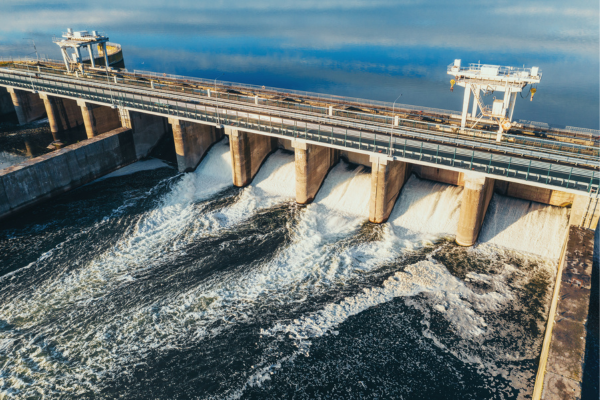
The Union government has informed the Supreme Court that no new hydroelectric power projects should be permitted in the upper reaches of the Ganga river basin in Uttarakhand beyond seven projects that are already under construction or substantially completed, according to court submissions reported in the past week. Advertisement






The Centre stated before the apex court that the upper Ganga basin, particularly the Alaknanda and Bhagirathi river systems, represents an ecologically and geologically fragile Himalayan region requiring enhanced environmental protection measures. The government also referred to the religious and cultural significance of the Ganga river system while opposing fresh hydropower development in the upper catchment areas.
The submissions were made during ongoing hearings linked to hydropower development in Uttarakhand following the 2013 Kedarnath disaster, after which concerns were raised regarding the cumulative environmental impact of multiple hydroelectric projects in the Himalayan region. The Supreme Court has been examining issues related to ecological degradation, river flow disruption, deforestation, slope destabilisation and disaster vulnerability associated with hydropower construction activity in the state.
According to reports, the Centre informed the court that seven hydroelectric projects that are already substantially advanced or under implementation may continue subject to statutory approvals, environmental safeguards and compliance with regulatory conditions. These include Tehri Stage-II, Tapovan Vishnugad, Vishnugad Pipalkoti, Singoli Bhatwari, Phata Byung, Madhyamaheshwar and Kaliganga-II projects.
The government stated that these projects had either reached advanced stages of construction or involved substantial financial investments and contractual obligations. However, it maintained that no further projects should be taken up in the upper Ganga basin beyond these developments.
The Centre’s position follows recommendations made by expert bodies and inter-ministerial committees constituted after the 2013 floods and landslides in Uttarakhand. Multiple expert assessments had examined the cumulative environmental impact of hydropower construction activity on Himalayan river systems and associated ecological risks in the region.
Environmental concerns surrounding hydropower projects in Uttarakhand have remained under judicial scrutiny for more than a decade, particularly regarding river diversion, tunnelling activity, muck disposal and impacts on biodiversity and local communities. Several environmental groups and petitioners have argued that extensive infrastructure development in ecologically sensitive Himalayan zones has increased vulnerability to landslides and flash floods.
The government’s latest submissions also highlighted the need to balance infrastructure and energy requirements with ecological sustainability and disaster resilience in fragile mountain ecosystems. Reports indicated that the Centre has supported maintaining uninterrupted environmental flows in critical stretches of the Ganga and preserving the river’s ecological integrity in upper Himalayan regions.
Hydropower remains a major component of India’s renewable energy strategy, particularly in Himalayan states including Uttarakhand, Himachal Pradesh and Arunachal Pradesh. However, recent policy discussions have increasingly focused on environmental carrying capacity, climate-linked disaster risks and cumulative ecological impacts associated with large infrastructure projects in mountain regions.
Source - PTI

5th Jun, 2025

25th May, 2023

11th May, 2023

27th Apr, 2023
Advertisement









 Facebook
 Whatsapp
