Advertisement






What really powers the cloud? Behind every Google search, A...
A lot of what defines a home isn’t visible at handover. I...
Private equity has played a significant role in shaping Indi...
Luxury real estate is one of the most talked-about segments ...
Airports play a much bigger role than just enabling travel -...
Mumbai’s long-term infrastructure pipeline estimated at around INR 1.68 lakh crore is gaining relevance amid the Centre’s continued focus on urban infrastructure investment, industrial corridors and multimodal connectivity projects. Recent policy discussions and central government statements have highlighted the importance of large-scale urban infrastructure spending in supporting economic growth and regional development. Mumbai’s ongoing civic and transport projects, including coastal roads, metro corridors, redevelopment works and mobility infrastructure, reflect broader national priorities centred on integrated urban expansion and capital expenditure-led growth.
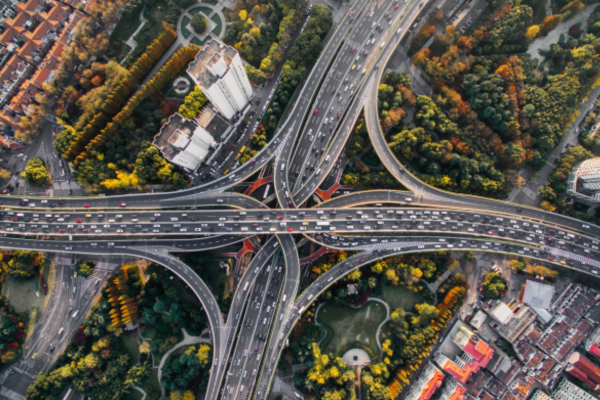
Mumbai’s expanding infrastructure pipeline, estimated at approximately INR 1.68 lakh crore across civic, transport and urban development projects, is increasingly aligning with the Centre’s broader investment-led infrastructure strategy focused on urban growth, connectivity enhancement and economic expansion. Advertisement






The push gains significance following recent statements by the Union government emphasising continued public investment in infrastructure, industrial corridors and integrated urban development as key drivers of long-term economic growth. In its latest policy communication, the Centre highlighted large-scale capital expenditure, multimodal transport systems and urban infrastructure creation as central components of India’s long-term development framework.
Mumbai remains one of the country’s largest urban infrastructure markets, with multiple high-value projects currently under execution across transportation, housing, mobility and civic infrastructure segments. These include metro rail corridors, the Mumbai Coastal Road project, Mumbai Trans Harbour Link (MTHL)-linked connectivity works, sewage infrastructure upgrades, road expansion projects and redevelopment-driven civic investments.
The Brihanmumbai Municipal Corporation (BMC), along with state agencies such as the Mumbai Metropolitan Region Development Authority (MMRDA), has been undertaking several long-term infrastructure projects aimed at improving east-west connectivity, reducing travel congestion and supporting urban expansion across the Mumbai Metropolitan Region.
The Centre’s recent emphasis on integrated infrastructure ecosystems also mirrors Mumbai’s ongoing approach towards combining transport connectivity, urban redevelopment and regional growth planning. Infrastructure agencies across the city are increasingly focusing on multimodal connectivity through metro integration, elevated corridors, railway expansion and transit-oriented development models.
Large-scale public infrastructure spending has additionally emerged as a major catalyst for real estate activity across Mumbai and adjoining metropolitan regions. Improved connectivity through transport projects has accelerated residential and commercial development in locations such as Navi Mumbai, Thane, Goregaon, Wadala and Sewri, where infrastructure-led urban growth continues to reshape land-use patterns and investment activity.
Industry stakeholders have observed that sustained government-led capital expenditure is also strengthening demand for construction, engineering and urban infrastructure-related investments. Mumbai’s infrastructure pipeline spans roads, bridges, tunnels, coastal connectivity, affordable housing, drainage upgrades and civic redevelopment projects, making it one of India’s largest urban investment programmes currently under implementation.
The Centre has continued to position infrastructure expansion as a key economic multiplier capable of generating employment, improving logistics efficiency and supporting industrial and urban productivity. In recent years, public investment has increasingly shifted towards integrated mobility systems and city-level infrastructure upgrades intended to improve long-term urban competitiveness.
Urban planners and industry executives have noted that Mumbai’s ongoing infrastructure transformation reflects the broader national strategy of using transport and civic investment as a foundation for economic expansion. With several mega projects entering advanced execution stages, the city’s infrastructure roadmap is expected to remain closely tied to the Centre’s long-term urban investment priorities in the coming years.
Source PIB

5th Jun, 2025

25th May, 2023

11th May, 2023

27th Apr, 2023
Advertisement









 Facebook
 Whatsapp
