Advertisement






What really powers the cloud? Behind every Google search, A...
A lot of what defines a home isn’t visible at handover. I...
Private equity has played a significant role in shaping Indi...
Luxury real estate is one of the most talked-about segments ...
Airports play a much bigger role than just enabling travel -...
• The Centre has introduced a revised framework under NMP 2.0 to streamline transfer and monetisation of surplus public land assets across government departments and CPSEs.
• The framework standardises land valuation, transfer and redevelopment norms while simplifying procedures for identification and monetisation of government land.
• Officials stated that around 3,400 acres of surplus land and nearly 235,000 acres held by CPSEs have been identified for monetisation, infrastructure development and non-tax revenue generation.
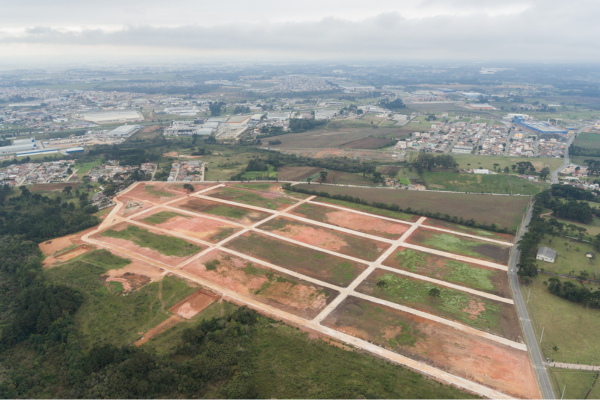
The Centre has introduced a revised framework for transfer, redevelopment and monetisation of surplus public land assets under the second phase of the National Monetisation Pipeline (NMP 2.0), with the objective of streamlining utilisation of government-owned land across ministries, departments and central public sector enterprises (CPSEs). Advertisement






According to government officials, the revised framework establishes standardised norms for land valuation, transfer and redevelopment while simplifying administrative procedures associated with monetisation of surplus land parcels. The framework forms part of broader efforts to improve public asset utilisation and accelerate infrastructure-led development under NMP 2.0, which has an estimated outlay of INR 16.7 trillion.
Officials stated that fragmentation of land records, procedural delays and multiple approval requirements had historically slowed redevelopment and monetisation of government-owned land. The revised mechanism seeks to address these bottlenecks through a more structured process for identification, transfer and utilisation of surplus assets.
The framework has been developed through coordination among ministries, departments and government agencies involved in land administration and infrastructure planning. According to officials cited in reports, the policy aims to establish a transparent process for transfer and utilisation of surplus public land assets while improving inter-departmental coordination during execution.
Government data referenced in the framework indicated that nearly 3,400 acres of surplus land identified for monetisation remain underutilised because of procedural and administrative delays. In addition, around 235,000 acres of land held by CPSEs have also been mapped for potential monetisation, redevelopment or infrastructure-linked utilisation.
Officials stated that the revised norms would support infrastructure expansion, urban redevelopment and commercial utilisation of land assets no longer required for their original purpose. The framework also proposes simplified mechanisms for transfer of land between government entities, ministries and agencies.
According to reports, ministries have been advised to prepare structured inventories of surplus land assets and undertake standardised valuation exercises to facilitate monetisation planning. The government is also expected to prepare digital land records and mapping systems to improve transparency and asset tracking.
The revised framework has been introduced at a time when the Centre is expanding infrastructure investment across sectors including railways, logistics, industrial corridors, housing and urban transport. Officials stated that monetisation of surplus public land is expected to support non-tax revenue generation while reducing delays in infrastructure implementation.
The policy also aligns with broader public asset monetisation initiatives undertaken over the past few years under the National Monetisation Pipeline, where government agencies have increasingly explored long-term leasing, redevelopment partnerships and infrastructure-linked asset utilisation models.

5th Jun, 2025

25th May, 2023

11th May, 2023

27th Apr, 2023
Advertisement









 Facebook
 Whatsapp
