Advertisement






What really powers the cloud? Behind every Google search, A...
A lot of what defines a home isn’t visible at handover. I...
Private equity has played a significant role in shaping Indi...
Luxury real estate is one of the most talked-about segments ...
Airports play a much bigger role than just enabling travel -...
• Stakeholders have raised urgent concerns over rising traffic congestion on the Neelambur–Madukkarai stretch of NH-544 in Coimbatore.
• The 27-km bypass remains a two-lane section despite adjoining NH-544 stretches already being expanded to six lanes, creating a major bottleneck.
• The corridor handles heavy interstate traffic between Kerala, Tamil Nadu and Karnataka, leading to frequent delays and safety risks.
• Industry representatives have urged faster widening and improved junction management, including flyovers and grade separators.
• Land availability for expansion has been highlighted as not being a constraint.
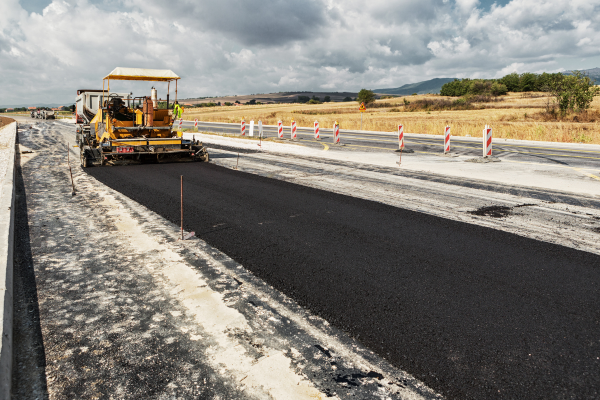
Industrial stakeholders and transport users have renewed their demand for widening the Neelambur–Madukkarai stretch of NH-544 in Coimbatore, citing increasing traffic pressure and safety concerns on one of the most critical highway corridors in southern India. Advertisement






The 27-km Coimbatore bypass section continues to operate as a two-lane road, even as the adjoining stretches of NH-544 have already been expanded to six lanes. This mismatch in road capacity has created a major bottleneck, especially for interstate freight and passenger movement between Kerala, Tamil Nadu and Karnataka along the Salem–Kochi highway route.
Traffic flow on this stretch has been consistently high due to commercial movement and daily commuting patterns within Coimbatore’s suburban regions. Industry representatives have pointed out that multiple busy junctions along the bypass lack adequate traffic control systems, which has further increased congestion, travel delays and accident risks.
Key intersections along the corridor have been identified as high-risk zones due to limited infrastructure such as signals, flyovers and grade separators. Stakeholders have stressed that the absence of structured traffic segregation is worsening vehicle pile-ups during peak hours and slowing down logistics movement along the route.
The National Highways Authority of India (NHAI) has already prepared planning documents and project proposals for widening the stretch into a multi-lane corridor. These plans include service roads, underpasses and flyovers aimed at improving traffic flow and reducing congestion. However, on-ground execution progress has remained limited, despite the corridor being part of a key national highway network connecting Salem and Kochi.
Stakeholders have also highlighted that land availability is not a major issue for the proposed expansion, strengthening the demand for faster implementation. The continued delay in widening has increased pressure from industry groups who rely on the route for regular freight transport and intercity connectivity.

5th Jun, 2025

25th May, 2023

11th May, 2023

27th Apr, 2023
Advertisement









 Facebook
 Whatsapp
