Advertisement






What really powers the cloud? Behind every Google search, A...
A lot of what defines a home isn’t visible at handover. I...
Private equity has played a significant role in shaping Indi...
Luxury real estate is one of the most talked-about segments ...
Airports play a much bigger role than just enabling travel -...
The Brihanmumbai Municipal Corporation (BMC) is moving ahead with a citywide smart parking initiative aimed at enabling motorists to digitally reserve parking spaces through a unified mobile and web-based platform. The proposed system will provide real-time parking availability, advance booking and digital payment facilities across municipal and private parking locations. The move comes amid rising vehicle density in Mumbai, where government data indicates nearly 2,300 vehicles per kilometre and over three lakh vehicle registrations during 2025. Industry experts have welcomed the initiative, stating that digital parking management can improve traffic flow and parking efficiency, but emphasised that Mumbai will also require large-scale development of mechanised, vertical and multi-level parking infrastructure to address long-term urban mobility challenges.
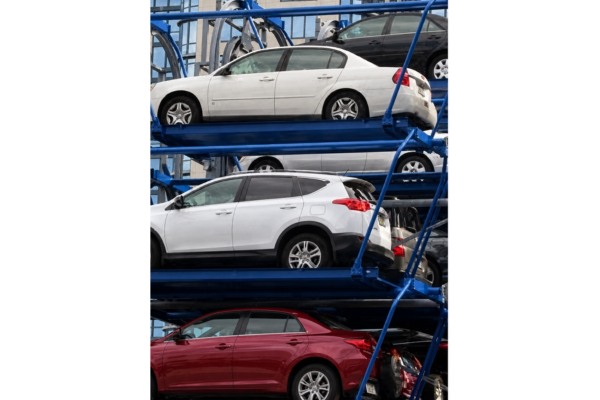
The Brihanmumbai Municipal Corporation is progressing with its proposed smart parking initiative aimed at digitising parking management across Mumbai through a unified reservation and payment platform, as civic authorities seek to address rising congestion and parking shortages in the city. Advertisement






According to media reports, the civic body is in the final stages of appointing a consultant for the project, which proposes the creation of an integrated digital parking ecosystem covering municipal and privately operated parking facilities across Mumbai.
Under the proposed system, motorists will be able to check real-time parking availability, reserve parking slots before beginning their journey and complete digital payments through a dedicated mobile application and online portal.
The initiative comes amid increasing pressure on Mumbai’s urban mobility infrastructure due to rising vehicle ownership and limited parking availability. Government data cited in reports indicates that Mumbai currently has the highest vehicle density among metro cities in India, with nearly 2,300 vehicles per kilometre. The figure has risen sharply from around 1,840 vehicles per kilometre in 2019 and approximately 1,150 in 2014.
Reports further indicate that more than three lakh vehicles were registered in Mumbai during 2025 alone.
At present, the BMC operates 26 off-street parking facilities across the city. Under the proposed model, municipal parking inventory is expected to be integrated with parking spaces located within malls, business centres and commercial developments. Housing societies may also be encouraged to make unused parking slots available for public use during specific daytime periods.
Industry experts stated that digitised parking systems are becoming increasingly necessary for densely populated urban centres such as Mumbai where land availability remains highly constrained.
Ashish Majithia, Founder and Chief Executive Officer of Nextkraft Parking Technologies, stated that the initiative could significantly reduce unnecessary vehicle circulation, commuter stress, fuel consumption and traffic congestion by enabling motorists to identify and reserve parking spaces in advance.
However, he noted that Mumbai’s parking challenges remain fundamentally linked to high vehicle density and limited land availability. According to Majithia, technology-driven parking management systems would need to be supported by large-scale development of multi-level and mechanised parking infrastructure to create long-term impact.
Naveen Rajagopalan, Director at City Lift India Limited, stated that digitally integrated parking systems represent the future for metro cities where efficient utilisation of urban space is becoming increasingly important.
He added that while pre-booking systems can improve utilisation of existing parking stock across commercial and public spaces, Mumbai’s rising vehicle population also requires investment in automated and vertical parking infrastructure to address long-term parking demand.
Civic officials believe the proposed system could help reduce unnecessary vehicle movement caused by drivers searching for parking in congested commercial districts, thereby contributing towards lower congestion levels in busy urban corridors.
According to reports, the smart parking platform is expected to be developed over the next year, with pilot implementation planned across five civic wards covering south Mumbai, eastern suburbs and western suburbs.
The BMC is also reportedly considering a revision in parking fees across municipal parking facilities. Media reports indicate that a proposal seeking a 40 per cent increase in parking charges has already received approval from the Additional Municipal Commissioner (Projects) and is currently awaiting further administrative clearances.
Urban mobility observers stated that long-term solutions for Mumbai’s parking pressures would likely depend on a combination of digital traffic management systems, enhanced public transport integration and expansion of structured parking infrastructure across high-density urban zones.
Advertisement













 Facebook
 Whatsapp
