Advertisement






What really powers the cloud? Behind every Google search, A...
A lot of what defines a home isn’t visible at handover. I...
Private equity has played a significant role in shaping Indi...
Luxury real estate is one of the most talked-about segments ...
Airports play a much bigger role than just enabling travel -...
Improved transport infrastructure and enhanced regional connectivity are reshaping commercial real estate activity across Mumbai’s western suburbs, with Goregaon East emerging as a key beneficiary of the shift, according to Vikash Kawar, Director at AGM Vijaylaxmi. In an industry commentary, Kawar highlighted the role of projects such as the Bandra-Worli Sea Link, Coastal Road, Metro Line 7 and the proposed Goregaon-Mulund Link Road in reducing commute times and improving cross-city accessibility. The suburb, once primarily residential, is increasingly attracting Grade A office demand due to its connectivity advantages, competitive rentals and integrated urban ecosystem. The commentary also referenced a major leasing transaction exceeding 73,000 sq ft in Goregaon East, indicating growing occupier confidence in the suburb’s long-term commercial potential.
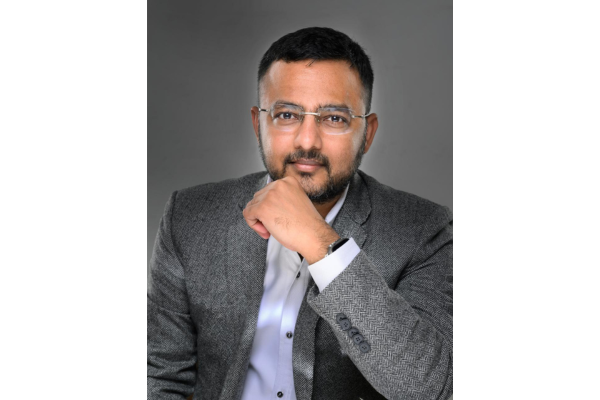
Mumbai’s ongoing infrastructure expansion is steadily altering commercial real estate dynamics across the metropolitan region, with Goregaon East emerging as one of the city’s increasingly prominent suburban business districts due to improved connectivity and transport integration, according to Vikash Kawar, Director at AGM Vijaylaxmi. Advertisement






In an industry commentary, Kawar stated that major infrastructure projects such as the Bandra-Worli Sea Link and the Coastal Road have significantly changed mobility patterns across Mumbai by reducing travel times between western suburbs, the airport precinct and South Mumbai.
He noted that Mumbai historically measured distance through commuting hours rather than geographical proximity due to severe congestion and fragmented transport links. According to Kawar, infrastructure-led mobility improvements are now enabling businesses to evaluate commercial locations beyond traditional office districts.
The commentary highlighted that metro corridors, arterial roads and cross-city connectivity projects have gradually reduced travel friction, encouraging the growth of suburban commercial hubs such as Goregaon East.
Kawar stated that Goregaon East, which was earlier regarded largely as a residential suburb, has evolved into an emerging commercial micro-market due to enhanced accessibility and integration with key business corridors. He noted that established industrial and commercial zones such as Cama Industrial Estate had historically benefited from access to the Western Railway network and the Western Express Highway, while newer infrastructure upgrades are now extending similar advantages across the wider Goregaon East region.
The expansion of Mumbai’s metro network was identified as a major driver of this transformation. Kawar pointed to Mumbai Metro Line 7, connecting Andheri East and Dahisar East, as an important transport corridor supporting the western suburbs. He added that upcoming infrastructure projects, including the proposed Goregaon-Mulund Link Road, are expected to further strengthen east-west mobility and improve access across suburban catchments.
According to the commentary, commuting efficiency has become increasingly important in commercial real estate decision-making due to its impact on productivity, employee wellbeing and talent retention. Kawar stated that sectors such as financial services, consulting, technology and Global Capability Centres are increasingly prioritising accessibility and workforce convenience alongside commercial visibility.
Goregaon East has gained attention because it offers connectivity advantages while maintaining comparatively competitive commercial rentals when compared with older business districts such as Nariman Point, Lower Parel, Bandra-Kurla Complex and Andheri East.
The commentary also referred to recent market reports citing a commercial leasing transaction involving more than 73,000 sq ft of Grade A office space in Goregaon East. According to the referenced data, the transaction carried a total lease commitment exceeding INR 144 crore over a five-year term, with monthly rentals exceeding INR 2 crore and a security deposit estimated at more than INR 20 crore.
Kawar stated that the transaction reflected rising occupier confidence in Goregaon East as a long-term commercial destination within Mumbai’s western suburban office market.
The commentary further observed that commercial growth in Mumbai is increasingly becoming multi-nodal rather than concentrated within a limited number of central business districts. Kawar said integrated urban ecosystems combining offices, residential developments, hotels, retail centres and lifestyle infrastructure are becoming increasingly important for occupiers and employees alike.
According to the commentary, Goregaon East benefits from the presence of commercial landmarks such as NESCO, alongside hospitality, retail and residential infrastructure that support integrated urban development.
Kawar concluded that infrastructure-led micro-markets historically tend to sustain stronger long-term growth due to continued improvements in accessibility and economic activity. He noted that Goregaon East is increasingly positioning itself as part of Mumbai’s next major commercial growth corridor as new infrastructure projects continue to reshape the city’s urban and business landscape.

5th Jun, 2025

25th May, 2023

11th May, 2023

27th Apr, 2023
Advertisement









 Facebook
 Whatsapp
