Advertisement






What really powers the cloud? Behind every Google search, A...
A lot of what defines a home isn’t visible at handover. I...
Private equity has played a significant role in shaping Indi...
Luxury real estate is one of the most talked-about segments ...
Airports play a much bigger role than just enabling travel -...
• China’s new home prices recorded their slowest monthly decline in a year during the past month, supported by improving prices in major cities such as Shanghai and Shenzhen.
• Tier-one cities saw marginal price growth, while smaller tier-two and tier-three cities continued to face falling prices, unsold inventory and weak housing demand.
• Analysts said the property market has still not fully stabilised and may take another one to two years to witness a broader recovery due to oversupply concerns.
• Property investment in China continued to decline sharply, while household loans, including mortgages, contracted significantly, reflecting weak buyer confidence.
• Chinese authorities have introduced buyer incentives and state-backed housing purchase programmes to reduce inventory and support the real estate sector.
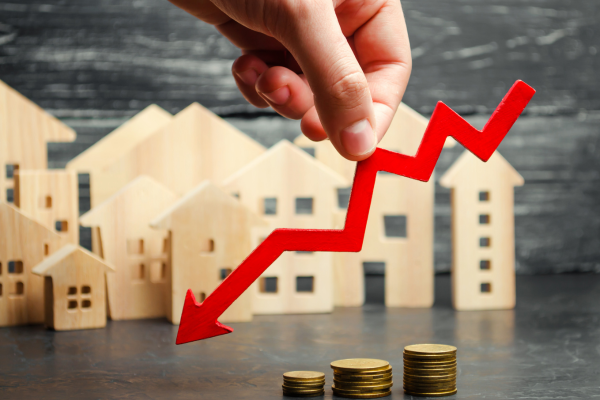
China’s new home prices recorded their slowest monthly decline in nearly a year in the past month, indicating some signs of stability in the country’s prolonged property downturn. However, analysts said a broader recovery is still some distance away as demand remains uneven across cities and housing inventory levels continue to stay elevated. Advertisement






According to calculations based on data released by China’s National Bureau of Statistics, new home prices declined 0.1% month-on-month in April, improving from the 0.2% fall recorded in March. This marked the mildest monthly drop since the same period last year.
On a yearly basis, however, home prices remained under pressure, falling 3.5% compared to the previous year. The annual decline was slightly steeper than the 3.4% fall recorded a month earlier and marked the sharpest yearly drop in almost a year.
The improvement in monthly figures was largely supported by stronger housing prices in China’s major cities. Tier-one cities, including Shenzhen and Shanghai, saw prices rise 0.1% month-on-month, while tier-two and tier-three cities continued to record declines of 0.1% and 0.3%, respectively.
The number of cities witnessing monthly price declines also reduced to 49 from 54 in the previous month, reflecting some improvement in market conditions in select urban centres.
Analysts said the recovery remains highly uneven across the country. Large cities with stronger economic activity and population inflows are seeing better transaction volumes and pricing support, while smaller cities are still dealing with oversupply, weak buyer confidence and delayed housing projects.
Morningstar analyst Jeff Zhang said the property market had still not reached its bottom and sector indicators were expected to remain weak over the coming months. He noted that while sales and pricing in higher-tier cities may stabilise gradually, oversupply across the broader market could delay a full recovery by another one to two years.
Lynn Song, chief economist for Greater China at ING, said the latest data suggested the market may be moving closer to stabilisation, although previous attempts at recovery had failed to sustain momentum. He added that stabilising prices would be an important first step as housing inventories remain high across several regions.
China’s property sector, which once contributed nearly 25% of the country’s economic activity, has been under pressure for several years following a debt crisis among developers, falling home sales and weaker consumer confidence. The prolonged slowdown has also affected household wealth and domestic spending activity.
Separate data released during the past week showed that property investment in China declined 13.7% in the first four months of the year compared to the same period last year. This was sharper than the 11.2% decline recorded in the first quarter, indicating continued stress in the sector.
Retail sales growth also remained subdued, rising only 0.2% in April, highlighting broader weakness in economic activity and consumer spending.
Housing demand continued to remain soft, with household loans, including mortgages, contracting by 786.9 billion yuan during the month after increasing by 490.9 billion yuan in March. The data suggested that many buyers are still hesitant despite policy support measures.
In recent months, Chinese authorities have increased efforts to support the housing sector. Following policy discussions during the annual parliamentary meeting held earlier this year, several cities introduced subsidies and incentives for homebuyers. Local governments have also encouraged state-backed entities to purchase unsold housing inventory and convert those units into affordable housing projects.
China’s top leadership had also reiterated during a meeting held in the later part of April that stabilising the real estate market and reducing financial risks remained among the country’s major economic priorities.
Analysts said differences between cities are expected to continue, with stronger cities recovering faster than smaller regional markets. Zhang Dawei, analyst at Centaline Property, said buyers should assess market conditions carefully and make purchase decisions based on long-term city development potential and personal housing needs.
Source Reuters

5th Jun, 2025

25th May, 2023

11th May, 2023

27th Apr, 2023
Advertisement









 Facebook
 Whatsapp
