Advertisement






What really powers the cloud? Behind every Google search, A...
A lot of what defines a home isn’t visible at handover. I...
Private equity has played a significant role in shaping Indi...
Luxury real estate is one of the most talked-about segments ...
Airports play a much bigger role than just enabling travel -...
The Andhra Pradesh Capital Region Development Authority (APCRDA) held a stakeholder consultation in Amaravati to discuss draft Sustainable and Green Public Procurement Guidelines aimed at promoting low-carbon and environmentally responsible infrastructure development. Supported by the World Bank programme, the proposed framework focuses on integrating sustainability into public procurement through life cycle costing, use of low-carbon construction materials, energy-efficient building practices, and climate-resilient infrastructure. Officials, industry representatives, consultants, and technical experts also discussed pilot projects and inclusion of green materials in the State Schedule of Rates to support wider adoption across upcoming projects in Amaravati.
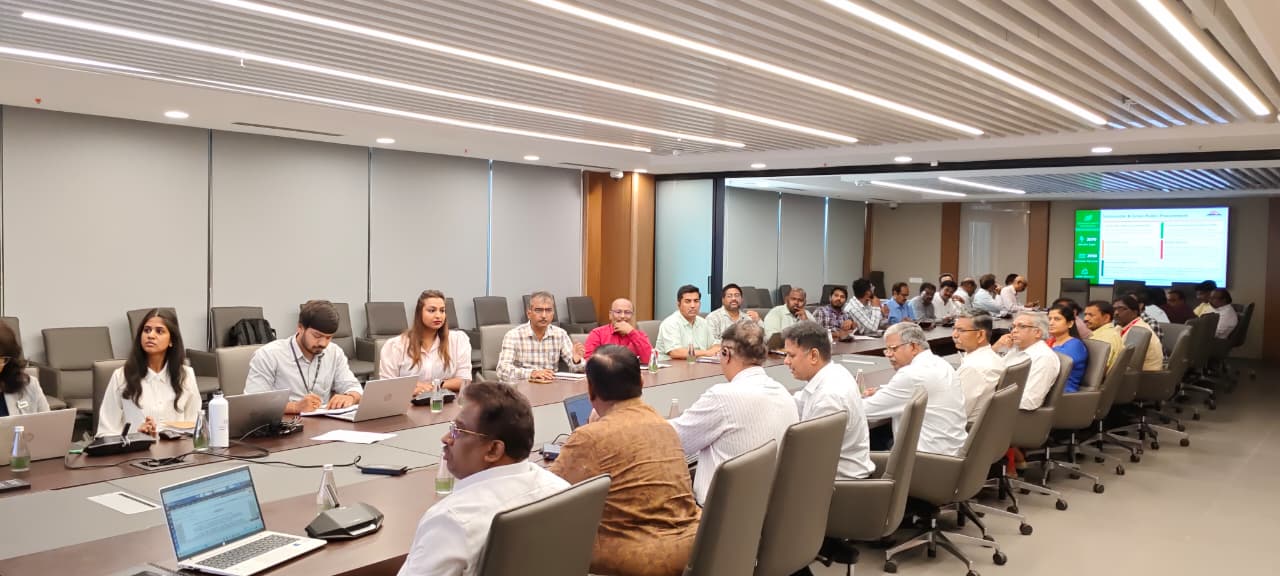
The Andhra Pradesh Capital Region Development Authority (APCRDA) has initiated steps towards introducing sustainable procurement practices for infrastructure and building projects in Amaravati as part of its broader low-carbon development strategy. During the past week, the authority organised a stakeholder consultation at the APCRDA Project Office to discuss draft Sustainable and Green Public Procurement Guidelines being prepared under a World Bank-supported programme. Advertisement






The meeting was chaired by Sri Gopal Krishna Reddy, Engineer-in-Chief, APCRDA, while Sri Sandeep Dixit, Chief Architect, APCRDA, coordinated the discussions. Representatives from Amaravati Development Corporation Limited (ADCL), Amaravati Greenfield Infrastructure Company Limited (AGICL), Confederation of Indian Industry (CII), green building consultants, EDGE consultants, and Project Management Consultants (PMCs) participated in the consultation.
Officials discussed the inclusion of environmental sustainability parameters within procurement systems for ongoing and upcoming infrastructure projects in Amaravati. The proposed guidelines are intended to align the capital city’s development plans with India’s national target of achieving Net Zero emissions by 2070 through the adoption of low-carbon materials, energy-efficient construction methods, and climate-resilient infrastructure planning.
A major focus of the proposed framework is shifting away from the conventional procurement system that primarily considers the lowest upfront cost. Instead, APCRDA is proposing a Life Cycle Costing (LCC) approach, where procurement decisions would account for installation, maintenance, operational efficiency, durability, and end-of-life recycling benefits of materials and products.
Experts during the consultation observed that the price gap between conventional construction materials and green alternatives has narrowed considerably in recent years. They noted that sustainable construction materials can help reduce operational and maintenance expenses over the long term while improving environmental performance.
The discussions also covered measures to reduce the carbon footprint linked to major construction materials such as cement, steel, sand, and aggregates. Proposed measures include encouraging the use of recycled and industrial waste materials such as fly ash-based products, increasing the use of locally sourced materials to reduce transportation-related emissions, and promoting energy-efficient building materials with better thermal performance.
The proposed guidelines also recommend the adoption of Green Pro-certified products to ensure environmental compliance and independent third-party verification standards. Green Pro certification, developed by the Confederation of Indian Industry, is increasingly being used across construction and infrastructure projects to promote sustainable building materials.
As part of the implementation strategy, APCRDA plans to take up pilot projects to demonstrate the practical benefits of green procurement and sustainable construction practices. Officials also discussed integrating environmentally friendly construction materials into the State Schedule of Rates (SOR), a move expected to support wider acceptance among contractors, suppliers, and executing agencies.
The consultation concluded with stakeholders agreeing to continue working with the World Bank, technical experts, and industry bodies for finalisation and implementation of the procurement guidelines. The initiative comes as Amaravati’s development authorities continue to position the capital city as a long-term sustainable urban centre with a focus on environmentally responsible infrastructure and resource-efficient growth.
Source APCRDA
Advertisement













 Facebook
 Whatsapp
