Advertisement






What really powers the cloud? Behind every Google search, A...
A lot of what defines a home isn’t visible at handover. I...
Private equity has played a significant role in shaping Indi...
Luxury real estate is one of the most talked-about segments ...
Airports play a much bigger role than just enabling travel -...
The National Highways Authority of India (NHAI) has directed all FASTag issuer banks to immediately validate vehicle registration numbers (VRNs) linked to FASTags to address data inconsistencies in the electronic toll collection system. The move follows complaints of mismatches between FASTag-captured VRNs and actual vehicle number plates, raising concerns over enforcement gaps and potential revenue leakage. NHAI noted that many discrepancies relate to FASTags issued before integration with the VAHAN database, when verification processes were limited. Banks have been instructed to verify issued FASTags and blacklist those linked to incorrect or invalid VRNs. The directive gains importance as India prepares to implement Multi-Lane Free Flow (MLFF) tolling, which relies on accurate vehicle identification for enforcement and penalty issuance.
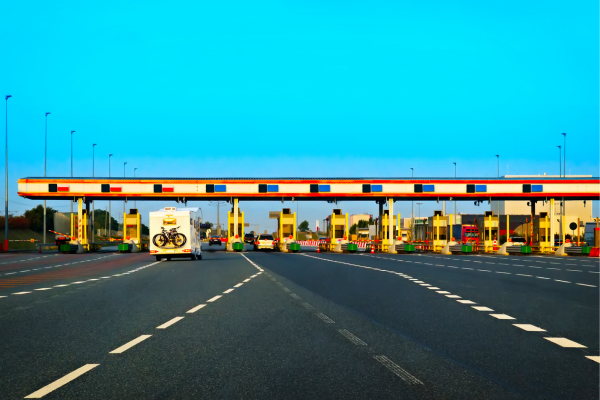
The National Highways Authority of India (NHAI) has directed all FASTag issuer banks to undertake immediate validation of vehicle registration numbers (VRNs) linked to FASTags, following complaints of mismatches between electronically captured data and actual vehicle number plates, with the directive issued in the past week to improve the reliability of the toll collection system. Advertisement






According to the authority, discrepancies have been observed in instances where the VRN recorded by FASTag readers does not correspond with the number displayed on the vehicle. Such inconsistencies have implications for enforcement, as they can weaken monitoring mechanisms and create scope for revenue evasion under the electronic toll collection framework.
NHAI indicated that a significant portion of these mismatches is associated with FASTags issued prior to their integration with the VAHAN database. During that period, validation processes were comparatively limited and relied on manual verification, which resulted in inconsistencies in vehicle identification records.
The authority stated that ensuring accurate mapping between FASTags and vehicle registration numbers is critical, particularly in the context of upcoming technology-led tolling systems. It highlighted that initiatives such as Multi-Lane Free Flow (MLFF) tolling will depend heavily on verified vehicle data for effective enforcement.
Under the MLFF system, toll collection is expected to be carried out without physical barriers, using automated number plate recognition and FASTag-based identification. In such a framework, enforcement actions, including the issuance of electronic notices to non-compliant vehicles, will require precise and reliable vehicle data to function effectively.
In this context, NHAI has instructed all FASTag issuer banks to carry out urgent verification of FASTags issued by them. The authority has directed that any FASTag found to be linked with incorrect or invalid vehicle registration numbers should be blacklisted, in accordance with government guidelines.
The move is aimed at strengthening the integrity of the electronic toll collection ecosystem while ensuring that enforcement provisions under the Motor Vehicles Act, 1988, are effectively implemented. Officials indicated that discrepancies in vehicle identification not only affect toll revenue but may also attract penal provisions under existing regulations.
The directive reflects a broader push towards improving data accuracy and system efficiency as India advances towards more automated and technology-driven highway infrastructure. With increasing reliance on digital tolling mechanisms, accurate vehicle identification is expected to play a central role in ensuring compliance and maintaining operational transparency across the national highway network.
Source - PTI

5th Jun, 2025

25th May, 2023

11th May, 2023

27th Apr, 2023
Advertisement









 Facebook
 Whatsapp
