Advertisement










In this episode of Prop Personalities, we sit down with Hars...
Luxury real estate is one of the most talked-about segments ...
Welcome to Prop Personalities by Prop News Time - a podcast ...
Airports play a much bigger role than just enabling travel -...
Why does the same hotel brand operate multiple properties in...
The Income Tax Appellate Tribunal (ITAT) has ruled that no capital gains tax is payable when a residential property is sold at the same price at which it was acquired, reaffirming that tax liability arises only when there is an actual profit. The decision, delivered in the past week by the Mumbai bench, involved a jointly owned flat that was sold for INR 85 lakh, identical to its purchase value. Despite this, the tax authorities had initially treated part of the transaction as short-term capital gains due to insufficient documentation. The tribunal set aside the addition after examining evidence and noting that no real income had been generated. The ruling provides clarity on capital gains computation and underscores the importance of accurate documentation in property transactions.
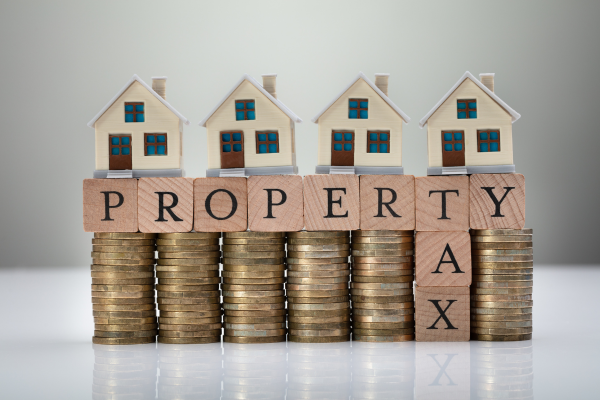
The Mumbai bench of the Income Tax Appellate Tribunal (ITAT) ruled in the past week that no capital gains tax can be levied when a residential property is sold at the same price at which it was purchased, reiterating that tax liability arises only when there is an actual gain from the transaction. Advertisement


The case involved a taxpayer who had jointly owned a residential flat with her spouse. The property had been acquired for INR 85 lakh and was sold approximately two years later at the same value. During reassessment proceedings, the Income Tax Department treated the taxpayer's 50 per cent share amounting to INR 42.5 lakh as short-term capital gains, citing the absence of supporting documentation at the time of assessment.
The taxpayer contested the addition, stating that while the amount reflected her share of the sale consideration, the assessing officer had failed to account for the cost of acquisition and associated expenses such as stamp duty. She submitted that once these costs were factored in, there was no surplus or profit arising from the transaction, and therefore no taxable capital gain.
Upon reviewing the case, the tribunal accepted the taxpayer's submissions and supporting documents, confirming that the sale consideration was identical to the purchase price. It further noted that the tax authorities had already accepted a similar position in the case of the co-owner, reinforcing the consistency of the claim. Based on these findings, the tribunal deleted the addition made under the head of short-term capital gains.
The ruling aligns with the fundamental principle of capital gains taxation under Indian law, where gains are computed as the difference between the sale consideration and the cost of acquisition. In the absence of any positive difference, no taxable gain arises.
Tax professionals indicated that the decision reinforces the need for proper documentation in property transactions, particularly in cases where the sale value does not generate a profit. In such scenarios, failure to present evidence at the assessment stage may lead to additions that require subsequent litigation to resolve.
From a real estate perspective, the ruling provides clarity for homeowners and investors, particularly in markets where price appreciation may be limited or where properties are sold at or near acquisition cost. It confirms that tax liability is contingent on actual income generation rather than notional or presumed gains.
The tribunal's decision also reflects a broader judicial approach of examining the substance of transactions, ensuring that taxation is applied only where there is demonstrable economic benefit. As property transactions continue to be closely scrutinised under income tax provisions, such rulings contribute to greater certainty in the treatment of capital gains arising from residential real estate.

5th Jun, 2025

25th May, 2023

11th May, 2023

27th Apr, 2023
Advertisement





 Facebook
 Whatsapp
