Advertisement










In this episode of Prop Personalities, we sit down with Hars...
Luxury real estate is one of the most talked-about segments ...
Welcome to Prop Personalities by Prop News Time - a podcast ...
Airports play a much bigger role than just enabling travel -...
Why does the same hotel brand operate multiple properties in...
Indian Railways, in collaboration with Bharat Petroleum Corporation Ltd (BPCL), has operationalised a Gati Shakti Cargo Terminal in Jammu, aimed at improving fuel transportation and logistics efficiency in the region. Commissioned in the past week, the facility has been developed under the Gati Shakti Multi-Modal Cargo Terminal policy to enhance freight handling capacity and reduce dependence on road transport. The terminal is expected to facilitate the movement of petroleum products, ensuring streamlined supply to Jammu and surrounding areas. The initiative forms part of the broader push to modernise rail-based logistics infrastructure, promote private sector participation, and improve multimodal connectivity. The development is also aligned with national infrastructure priorities focused on cost efficiency and faster cargo movement.
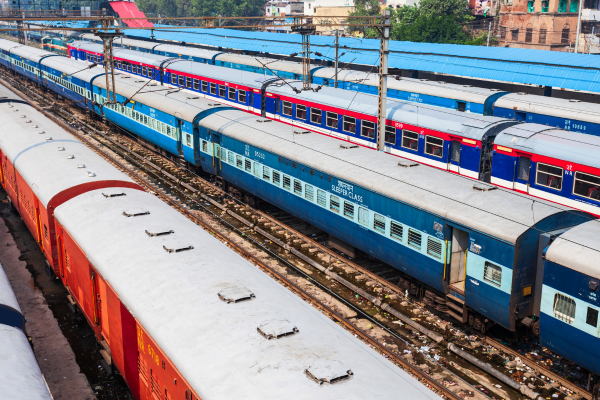
Indian Railways, in partnership with Bharat Petroleum Corporation Ltd (BPCL), commissioned a Gati Shakti Cargo Terminal in Jammu in the past week, with the objective of strengthening fuel logistics and improving freight movement efficiency in the region. The facility has been developed under the Gati Shakti Multi-Modal Cargo Terminal (GCT) policy, which seeks to promote private investment in rail-linked cargo infrastructure while reducing logistics costs and enhancing connectivity. Advertisement


The newly operational terminal is designed to handle petroleum products, enabling bulk transportation of fuel through rail networks. This is expected to ease pressure on road-based logistics while ensuring a more reliable and efficient supply chain for fuel distribution in Jammu and adjoining areas. The development comes in response to increasing demand for streamlined logistics solutions in northern regions, particularly for essential commodities such as petroleum.
Officials indicated that the terminal would support faster turnaround times for freight handling and contribute to improved operational efficiency. By facilitating direct rail connectivity for fuel transportation, the project is expected to reduce transit time and minimise logistical bottlenecks that have historically affected supply consistency in the region.
The Gati Shakti Cargo Terminal policy, under which the project has been executed, encourages private players to develop and operate cargo terminals on railway land or private land with rail connectivity. The policy framework allows for flexibility in design, financing, and operations, thereby attracting participation from companies such as BPCL. The Jammu terminal represents one of several such initiatives being implemented across the country to modernise freight infrastructure.
From a strategic standpoint, the terminal holds significance due to Jammu's geographical location and its role as a supply node for nearby regions. Improved rail-based logistics infrastructure is expected to support not only petroleum distribution but also broader industrial and commercial activities by enabling efficient cargo movement.
Railway authorities have maintained that expanding cargo terminal infrastructure remains a key focus area, particularly under national programmes aimed at enhancing multimodal connectivity. The integration of such terminals into the wider logistics network is intended to support economic activity by lowering transportation costs and improving reliability.
The commissioning of the Jammu cargo terminal reflects ongoing efforts to align infrastructure development with national logistics goals. By leveraging rail networks for bulk commodity movement, projects of this nature are expected to contribute to a more efficient and integrated supply chain ecosystem while supporting long-term infrastructure planning objectives.

5th Jun, 2025

25th May, 2023

11th May, 2023

27th Apr, 2023
Advertisement





 Facebook
 Whatsapp
