Advertisement










In this episode of Prop Personalities, we sit down with Hars...
Luxury real estate is one of the most talked-about segments ...
Welcome to Prop Personalities by Prop News Time - a podcast ...
Airports play a much bigger role than just enabling travel -...
Why does the same hotel brand operate multiple properties in...
The Delhi government has proposed a 19.2 km elevated road corridor along the Yamuna, stretching from Wazirabad to the DND Flyway, as part of a broader push to improve urban mobility and reduce congestion. The plan, reviewed in the past week, includes phased development of the corridor alongside metro expansion and multiple flyover projects. A 2.62 km flyover between Tripolia Gate and Barfkhana has also been proposed. The initiative is being considered alongside ongoing Delhi Metro Phase IV works, where over 100 km of network is under construction. The combined approach seeks to enhance north-south connectivity, reduce travel time across key traffic corridors, and strengthen integration between road and rail-based transport infrastructure in the capital.
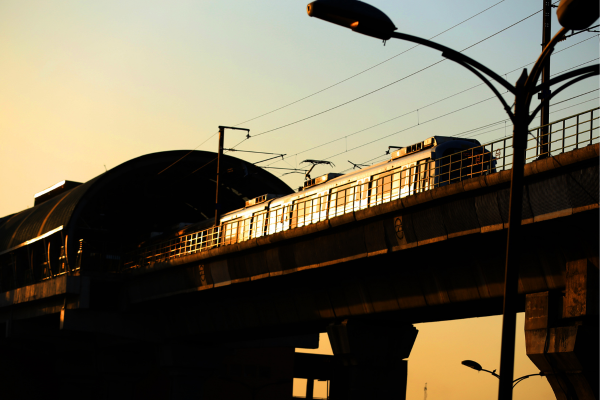
The Delhi government has proposed the development of a 19.2 km elevated road along the Yamuna from Wazirabad to the DND Flyway, with the plan reviewed in the past week as part of a broader strategy to reduce congestion and improve urban mobility across the capital, while integrating the project with ongoing metro expansion and flyover developments. Advertisement


The proposed elevated corridor is planned in three phases Surghat to ISBT, ISBT to Sarai Kale Khan, and Sarai Kale Khan to DND covering key stretches that currently experience significant traffic pressure. In addition to the main corridor, a separate proposal has been prepared for a 2.62 km flyover between Tripolia Gate and Barfkhana to further improve traffic dispersal in congested areas.
The proposal was reviewed during a high-level meeting chaired by the Chief Minister with senior officials, including representatives from the Delhi Metro Rail Corporation. During the review, the government emphasised the need to strengthen public transport infrastructure through integrated planning of road and metro systems, with a focus on improving travel efficiency and reducing vehicular congestion.
Officials indicated that the elevated road is intended to function as a high-speed corridor running parallel to the Yamuna, allowing uninterrupted movement across north, central, and south-east Delhi. By diverting through-traffic away from surface roads, the project is expected to reduce bottlenecks at key junctions such as ISBT and Sarai Kale Khan, which currently experience heavy traffic volumes.
The initiative is being planned alongside a significant expansion of the Delhi Metro network. At present, approximately 104.45 km of metro lines with 81 stations are under construction, with Phase IV corridors recording substantial physical progress. Several priority sections are targeted for completion in the coming months, indicating a coordinated push to expand rail-based transit capacity.
In addition to the elevated corridor, multiple flyover and double-decker infrastructure projects are underway or nearing completion. These include structures designed to accommodate both road traffic and metro lines, reflecting an increasing emphasis on multi-level, integrated transport solutions within the city.
The combined approach of expanding metro networks while introducing elevated road corridors highlights a shift towards multimodal transport planning in Delhi. Authorities have indicated that addressing congestion and improving commute efficiency remain key priorities, particularly in high-density urban corridors where existing infrastructure faces capacity constraints.
The proposal for the Yamuna elevated road is currently at the planning stage and will require further approvals, detailed design, and coordination across agencies before execution. Its integration with metro expansion and flyover projects is expected to form part of a broader infrastructure pipeline aimed at strengthening connectivity and supporting the city's long-term transport requirements.

5th Jun, 2025

25th May, 2023

11th May, 2023

27th Apr, 2023
Advertisement





 Facebook
 Whatsapp
