Advertisement






What really powers the cloud? Behind every Google search, A...
A lot of what defines a home isn’t visible at handover. I...
Private equity has played a significant role in shaping Indi...
Luxury real estate is one of the most talked-about segments ...
Airports play a much bigger role than just enabling travel -...
Mumbai Metropolitan Region Development Authority (MMRDA) has achieved a key construction milestone on Metro Line 6 with the successful installation of a steel composite girder span over the operational Western Railway corridor at Jogeshwari. The corridor has now reached over 88% physical completion, indicating steady progress. The complex railway crossing was executed in nearly half the permitted traffic block time, reducing disruption to train services. The project uses high-capacity cranes and closely coordinated engineering work. Once completed, the corridor will improve east–west connectivity between Swami Samarth Nagar and Vikhroli, easing daily travel across Mumbai.
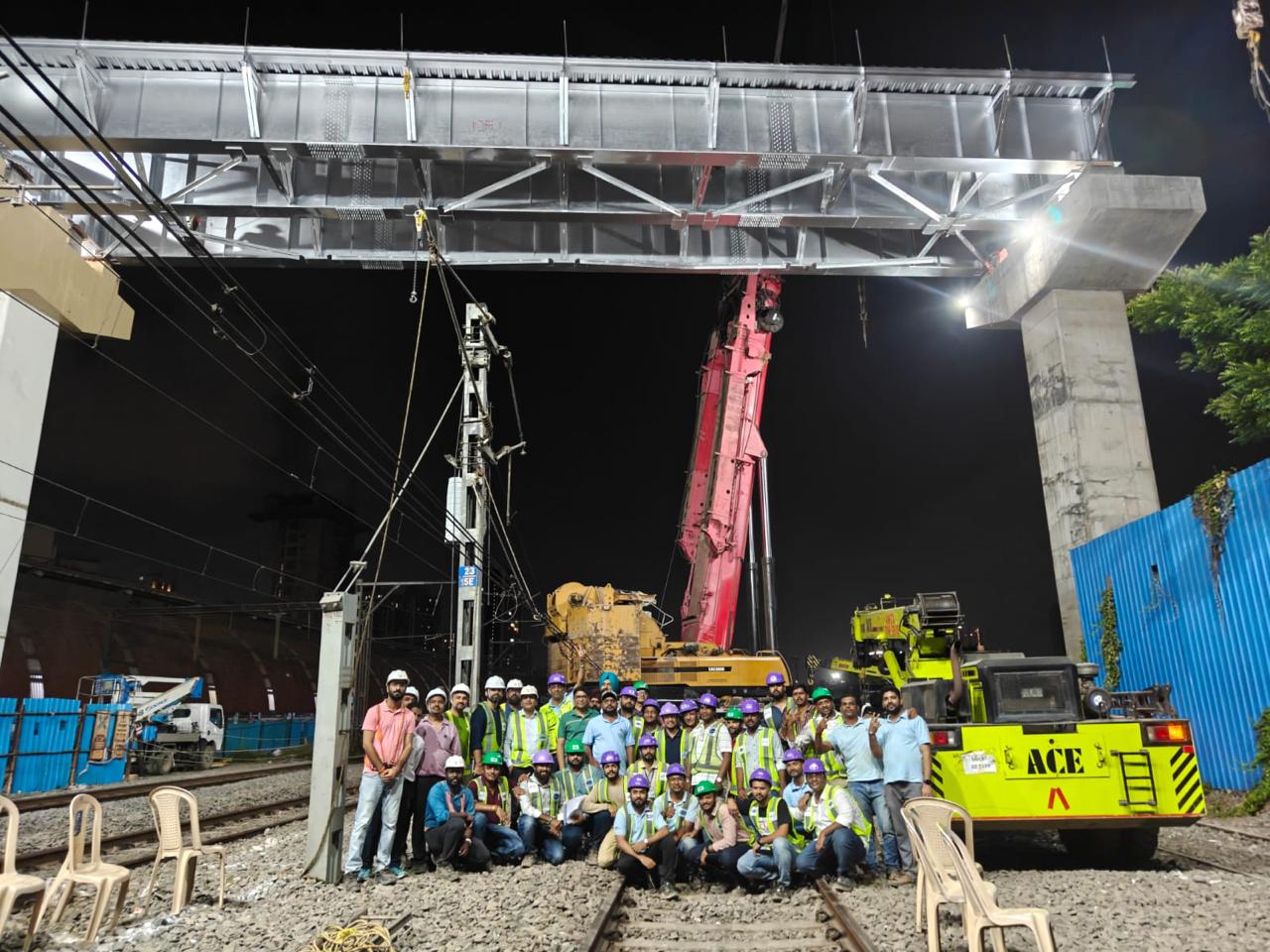
Mumbai Metropolitan Region Development Authority (MMRDA) has completed a significant construction stage on Metro Line 6 by erecting the second steel composite girder span over the active Western Railway line at Jogeshwari. This segment is considered one of the more technically sensitive portions of the project due to continuous train movement and limited execution windows. Advertisement






With this development, overall physical progress of Metro Line 6 has crossed 88%, showing steady advancement towards final completion. The corridor is part of Mumbai’s expanding metro network aimed at improving cross-city connectivity.
The newly installed span is 31.16 metres long and weighs around 90 metric tonnes. It includes steel composite girders along with diaphragms and bracing systems designed to support long-term durability and operational safety of the metro structure.
The railway span installation was originally planned within a traffic block of 3 hours 10 minutes. However, the execution was completed in 1 hour 35 minutes, nearly half the allotted time. This helped limit disruption to suburban railway operations while maintaining required safety procedures.
The activity involved multiple coordinated steps such as overhead equipment shutdown, wire lowering, crane positioning, heavy lifting, precision placement of the structure, inspection, and restoration of railway systems. Two high-capacity cranes of 500-ton and 600-ton were deployed simultaneously to carry out the lifting work over the live railway corridor.
MMRDA officials highlighted that the execution required minute-level coordination between multiple teams, including contractors and Western Railway authorities. The authority stated that the completion of the span ahead of schedule reflects improved planning, technical capability, and coordination among stakeholders.
Dr. Sanjay Mukherjee, IAS, Metropolitan Commissioner of MMRDA, noted that Metro Line 6 is progressing at a strong pace with over 88% completion. He added that completing such a critical railway crossing in significantly less time than planned demonstrates the efficiency and technical strength of the teams involved. He also confirmed that the project continues to follow strict safety and engineering standards.
With two steel spans now successfully placed across the railway corridor, the project has achieved an important engineering milestone on this metro line.
Once operational, Mumbai Metro Line 6 will connect Swami Samarth Nagar (Andheri Lokhandwala) to Vikhroli, offering improved east–west connectivity and reducing travel time across key stretches of the city. The line is expected to provide a more structured and reliable public transport option for commuters, especially in densely populated areas.
MMRDA also acknowledged the cooperation of Western Railway authorities, stating that their support has been essential in carrying out complex construction activities within live railway environments.

5th Jun, 2025

25th May, 2023

11th May, 2023

27th Apr, 2023
Advertisement









 Facebook
 Whatsapp
