Advertisement










Private equity has played a significant role in shaping Indi...
In today’s real estate landscape, fitness is often treated...
In this episode of Prop Personalities, we sit down with Hars...
Luxury real estate is one of the most talked-about segments ...
Welcome to Prop Personalities by Prop News Time - a podcast ...
Rooftop solar adoption in Delhi has expanded significantly, with power distribution companies energising over 23,000 installations across residential, commercial, and industrial categories. BSES discoms have commissioned more than 13,600 connections with a combined capacity of around 260 MWp, while Tata Power Delhi Distribution Limited has energised over 4,000 installations in the past year alone. The growth has been supported by subsidy schemes such as the PM Surya Ghar programme and the Delhi Solar Policy. Consumers are eligible for subsidies of up to INR 1.08 lakh, alongside generation-based incentives, driving uptake across housing societies and individual households.
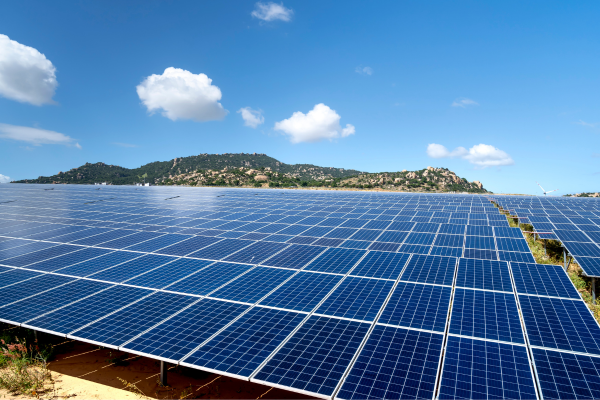
Rooftop solar installations in Delhi have expanded in the past year, with power distribution companies energising more than 23,000 connections across residential, commercial, industrial, and institutional categories. The increase has been driven by policy incentives, subsidy support, and rising consumer interest in reducing energy costs. Advertisement


BSES discoms—BRPL and BYPL—have together energised over 13,600 rooftop solar connections, accounting for a combined installed capacity of approximately 260 MWp. During the financial year 2025–26, the discoms commissioned more than 4,600 new connections, including over 2,600 installations under the PM Surya Ghar scheme.
Tata Power Delhi Distribution Limited, which serves around 28% of the city’s distribution area, reported that it has registered over 18,000 households under its ‘Suryansh’ initiative. The company energised a record 4,011 rooftop solar connections during the previous year, marking its highest annual addition to date. It has also integrated 10,310 rooftop solar systems with a cumulative capacity of 156.78 MWp.
Discom officials attributed the growth to central and state government schemes that have improved affordability for consumers. Under current policies, consumers can avail total subsidies of up to INR 1.08 lakh, including INR 78,000 from the central government and INR 30,000 from the Delhi government. In addition, generation-based incentives and net metering allow consumers to earn from surplus electricity supplied back to the grid.
Residential consumers account for the largest share of rooftop solar installations. Data from BSES indicates 9,888 residential connections, followed by commercial establishments with 2,184 installations, educational institutions with 1,009, and smaller numbers across industrial and other categories. In terms of installed capacity, commercial consumers lead with 90.2 MWp, followed by residential installations at 83.8 MWp.
The financial benefits of rooftop solar adoption have also contributed to its uptake. According to discom estimates, a typical 5 kW system can generate monthly savings of around INR 3,500, depending on consumption patterns. Annual savings across all consumer categories are estimated at up to INR 200 crore, with commercial users accounting for INR 84 crore, followed by residential consumers at INR 55 crore.
In addition to cost savings, rooftop solar systems are generating supplementary income through the sale of excess power. In North and Northwest Delhi, residents have collectively earned approximately INR 8 crore through generation-based incentives and grid exports.
The increasing adoption across residential buildings, including more than 50 cooperative group housing societies, indicates a broader shift towards decentralised energy systems. As policy support and financial incentives continue, rooftop solar installations are expected to remain a key component of Delhi’s urban energy transition.
Source - PTI

5th Jun, 2025

25th May, 2023

11th May, 2023

27th Apr, 2023
Advertisement





 Facebook
 Whatsapp
