Advertisement










Private equity has played a significant role in shaping Indi...
In today’s real estate landscape, fitness is often treated...
In this episode of Prop Personalities, we sit down with Hars...
Luxury real estate is one of the most talked-about segments ...
Welcome to Prop Personalities by Prop News Time - a podcast ...
The Haryana government has proposed amendments to its building regulations to mandate electric vehicle (EV) charging infrastructure in all new residential and non-residential developments, including group housing, offices, and commercial complexes. The draft changes to the Haryana Building Code, 2017, aim to accelerate EV adoption by ensuring charging availability at the design stage. The proposal also includes provisions such as exemption of EV infrastructure from floor area ratio calculations and defined installation norms. The move aligns with the state’s broader electric mobility strategy and responds to infrastructure gaps affecting EV adoption across urban areas.
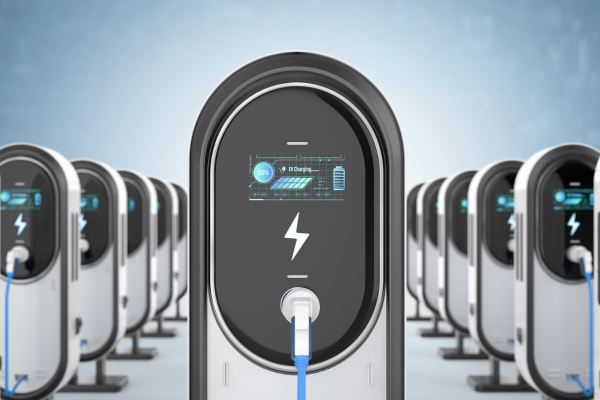
The Haryana government has proposed amendments to the Haryana Building Code, 2017, to make the provision of electric vehicle (EV) charging infrastructure mandatory in all new buildings, covering both residential and non-residential developments. Advertisement


The proposal, put forward in the past week by the Department of Town and Country Planning, seeks to integrate EV charging facilities into the planning and construction stage of projects, including group housing societies, commercial complexes, and office buildings. The draft amendments have been released for public consultation, with stakeholders invited to submit feedback before final notification.
Under the proposed norms, developers will be required to install a minimum number of EV charging points based on parking capacity. Earlier provisions had already introduced a requirement of two charging points per 100 equivalent car spaces in certain building categories, and the revised framework is expected to expand and standardise these requirements across projects.
To encourage adoption and ease implementation, the government has proposed that EV charging infrastructure be exempt from floor area ratio (FAR) calculations. This is intended to ensure that developers are not constrained by built-up area limits when incorporating charging facilities within projects.
The draft also permits installation of charging points in basements and stilt parking areas, subject to compliance with prescribed fire safety norms and technical standards. Authorities indicated that these provisions are aimed at addressing practical challenges faced in deploying EV charging infrastructure in urban residential settings.
The move comes amid growing emphasis on electric mobility across India, with states seeking to strengthen charging infrastructure as a key enabler of EV adoption. Haryana has already introduced incentives under its EV policy and has been expanding public charging networks, though gaps remain in residential and commercial charging availability.
Officials indicated that integrating charging infrastructure at the building design stage would help reduce future retrofitting costs and improve accessibility for EV users. The lack of adequate charging facilities, particularly in residential societies, has been identified as a constraint to wider EV adoption in urban areas.
From a real estate perspective, the proposed mandate is expected to influence building design standards and project planning, particularly in urban centres such as Gurugram and Faridabad. Developers may need to incorporate additional electrical infrastructure and allocate dedicated parking spaces for EV charging as part of compliance requirements.
The proposal reflects a broader shift towards sustainability-linked building norms, where environmental considerations and mobility infrastructure are increasingly being integrated into urban development frameworks. Final implementation will depend on stakeholder feedback and formal notification of the amended building code.

5th Jun, 2025

25th May, 2023

11th May, 2023

27th Apr, 2023
Advertisement





 Facebook
 Whatsapp
